Print Story
X




Training the youth in green infrastructure development will open up new ways for livelihood creation
| P |
akistan has to deal with the dual challenges of climate change and rural poverty. These challenges are linked and demand integrated solutions that blend indigenous knowledge with modern green practices to enable rural communities to adapt to climate impacts, reduce greenhouse gas emissions and rejuvenate their livelihoods. It’s time to innovate.
A range of initiatives from climate-smart agriculture, renewable energy use and nature-based solutions to eco-tourism and vernacular construction techniques to diversified means of livelihoods can enhance resilience against climate shocks and promote sustainable local economic development in vulnerable communities. By equipping local farmers, women and the youth with the tools and training needed for environmental stewardship and economic empowerment, we can promote resilient, low-carbon communities that are both self-sufficient and ecologically sustainable.
According to the World Bank, climate-smart agriculture (CSA) is an integrated approach to managing landscapes—cropland, livestock, forests and fisheries—that address the challenges of food security and climate change. Key CSA areas include water conservation, soil health, pest management, crop diversification, crop varieties, organic farming techniques, livestock feed and manure management. Empowering farmers through training, demonstration farms and cooperative models to enhance resilience and market access is integral to the approach. Following this approach, Pakistan Poverty Alleviation Fund works with a network of partners across the country to pilot and promote innovative approaches in rural communities.
The PPAF experience demonstrates that efficient water management techniques, such as drip irrigation integrated with rainwater harvesting and timely water scheduling, ensure optimal moisture during critical crop growth periods. Sustainable soil management practices, including the use of organic fertilisrs, crop rotation and conservation tillage, complemented by farmer education on soil testing and balanced nutrient application, enhance productivity and prevent land degradation, helping farmers to adapt to climate change and reduce greenhouse gas emissions.
Vaclav Smil, in his book Numbers Don’t Lie—71 Things You Need to Know about the World, emphasises that crop rotation, particularly involving leguminous plants, can significantly reduce synthetic ammonia use by naturally replenishing soil nitrogen. Biological nitrogen fixation as well as recycling farm organic waste and human and animal waste can support smaller-scale or organic systems and create a niche industry, particularly for small farmers. (Nearly 43 percent of the farmers in Pakistan have land holdings of less than a hectare).
The Food and Agriculture Organisation has pointed out overreliance on a narrow selection of crops - rice, maize and wheat that dominates global nutrition. Of more than 50,000 edible plant species in the world, 15 crop plants provide 90 percent of the world’s food energy intake.
Rice, maize and wheat, staples of over 4,000 million people, provide 60 percent of the world’s food energy. Gradually, we can introduce a wider range of edible crop varieties and cultivate climate-resilient species that can withstand droughts, floods and temperature extremes not only to promote dietary diversity, but also to reduce the risk of crop failure, enhance food security and improve income stability.
Providing certified seeds and training farmers to produce their own seeds, can lead to improved yields, greater pest resistanceand enhanced drought tolerance. Communities can also establish seed banks to ensure the availability of quality seeds and make them accessible to neighbouring villages, promoting resilience and self-reliance at the local level.
Climate-smart agriculture is also about lowering greenhouse gases. Agriculture contributes approximately 41 percent of GHG emissions in Pakistan, mostly through livestock production. CSA techniques and practices for efficient crop and livestock management and reduced emissions can help by minimising tillage, adopting agro-forestry and managing livestock feed and waste efficiently. Encouraging the use of renewable energy for farming operations, like solar-powered irrigation systems, will further reduce carbon footprints in agriculture. Improved irrigation and water management can reduce methane emission from cultivation.
The Human Development Report, 2020, argues that local nature-based solutions have the potential to contribute to transformational change at the global level. Building on this global perspective, Pakistan can advance its climate goals by integrating livelihoods with green skills, promoting greater engagement in nature-based economic sectors while reducing the carbon footprint of non-sustainable products.
Green skills and entrepreneurial training can equip and hone skills of the youth and individuals to create earth-friendly products and biodegradable products using agriculture products and link them with a value chain. Communities can produce and package a variety of products by utilising resources from farms, kitchen gardens and wild-grown sources—such as herbs for medicinal or culinary use, organic fruits and vegetables and other nature-based produce.
According to the European Union, Pakistan generates almost 2 million tonnes of plastic waste per year. Single-use-plastic waste can be reduced by compostable takeout containers made from materials like potato starch, banana leaves, trunk pulp, sugarcane, bamboo or wheat straw. Similarly, grass straws can be developed as sustainable alternatives to plastic straws and supplied to packaging industries, hotels and restaurants.
Knowledge exists around climate smart practices. It needs to be translated into action. To encourage its implementing partners to pursue innovation in climate action, the PPAF has introduced a dedicated category for innovative projects under its Restoring Social Services and Climate Resilience initiative, covers 61 union councils across 19 flood-affected districts. Similarly, through initiatives like the EU-funded the Growth for Rural Advancement and Sustainable Progress project, the PPAF is supporting agri-preneurship and value chain development in 22 districts of Sindh and Balochistan. A standout example is a banana tissue culture lab in Thatta, established with matching grant, which produces Panama disease-resistant banana plants—demonstrating how agri-tech can boost food security and make agriculture more appealing to the youth by linking innovation with livelihoods.
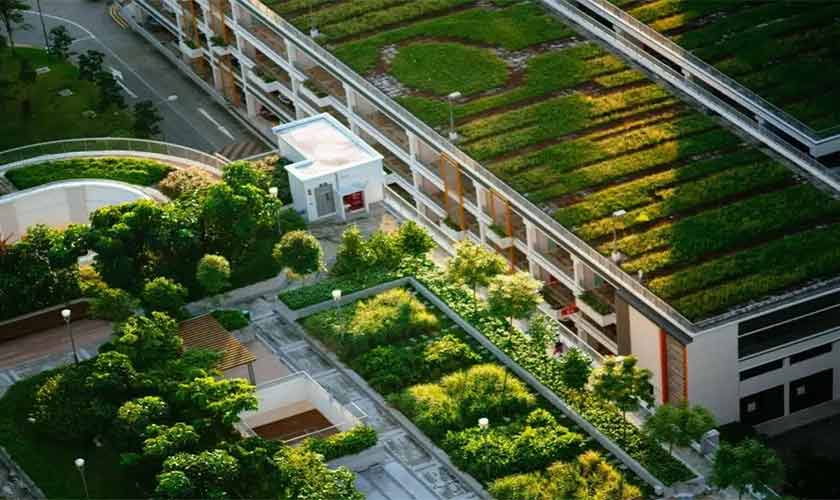
We should explore more options to engage and train young entrepreneurs not only in established sectors of apiculture, aquaculture, floriculture and horticulture, but also in the emerging fields of sericulture, hydroponics and vertical farming. Training the youth in green infrastructure development, including the construction of wetlands (to even treat wastewater naturally with wetland plants), rain gardens, soak-aways, retention ponds and permeable pavements to enhance water management and climate resilience can open up new ways to integrate environmental stewardship with livelihood creation.
The youth can also be equipped to construct wetlands integrated with parks, thus enhancing water management, boosting biodiversity and providing community recreation spaces. Women and the youth can be skilled in low-carbon, structurally sound vernacular construction techniques to build climate-adaptive houses and livestock shelters that incorporate natural insulation and flood-resilient features.
Expanding these activities anchors upon hospitality and cultural-, eco- and agri-tourism initiatives to stir up the local economy and make it possible for the rest of the activities to draw strength from.
Together the adaptation and mitigation practices can enhance agricultural production, conserve resources, preserve natural resources and ecosystems and increase incomes for farming communities, while improving food security of the poor. Organisations like the Pakistan Poverty Alleviation Fund are already implementing some of these approaches. However, intense collaboration with government institutions is essential to scale up these innovations across the country.
The writer is an architect and urban planner working with the Pakistan Poverty Alleviation Fund.