

Print Story
X




They are everywhere—working in fields, homes and streets—but in the eyes of data collectors handlers, they are nowhere
| P |
akistan’s women workers in the informal economy form the backbone of their communities, yet their contributions remain systematically excluded from global gender assessments.
The Global Gender Gap Report 2025 once again ranks Pakistan near the bottom, highlighting persistent disparities in education, economic participation, health and political representation. The report generates headlines and sparks policy debates each year but continues to overlook a critical reality: the Pakistani women who power the informal economy are simply not counted.
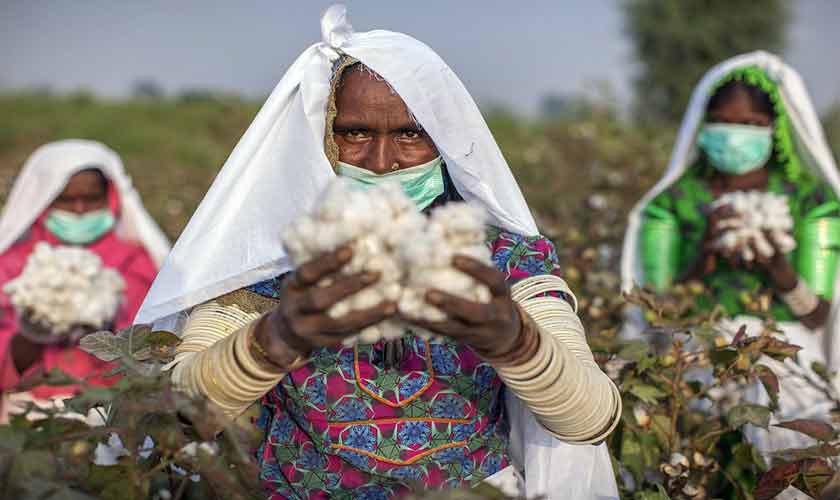
According to national labor force estimates and development surveys, over 70 percent of working women in Pakistan are engaged in agriculture, livestock care, home-based production or informal services. Much of this labour is undocumented and unrecognised by formal economic systems, leaving these women invisible in the data used for global indices.
Because the Gender Gap Report relies on formal employment indicators such as labour force participation, wage equality and income levels, it inadvertently ignores the millions of women whose labour sustains families and communities without ever appearing in official statistics.
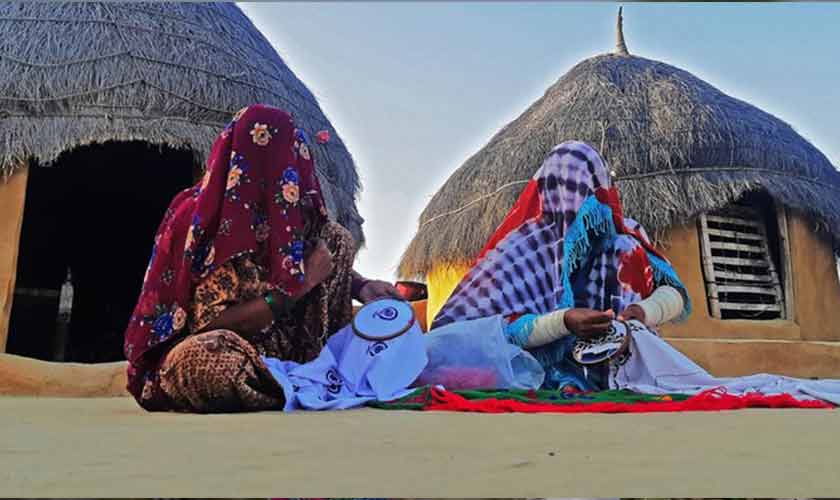
In Sindh alone, women play an essential role in small-scale farming, livestock rearing, handicrafts and waste collection. Their contributions are vital to rural and low-income urban households, yet they remain absent from mainstream labour surveys, wage comparisons and productivity metrics.
The 2024 national budget speech had signaled a breakthrough by naming the documentation of the informal economy as a national priority. It was a promising commitment toward recognising this shadow labour force, particularly women. Yet, the continued absence of informal labour data in this year’s Gender Gap Report raises serious concerns: either the policy efforts have stalled, or they’ve failed to produce measurable results.
This disconnect between promises and action is something many gender advocates have long observed. Sarah Zaman, a development practitioner, reflects, “It was disappointing to see Pakistan’s ranking in the 2025 report. I recalled that the 2024 budget had prioritised documenting the informal economy—a move that offered hope for recognising women’s labour. But without centralised data systems at the federal and provincial levels, these contributions remain unrecorded. The lack of corresponding data shows these commitments haven’t translated into real action. The government must take the lead in digitising and centralising gender-disaggregated data, so that actual progress—and existing gaps—are properly reflected.”
She notes that the issue is more complex than formal documentation alone. “It’s important to understand the difference between the informal economy and the care economy—gender differences are stark where these intersect. Pakistan’s economy is not only largely informal or undocumented; women’s share in undocumented, home-based paid work is massive. While provincial laws have been passed, we are nowhere near universal registration for home-based workers. Domestic workers in major cities are another example of largely undocumented paid labour. Data collection is further complicated by domicile issues, especially for migrant women.”
The continued exclusion of informal women workers from global indices isn’t just a statistical flaw - it deepens inequality by erasing the lived experiences of millions. Without accurate data, policies fail to reach those most in need. Social protections remain out of reach, financial services miss their mark and development programmes fall short.
Yasmeen Kapri, who has worked with women artisans for more than two decades, offers a critical view from the ground. She has witnessed firsthand how thousands of women, especially in Sindh and southern Punjab, sustain their families through embroidery, weaving, mirror work, ralli making and stitched crafts—yet remain completely undocumented.
“For over 20 years, I’ve been working with women artisans from rural and semi-urban areas. They have immense skill and contribute significantly to household incomes. From Tharparkar to Multan women and girls earn by making handicrafts, yet they are never counted. Their work is still considered a ‘hobby’ or a ‘helping hand’ rather than formal income.”
She notes that while digital platforms brought new hope after Covid-19, they also exposed a new divide. “Since the pandemic, many women have started selling their products online—through WhatsApp, Instagram or local marketplaces. But this shift has not been supported by any state-led data system to recognise them. There is no directory, no registration, no mechanism that reflects this growing economic activity. These women pay for raw materials, invest labour and earn real money—but none of it is captured in national reports.”
Kapri emphasises that ignoring this segment not only hurts Pakistan’s gender image internationally but also denies real women access to credit, skill support and protection, “It’s not just about global rankings—it’s about what happens on the ground. If these women were registered as economic contributors, they could access microloans, training and social safety nets. It is the state’s responsibility to create a national data and registration system for informal women workers. Until then, our country’s progress on women’s economic empowerment will remain incomplete—on paper and in reality.”
Amid the challenges, there is room for optimism. Sindh, the most progressive province in Pakistan in terms of gender legislation has enacted two pivotal laws: the Sindh Home-Based Workers Act (2018) and the Sindh Women Agricultural Workers Act (2019). If implemented effectively, these could enable the registration of thousands of women in the informal sector, providing access to legal rights, social protections and visibility in national data systems. These reforms could also ensure that future global reports more accurately reflect women’s real contributions.
The continued exclusion of informal women workers from global indices isn’t just a statistical flaw - it deepens inequality by erasing the lived experiences of millions. Without accurate data, policies fail to reach those most in need. Social protections remain out of reach, financial services miss their mark and development programmes fall short.
Recognising women’s informal labour is not just about improving Pakistan’s position in global rankings. It’s about justice, inclusion and equity. These women deserve to be seen, counted and valued—not just by the system, but by the nation they help sustain.
As Pakistan moves toward a more inclusive development agenda, acknowledging the invisible labour of women must be the first step—not just to close the gender gap in reports, but to transform the lives behind the numbers.
The author is a gender and development professional. She can be reached at email: sanakhanzada4@gmail.com, LinkedIn www.linkedin.com/in/sana-siddique-6290a9177 and at X https://x.com/sanasrahimoo?s=21.