

Print Story
X




Artificial intelligence can help in curriculum development, material design, teaching practices, tackling individual differences, assessment and feedback
| T |
he Twenty-first Century has brought us several new challenges and opportunities. As a result of the latest technological advancements, several skills and jobs will become redundant and a new set of skills will become mandatory. One of the most important skills required in the 21st Century is the use of artificial intelligence. The AI is going to influence all aspects of life, and education is no exception.
Responses to the changes wrought by the AI have been varied. A balanced approach is to make use of the AI in a responsible way, keeping in view the standard ethical protocols. Let us look at the opportunities the AI can create to help us cope with the major educational challenges of Pakistan, including access, quality, relevance and equity.
Pakistan’s biggest educational challenge is its 25.1 million out-of-school children. The AI can help us educate the children without requiring school and college buildings. The AI can help us deal with the challenges of inadequate school buildings and a shortage of teachers.
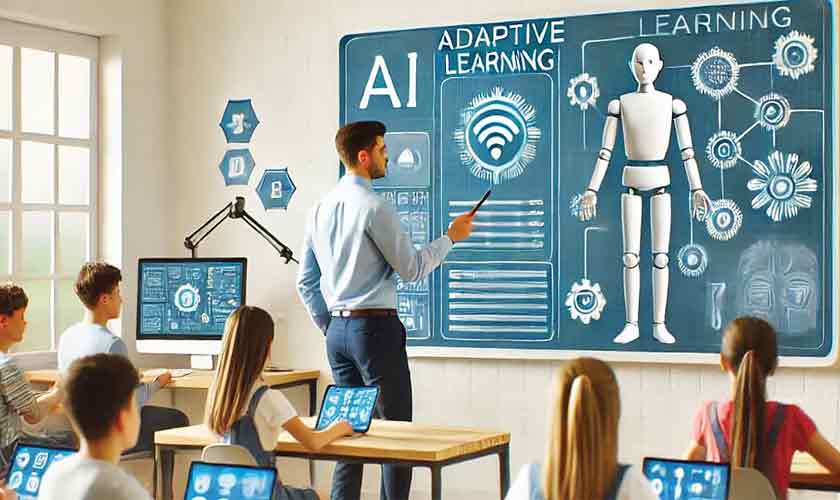
Responsible use of the AI can also help in curriculum development, material design, teaching practices, tackling individual differences, assessment and feedback. The AI can play a vital role in mining large data sets of the performance of learners and societal trends. Once the needs are identified, the AI can assist in developing the curriculum structures with the right balance between knowledge, skills and competencies.
Once the curriculum has been developed, the next important phase is design of teaching materials. The AI can be very helpful in taking the lead from the curriculum outline and transforming the outline into interactive and localised teaching materials. The AI can also help us align the materials and the learning objectives. Thus, the AI can prepare the first layer or draft of the materials, making the job of the material designers easy. They can then focus on cultural aspects, pedagogical issues and subject accuracy.
Next comes the teaching phase. The teachers can make use of the AI for personalisd learning, adjusting the pace and difficulty level. It is important therefore that the teachers are equipped with the necessary skills to use the AI responsibly and professionally. The AI can also help analyse the performance of students and adjust the difficulty and delivery method accordingly. Next comes evaluation. The use of AI can help in assessment of examination papers, not just objective questions, but also subjective questions.
The AI can help in effective school administration. Effective use of the AI can thus help Pakistan attain SDG 4 (United Nations Sustainable Development Goal 4), which deals with quality education for all.
The state should encourage and promote local open-source AI tools in national and regional languages. The state also needs to ensure data privacy and ethical use of the AI.
Having emphasised the importance of the AI tools in education, let us also identify the major challenges. The first and most significant challenge is the lack of digital infrastructure. In many areas of the country, there is no digital infrastructure: no electricity, no internet and no computers. Even where such infrastructure exists, internet access is often slow, erratic and unreliable. Many of the teachers may not be ready to make the appropriate investment in time and effort to ensure ethical use of the internet. This became obvious during the Covid-19 lockdowns. The lack of readiness is largely on account of the Education Departments’ failure to introduce the use of AI in teacher education programmes. Without departmental support, teachers deployed in remote places will find it particularly difficult to benefit from the AI tools.
A related issue is the teachers’ feedback to students. Due to the large size of classrooms, the feedback is often generic, late and unhelpful as it lacks advice on how to remedy the mistakes and improve. Supported by the AI, the feedback can be prompt and specific and guide the students to make use of alternative strategies to improve their outcomes. Continuous feedback supported by the AI can also inform the curriculum assumptions and the pedagogical practices by identifying and feeding the students’ needs.
Thus, one of the focus areas for policymakers should be investing in setting up robust digital infrastructure, i.e., internet, mobile phones and solar-powered labs. There is a need also to integrate the AI with our teacher education programmes so that teachers can be trained to use the AI efficiently and ethically to deal with large classes. These interventions can only succeed if we have an elaborate AI policy and strategic plans, both at the federal and provincial levels, dealing with curriculum reforms, integration with pedagogy and assessment and feedback.
The state should encourage and promote local open-source AI tools in national and regional languages. Another important step the state needs to take is to ensure data privacy and ethical use of the AI. This requires comprehensive guidelines for all users.
Finally, the AI should not be taken as a replacement for teachers. The AI can assist in policy making, curriculum design, pedagogy and assessment, but creative and critical teachers will always be needed to add layers of creativity, critical reflection and affection.
The writer is an educationist and applied linguist. He is the author of several books on education, language and gender, including Education Policies in Pakistan: Politics, Projections, and Practices. LinkedIn: https://www.linkedin.com/in/shahidksiddiqui/