

Print Story
X




Climate change induced weather disasters pose several health risks, including mental health concerns
“An awful tempest mashed the air,
The clouds were gaunt and few;
A black, as of a spectre’s cloak,
Hid heaven and earth from view.”
— Emily Dickinson (1891)
| R |
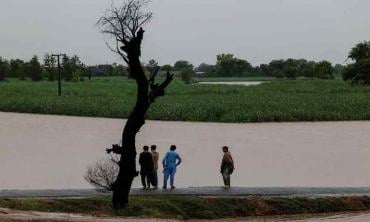
ecently, a video of 18 members of a family perishing in a flood in the Swat River went viral on social media. Even worse than the loss of lives was that it was filmed and repeated in an endless loop on the media (including social media). For obvious reasons, I did my best to avoid watching it for. Watching people drown cannot but engender feelings of sadness, horror, revulsion, anger and pity. Another reason was that, as a psychiatrist, I am aware that there are now vast amounts of research proving the link between excessive social media consumption and poor mental health. But the Swat River tragedy actually pointed to a much larger problem in the making: climate change and especially, its effects in already vulnerable regions.
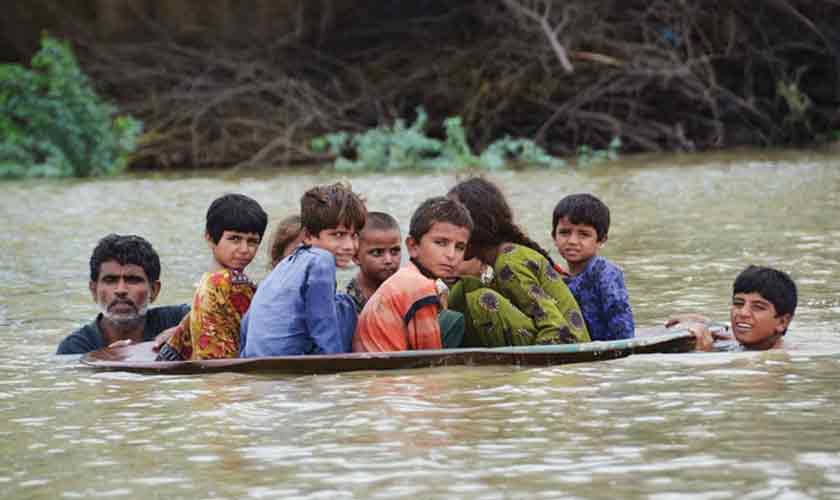
Climate change poses severe risks to Pakistan and the South Asian region, intensifying threats to water resources, agriculture, health and economies. Pakistan relies heavily on the Indus River, fed by Himalayan glaciers now melting at accelerated rates due to rising temperatures. This leads to both devastating floods, like those in 2010 and 2022, and looming long-term water shortages threatening agriculture and drinking supplies.
Extreme weather is becoming more frequent: heatwaves causing loss of lives and productivity and erratic monsoon rains triggering destructive floods, displacing millions and causing vast economic losses. Next door, in coastal areas of Bangladesh and eastern India rising sea levels and cyclones are endangering densely populated regions. Agriculture, vital for Pakistan’s economy and employment, suffers from heat stress, unpredictable rains and water scarcity, harming wheat, rice and cotton crops and endangering food security across South Asia. The recent exchange of missiles and artillery barrages between our two nuclear-armed nations, alarming to the extreme, was triggered by a water dispute. As climate change accelerates, these tensions will no doubt worsen.
Health impacts are growing. Warmer temperatures expand disease vectors, increasing malaria and dengue fever. Floods contaminate water supplies, raising risks of diarrheal diseases. From glaciers to coastal mangroves, ecosystems are under threat with biodiversity loss affecting livelihoods dependent on natural resources. Economically, climate change strains budgets through disaster recovery and lost productivity, worsening poverty and inequality.
The mental health effects of all of this can be twofold. Obviously, those affected directly by climate change disasters—like victims of the Swat River flood and their families or others forced to migrate from regions affected by climate change—will suffer not just the loss of their homes and livelihoods, but also health effects including extreme effects on their mental health (as with all those affected by wars, natural disasters and the like). But what about the rest of us—those not affected directly by climate change (yet)? Do we also need to be concerned?
Yes, we do. If climate change has not yet reached our doorstep, eventually it will, since Pakistan is one of the ten countries most affected by climate related disasters in the world according to the Global Climate Risk Index. Whether it is extreme heat and flooding in the Punjab and Sindh, droughts in Balochistan, glacial lake outbursts and flooding in Khyber Pakhtunkhwa and the Northern Areas or extreme water shortages in Islamabad, no part of our country is immune to the effects of climate change.
So, what should we do?
Being informed and aware is, of course, the first step in making a change. While individual actions may not be enough to change the course of climate change, which is a global phenomenon driven primarily by the actions of governments and large industry in the Global North, it is no excuse to sit on our hands and do nothing. By encouraging one another and our communities to save energy, conserve water and avoid adding to environmental pollution; reusing and recycling; using greener transport means; eating sustainably; and supporting local and national leadership focused on climate change, we can play our part in capping this climate volcano.
While staying informed and aware of what is happening around the issue of climate change may invariably involve social media, we need to use it mindfully and wisely. There are all kinds of apps built into devices now that can help you monitor your time online and avoid excessive use. If you are feeling upset, angry or depressed about an issue on social media, get off the screen and avoid looking at it for a while. In this day and age, if there is something of significance happening in the world, be assured it will reach you whether you go looking for it or not. Perhaps find and bookmark a few reliable sites or news outlets where you can check updates once or twice a day, if you wish. Better yet, avoid obsessively following topics which you know will upset you. If you feel like you need it, ask for help, from friends and family, or if necessary, from a professional.
Climate change is a global problem but individual actions can make a difference. Inform, organise and agitate for change but not at the risk of your mental health. Better to go for a walk in the park and enjoy nature rather than glue yourself to a screen until you have a panic attack. We humans are also a part of nature; taking care of ourselves is as essential as taking care of our planet.
The writer is a psychiatrist and faculty member at King Edward Medical University. He is the author of Faiz Ahmed Faiz: A Biography, Sang-e Meel Publications, 2022. His X handle: @Ali_Madeeh.