


Print Story
X




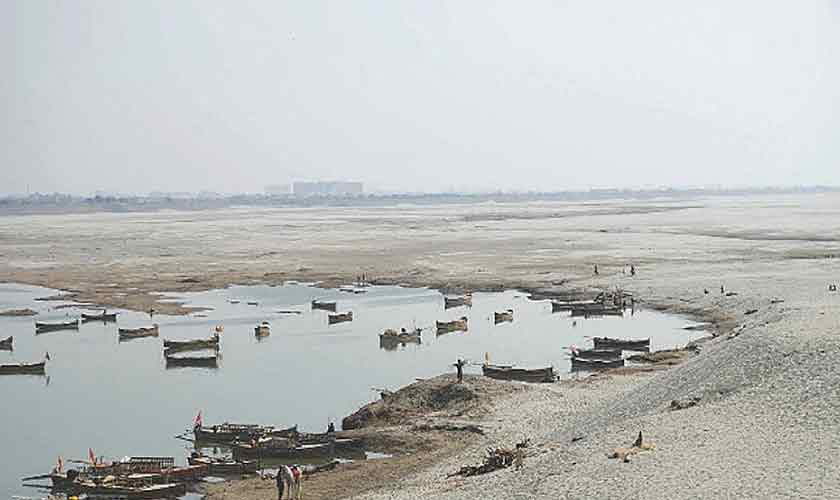
River flows in the Indus basin system are declining noticeably
| S |
ome protagonists of more dams have conjured up a fiction: that the Indus River has a large quantities of surplus water that is wastefully flowing into the sea. They are eager to see new dams to store this mythical surplus. Such ideas are being promoted without supporting water availability data. Contrary to such claims, flows in the Indus River system are declining.
Flow data during 1976-2000 and 2001-2024 reveals a disturbing pattern in the basin. An analysis of 50 years flows of eastern (Sutlej and Ravi) and western (Chenab and Jhelum) riversshows how sharply the flows in the basin are decreasing. Here are some important facts:
The average flows in western rivers at their river inflow measurement(RIM) stations were 135.6 million acre feet (MAF) during 1976-98. However, by 1999-2022 the average had decreased to 120.8 MAF. Similarly, the average annual flows in the eastern rivers tumbled from 9.35 MAF during 1976-98 to only 2.96 MAF during 1999-2022.
Flows below the Panjnad barrage — the point of confluence of three eastern rivers and the Jhelum River —marked a 65pc decline. The average annual discharges below the PanjnadBarrage dropped from 20.5 MAF in 1976-2000 to 7.5 MAF in 2001-2024.
The much trumpeted flow below Kotri barrage also saw a drastic dip. The average annual flow below Kotri Barrage was 40.7 MAF in 1976-99. It was only 14.8 MAF during 1999-2023. Worryingly 12 of the last 25 years witnessed less than 10 MAF flows below Kotri Barrage. This was the minimum flow agreed in the Water Apportionment Accord of 1991.
The frequency of floods at Guddu Barrage also depicts a declining trend. The Guddu Barrage received medium floods of over 400,000 cusecs for 23 years during 1976-2000. The frequency of such floodswitnessed a reduction to only 10 years over the last 24 years. Similarly, high flood of 500,000 cusecs declined from 20 to seven during the same years. Five super floods of over 800,000 cusecs crossed Sukkur Barrage during 1976-2000. Only one super flood was experienced in the subsequent 24 years.
Some experts continue to lament that in 2022 a large amount of water flowed below Kotri barrage, suggesting that this could have been stored by building a dam on the Indus. Lacking basic knowledge of geography of floods these ‘experts’ don’t even recognize that the 2022 flood was not a riverine flood. It was actually a torrential flood - that entered Sindh mostly from Balochistan- plus surface run off triggered by abnormal rainfall in Sindh. No dam on Indus could have stored this water as this flood that was generated mostly in lower Sindh after a breach in the MancharLake.
After meeting all commitments, flows below Kotri are likely to decrease to almost zero. Simple arithmetic leaves no doubt that the country has entered a no water surplus era.
The water requirement of new storages and diversion projects is often ignored in such claims. The ongoing projects require an estimated 12 MAF of additional water. These projects include the Bhasha dam (6.4 MAF), the Mohmand dam (0.88 MAF), the KurramTangi dam (0.9 MAF), the CRBC Lift cum Gravity project (1.19 MAF), the Kachhi canal (1.21 MAF), the Rainee canal (1.25 MAF), the Pat Feeder Extension (0.1 MAF) and the NaiGaj dam (0.16 MAF).
Afghanistan is constructing new reservoirs on Kabul River so that inflows from Kabul River are likely to diminish over the coming years.
After meeting these commitments, flowbelow Kotriis likely to decrease to almost zero. Simple arithmetic leaves little doubt that the country has entered a no water surplus era. No dam is feasible based on the two-month monsoon flows or super floods occurring once in 15-20 years.
There is a false perception among some circles that there is no life below KotriBarrage.As a result,river flows below Kotri are considered a waste. In fact, Indus flows for about 300 kilometres, crossing three districts below Kotri barrage before flowing into the sea. According to the census 2023, the three deltaic districts of Sindh (Thatta, Sujawal and Badin) have eight talukas with a population of about two million. This population owes its sustenance to ecological wellbeing of the Indus delta.
According to a report by the International Panel of Experts commissioned by the federal government, 5,000 cusecs per day and 25 MAF once in every five years is the minimum flow required below Kotri Barrage for survival of the deltaic ecosystem. However, water flow data reveals that except for few monsoon months (July to September), the desired quantum of water doesn’t cross the gates of Kotri Barrage.
Consequently, sediment transport to the delta has declined. The Indus delta used to receive 400 million tonnes of silt. This has declined to less than 100Mt per year after dams and diversions built over the last century. In 2001, the government of Sindh estimated that up to 0.5 million hectares of fertile land in the coastal districts has been degraded by seawater intrusion.
Indus delta, a pristine ecosystem, requires more freshwater flow. Water and agriculture planners of Pakistan should move their lens from engineering solutions to conservation and increased productivity of water. Some experts claim that Pakistan can increase grain production by 1.5 to 2 times with the same amount of water and land just by improving farming practices and water conservation.
The writer is a civil society professional. He can be reached atnmemon2004 @yahoo.com