


Print Story
X




After meeting Netanyahu in Washington, President Trump claims a Gaza ceasefire is ‘days away’
| M |
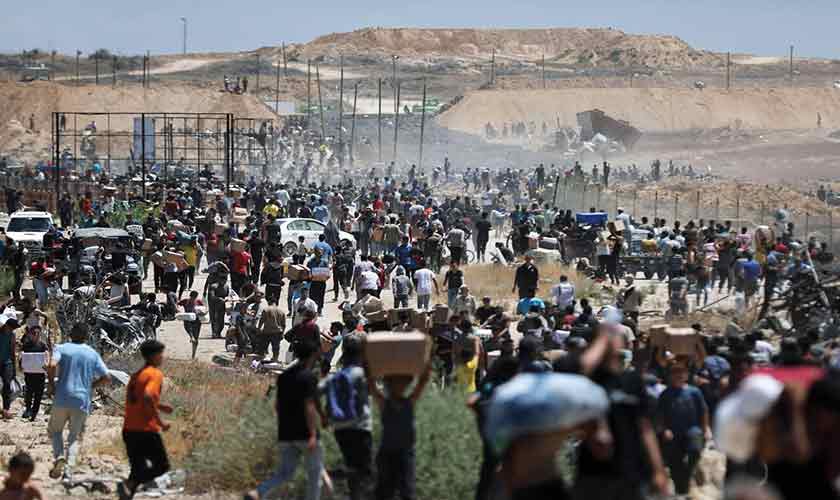
ore than 57,000 Palestinians have lost their lives in Gaza, including 17,500 children, while more than 136,000 have been injured, since October 7, 2023. These numbers, grim as they are, fail to capture the human anguish behind the statistics. Notably, since March 2024, following the breakdown of a temporary ceasefire, another 6,800 Palestinians have been killed and more than 24,000 wounded by the Israeli Defence Forces. Gaza’s hospitals, schools, parks and civic centres lie in ruins. Starvation now defines the daily struggle of over half a million people.
The deliberate targeting of refugee camps, schools, journalists and humanitarian workers constitutes a grave breach of international law, yet there is no meaningful accountability for the actions of the Zionist regime. The international community, particularly those who claim to be guardians of human rights, stands complicit in this ongoing genocidal war. Israel’s impunity is reinforced by its most powerful ally, namely, the United States. Washington continues to shield Tel Aviv diplomatically while providing sustained military and technological support to the Zionist regime. The situation in Gaza is not merely a reflection of large-scale war crimes; it also represents a profound moral and political indictment of global power structures and international institutions that have utterly failed to prevent human catastrophe not only in Gaza but also in the West Bank, where more than 1,000 Palestinians have been killed by the IDF since October 2023.
As President Trump acts erratically having pulled the US out of the Israel-Iran war, which was apparently backed by Washington and where he later declared a ceasefire his administration has recently initiated a diplomatic push to secure a 60-day ceasefire in Gaza. Ever theatrical, President Trump has claimed that he could broker a truce within a week and asserted that he would be very firm with the Israeli prime minister. The public messaging might appear promising, but rhetoric without leverage is ultimately meaningless. It is difficult to ignore the fact that the same administration continues to authorise weapons shipments to Israel while issuing carefully worded statements about civilian protection. Behind the press briefings lies the reality that the Washington’s strategic commitment to Israel consistently outweighs its rhetorical concern for human lives.
Importantly, Netanyahu’s most recent visit to Washington vividly illustrates the enduring strategic depth of US-Israel relations. It was his third trip since the war reignited an extraordinary diplomatic concession extended to few world leaders. During his visit, the Israeli prime minister attended a private dinner with President Trump and senior administration officials, where the issue of a Gaza ceasefire was reportedly central to the discussions. However, the outcomes were conspicuously vague. While references were made to a phased release of hostages and a conditional withdrawal of Israeli forces from the devastated Gaza Strip, no binding commitments emerged from the talks. Netanyahu, who is politically embattled at home and increasingly isolated on the global stage, found in Trump a familiar and accommodating ally. The latter appeared willing to shield the Israeli leader from mounting international pressure and moral censure, thus reaffirming Israel’s role as America’s strategic anchor in the Middle East.
The reality on the ground is far more alarming. Israel’s conduct in Gaza reveals not only sa military objective but also a demographic strategy aimed at forced displacement of the hapless Palestinians from their land. The imposition of a sustained blockade, the obstruction of humanitarian aid, the systematic targeting of civilian infrastructure and the killing of UN personnel point to a deliberate policy to render Gaza uninhabitable. This is not a campaign confined to weakening Hamas; it is indeed an effort to induce mass flight. The presence of tent encampments along the Egyptian border and growing speculation about a large-scale exodus illustrate a disturbing calculus, in which starvation and siege have been deployed by the IDF as instruments of war not only to dismantle resistance but also to erase the very existence of the Palestinians.
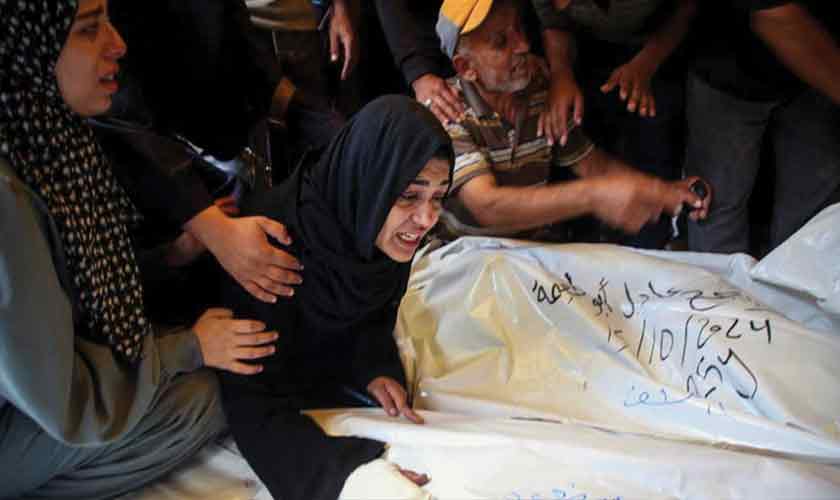
Netanyahu’s most recent visit to Washington vividly illustrates the enduring strategic depth of US-Israel relations. It was his third trip since the war reignited. The Israeli PM attended a private dinner with President Trump and senior administration officials, where the issue of a Gaza ceasefire was reportedly central to the discussions.
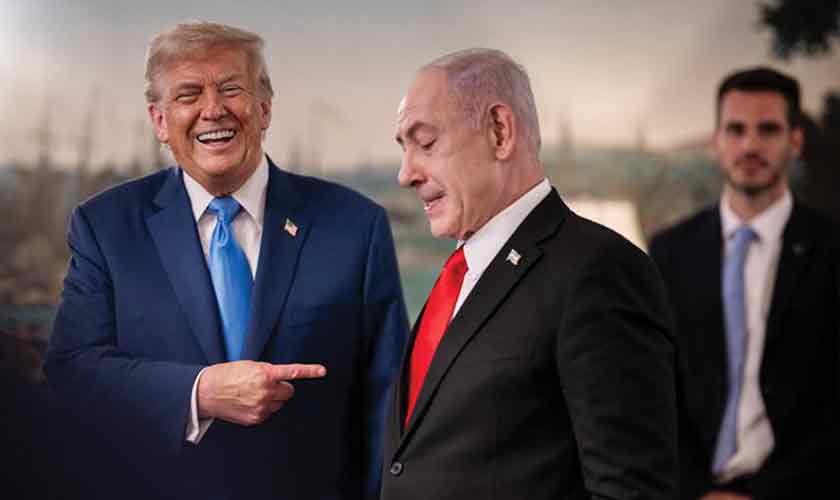
Notably, despite its military-strategic leverage over Israel, the US continues to aid the ongoing genocidal war. If the latter desires regional peace and stability, it possesses the resources to end this war overnight by suspending military assistance to the Zionist dispensation, conditioning diplomatic support on adherence to international humanitarian law and leading its UN coalition to impose a binding ceasefire in Gaza. However, such measures demand political will and public pressure. America’s domestic political environment is currently mired in partisanship and moral equivocation. Nevertheless, signs of a normative shift are re-emerging. Protests across Western capitals, university mobilisations, faculty senate resolutions and resignations from the US State Department signal deepening cracks in what was once bipartisan and unquestioned support for Israel. The surge of campus activism and public dissent from diplomats and policy experts indicates that segments of American civil society are beginning to challenge the moral basis of President Trump’s foreign policy. If this dissent matures into sustained, organised political pressure, it could catalyse a reassessment of American strategic priorities in the Middle Eastern region. However, in the absence of such momentum, ceasefire negotiations risk devolving into performative gestures that are devoid of meaningful outcomes for the war-stricken Gazans.
Importantly, if the US refrains from playing an effective role in terms of pressuring Netanyahu for an immediate and durable ceasefire, the moral responsibility for diplomatic action arguably extends to other global and regional powers. For instance, China, with its expanding influence in the Middle East, has positioned itself as an advocate of multilateralism in the recent years. Its consistent calls for a ceasefire, humanitarian access and adherence to international legal norms offer a stark contrast to Washington’s strategic ambiguity. Following its successful mediation in the Saudi-Iran rapprochement, Beijing enjoys increasing credibility among the Global South countries. This must now be leveraged in the Gaza war in terms of reflecting an active diplomatic engagement aimed at brokering de-escalation and pressuring Israel through multilateral channels. China’s economic clout, neutrality and long-term interest in regional stability equip it with the tools necessary for such a role.
Concurrently, the Arab states must move beyond rhetorical solidarity and adopt coordinated measures of meaningful pressure. As is well known, Saudi Arabia, the United Arab Emirates and Qatar, if not Egypt, wield considerable financial and diplomatic leverage, regionally. They need to condition normalisation processes, bilateral trade and intelligence sharing with Israel on an immediate cessation of hostilities. These regional states, which often claim leadership of the Islamic world and advocacy for the Palestinian cause, cannot remain passive spectators as Gaza descends into humanitarian collapse. Additionally, regional forums such as the Arab League, the Organisation of Islamic Cooperation, and platforms within the United Nations system must be actively utilised to demand accountability and to mobilise international consensus for a permanent ceasefire and a people-centered solution to this lingering conflict.
Last but not the least, the path to peace does not lie in ambiguity, incrementalism and transactional diplomacy. It requires clarity of purpose, moral courage and unified international action. The Zionist regime in Israel has demonstrated its unwillingness to halt its military campaign voluntarily. Only sustained external pressure through diplomatic isolation, economic disincentives and international legal proceedings can alter its strategic calculus. The United States clearly has the capacity but lacks the moral clarity to put an end to this genocidal war. China and the Arab countries possess regional influence, however, this needs to be translated into tangible policy demands. Besides, the global civil society must continue to amplify dissent, and demand accountability of the Zionist regime not only for the sake of Gaza but also to uphold the foundational principles of international law and human dignity.
This war will leave an indelible imprint on global consciousness. Its legacy will either reflect a moment of international complicity or one of collective moral awakening. The choice lies with us, individually and collectively, and the time to act is now.
The writer has a PhD in political science from Heidelberg University and a post-doc from UC-Berkeley. He is a DAAD, FDDI and Fulbright fellow and an associate professor. He can be reached at ejaz.bhatty@gmail.com