


Print Story
X




In an exclusive Instep interview, Syed Murad Ali shares his daring vision for horror cinema in Pakistan, taking creative risks, promotional challenges, and cultural ambitions that fuelled Deemak’s remarkable success.
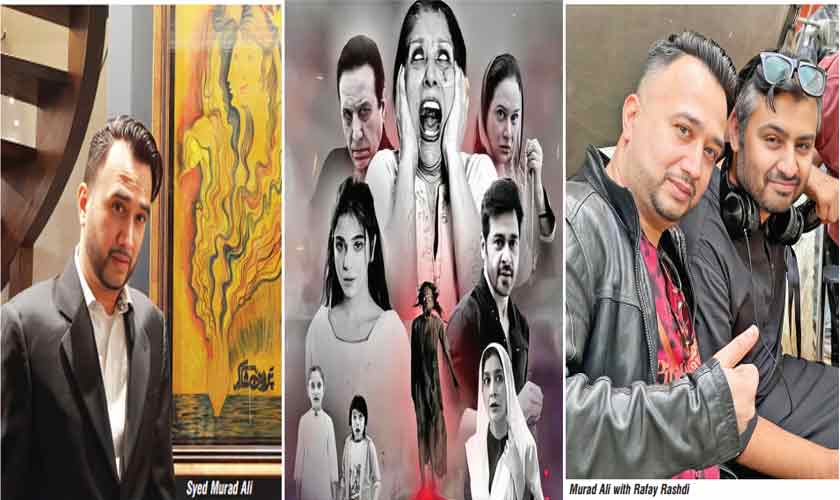
Syed Murad Ali is making remarkable strides in entertainment as the visionary producer behind the acclaimed Pakistani horror film, Deemak. It is currently entertaining audiences in bustling cinemas. Deemak is also being screened at prestigious venues, including
the Shanghai Cooperation Organization (SCO) in China where it won at an award for Best Editing.
Deemak masterfully weaves together threads of suspense and the supernatural, enriched by complex familial relationships with an undercurrent of psychological and paranormal. These facets showcase Syed Murad’s extraordinary intelligence on producing such a film.
The son of the late eminent poet Parveen Shakir, Syed Murad Ali embodies a legacy steeped in literary excellence. He is also the founder of the Parveen Shakir Foundation, committed to preserving his mother’s legacy while promoting Urdu literature and culture. This dedication reflects his deep-seated passion for the arts, revealing his belief that literature and cinema can illuminate society.
Armed with a bachelor’s degree in Mathematics and Computer Science from the University of Waterloo, Murad possesses over 20 years of software-engineering experience by working at Tesla. With a multifaceted career that marries technology, art, and cultural advocacy, Syed Murad Ali now channels his creative energies into Wah Wah Productions as CEO. Under his leadership, the company is dedicated to crafting compelling narratives. In an exclusive interview with Instep, Murad reveals the stories behind the making of his hit film, Deemak.
Instep: As a producer, what drove you to back a horror film instead of playing it safe with a rom-com for predictable returns?
Syed Murad Ali (SMA): I’ve always believed the most impactful stories come from embracing challenges. While rom-coms offer more commercial security, horror fascinates me for its primal intensity. It taps into fears uniquely.
Plus, horror is inherently cinematic—a playground for sound, atmosphere, and symbolism. With Deemak, the frights serve a purpose—they’re layered with metaphor and social commentary, reflecting decay and infestation in homes, relationships, and societies. I saw not only box-office potential but also a chance for genuine cultural resonance—and that made the gamble worthwhile.
Instep: Horror can be tough to market in Pakistan. What obstacles did you encounter promoting Deemak, and how did you overcome them?
SMA: Horror still carries a stigma here, often dismissed as cheesy or poorly crafted. Our first task was to shatter that perception, proving Deemak was elevated and rooted in psychological tension rather than cheap thrills.
Technically, local VFX capabilities still need work. We either had to build in-house expertise or collaborate with external specialists, which demanded extra time and resources.
Instep: You released the film during Eid, traditionally a time for family-friendly films. Wasn’t that a risky move?
SMA: We leaned into Dee-mak’s distinctiveness, generating buzz with atmospheric trailers and framing the narrative as a deeper allegory. Word-of-mouth proved indispensable.
Once viewers realised the film offered more than jump scares—that it combined rich storytelling with emotional depth —they embraced it.
Instep: Were you concer-ned audiences might not connect with a psychological horror?
SMA: Absolutely—we knew we were swimming against the tide. We needed to balance genre conventions with local relevance. We built tension through atmosphere and character-driven fears, avoiding reliance on gore or gimmicks. By weaving in emotional stakes around family dynamics and societal pressure, we offered familiar touchpoints amid the unsettling moments. From a production standpoint, we poured resources into mood, pacing, and visual narrative to ensure the horror felt organic.
Instep: What if Pakistani audiences rejected the psychological layers of Deemak?
SMA: That was a big concern. Psychological horror is subtle—it thrives on nuance, inner conflict, and slow-burn tension. Given the local taste for more straightforward storytelling, the risk of misunderstanding the film was real. However, we also saw an opportunity to frame the genre through a cultural lens—family dysfunction, loss, emotional repression—and make the storytelling universal and relatable.
Instep: What gave you
the confidence that Deemak would succeed despite the scepticism? Were there specific metrics that influenced your decision?
SMA: It wasn’t just instinct; we analysed the data. Internationally, horror consistently outperforms other genres, and there is a growing appetite for fresh narratives that defy convention. I saw a golden opportunity to bridge that gap. Deemak was our chance to shift perceptions—offering a film that was not just frightening—but also intelligent, emotionally resonant, and culturally grounded.
Instep: Reflecting on the outcome, was there a pivotal moment when you felt vindicated?
SMA: There were several, but one stands out. After the second night’s screenings, I slipped into a cinema just to observe. The hall was nearly packed. What struck me was the intense silence during tense scenes, the collective gasps at critical moments, and the lively discussions afterwards. People weren’t just watching; they were experiencing. That’s when I realised Deemak had truly connected with the audience
Instep: How was the condition of the entire team a day before its release?
SMA: Prior to release, uncertainties loomed large. We questioned whether audiences would appreciate layered horror. But seeing viewers linger post-credits, debating the film’s ending, brought me a sense of quiet validation. While box office figures and critical acclaim matter—and we were thankful for both—the emotional reaction from the audience really sealed the success for me.
Instep: With Deemak’s critical and commercial success, are you planning to invest in more projects in this genre, or will you explore other avenues?
SMA: I genuinely believe Deemak marks a crucial step for horror in Pakistan—not just for its success but as proof that this genre can thrive here if treated thoughtfully and with cultural authenticity. It challenged assumptions about what local audiences will engage with, marking real progress.
Instep: Is a Deemak sequel in the works?
SMA: One question I frequently hear is, “When is Deemak 2 coming? The strong demand signals that viewers aren’t merely accepting horror; they’re actively craving stories that push boundaries and provide continuity. We’re exploring Deemak 2, delving deeper into the emotional and symbolic layers of societal fear. With over 7,000 years of history dating back to the Indus Valley Civilisation, we possess an ancient legacy filled with mythology and forgotten narratives yearning for cinematic reimagining. Why can’t we create our own Gladiator or craft epics like 300 or Troy? We have just as much history and grandeur—and arguably more untapped stories—worth exploring on a grand cinematic scale. If Turkish and Indonesian horror can captivate audiences, a well-made local version can certainly rival—or surpass—them.
Instep: How do you envision the future?
SMA: There’s immense potential—not just for scares but for narratives that use fear to examine deeper societal truths. We’ve relied too heavily on borrowed tropes. Pakistan is rich in folklore, superstition, generational trauma, colonial scars, and spiritual unrest—all of which can be modernised through cinematic language. In many ways, Deemak was simply the first scream. The audience is ready; now it’s time for the industry to rise to the occasion.