Print Story
X

| E |
very Sunday, at around 8am, my mother wakes me up and tells me to get ready. Sluggishly, I change and sit in the car waiting for my mother to gather all her belongings. Where are we venturing to, you may ask? Sunday Bazaar (or itwaar bazaar).
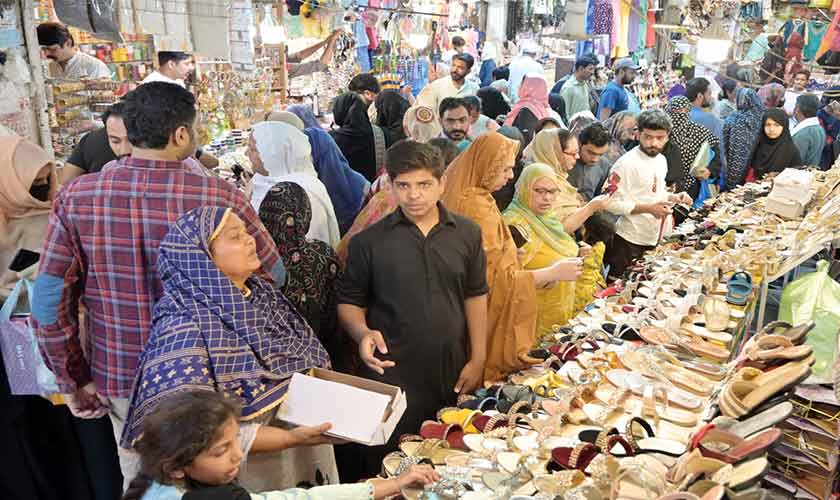
For all desi mothers of Lahore, seeking lower prices and a prospect of heatstroke in the scorching summers of Lahore, these bazaars are the perfect haven.
While the parking lot of these bazaars is often just an empty plot littered with garbage and vegetable compost, it won’t take you more than five minutes to find a spot after a heated argument with another driver. The moment you enter the bazaar, you’ll get a whiff of the aroma of vegetables and fruits that have been sitting in sacks for hours as they travel from one vendor to the other.
If you’re someone who struggles with crowds, I highly advise against visiting these bazaars. It can genuinely be a battleground at times. Just as the gates to these markets open, a myriad of people flood through — children running to the stalls that sell cheap toys or oily goodness in the form of chips, men holding baskets overflowing with produce and mothers engaging in rigorous bargaining sessions with the vendors.
But Sunday Bazaars aren’t all about food; you’ll find them brimming with a variety of knick-knacks, second-hand clothes, toys, old books and household items. The best part about them? They are sold for less than half the price displayed at urban retail stores. For anyone wondering why their mothers don’t buy fresh produce from the likes of Alfatah or Carrefour, the availability of cheaper alternatives at Sunday Bazaars is your answer.
What makes them so affordable is the fact that there are fewer intermediaries in the supply-chain flow of goods to Sunday Bazaars. After farmers have harvested their crops from rural and peri-urban areas, the produce is transported in vans, usually the night before or in the wee hours, to reach the sabzi mandi at peak buying time. Vendors then buy the required quantities and transport them to Sunday Bazaars early in the morning to set up their stalls and display the produce. Due to the high perishability of fruits and vegetables, prices tend to drop later in the day.
Beneath this lively chaos lies an often-overlooked problem: food waste.
Because Sunday Bazaars are a part of the informal economy, it is much more challenging to regulate their storage or preservation standards. For example, many vendors will keep spraying cold water on fruits and vegetables, but due to the heat of Lahore there’s not much you can do to prevent the produce from wilting or spoiling. At the end of the day, leftover produce often results from overestimated demand. Without cooling facilities this food has to be discarded.
With a Global Hunger Index of 27.9, Pakistan has a serious hunger problem. It is disheartening to witness such food waste while many people struggle to get through each day on an empty stomach.
Using cold storages is a solution, but it’s not a realistic one given that Sunday Bazaars are all about affordability. However, this does not mean there are no other ways to prevent leftover food from ending up in kilos of trash heaps by the end of the day.
Spreading awareness among the vendors can be one way to ensure that they do not overestimate demand or try to hoard due to low prices. Since waste can be used as compost and organic fertilisers, NGOs and waste management companies in Lahore will do well to collect these leftovers. Local food banks too can collect leftovers on Sunday evening and distribute those among low-income communities to prevent waste.
After a while, the sun becomes unforgiving, and the stalls begin to empty. Tired, sweaty and hungry, customers head home with bags full of edibles and small surprises. The ground is left scattered with fruit peels and plastic cups. Tomorrow, people will return because here, choice comes at a price and affordability comes with compromise.
Arfa Tiwana is a student based in Lahore. She is interested in South Asian history, politics and sociology