

Print Story
X




Every year, Pakistan witnesses deaths due to weather extremes. Poor governance has a lot to do with these tragedies
| S |
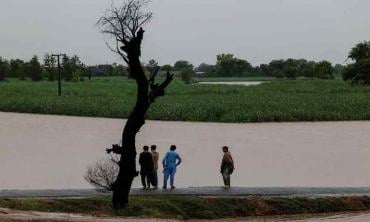
everal members of a family were recently swept away in a flash flood in Swat. This news made headlines nationally and beyond our borders. The tragic incident was recorded on camera and widely shared by some locals. According to eyewitnesses, these people waited for around two hours to be rescued, only to be swept away by the raging waters. The “live deaths” shocked the whole nation. However, this is not the first such incident. In a similar case in 2022 four brothers were stranded for hours as rescue teams failed to reach them in time.
Every year, Pakistan loses precious lives because of torrential rains, flash floods, urban flooding, glacier melting, landsliding, water scarcity and heatwaves. There is no single count or dashboard to provide the exact count of deaths due to weather extremes. Many deaths probably go unreported and unnoticed.
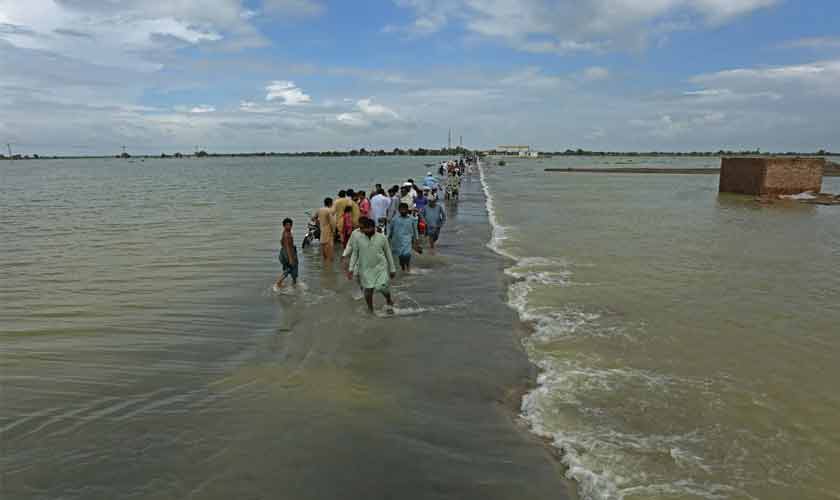
According to the National Disaster Management Authority, 57 people lost their lives between June 25 and July 1. These included 28 children, 17 men and 12 women. 99 others were injured because of monsoon rains. Most of the casualties were caused by flash floods, followed by roof collapse, drowning, lightning, electrocution and landslides. The most affected province was Khyber Pakhtunkhwa, followed by the Punjab, Sindh, Azad Kashmir and Balochistan in that order. In 2022, a combination of heavy monsoon rains and glacial melt had caused catastrophic floods that killed more than 1,700 people and caused damage estimated at over $33 billion.
Pakistan is among the most vulnerable countries when it comes to climate change. It contributes less than one percent to the global greenhouse gas emissions but faces the brunt of climate change. Can the rich countries be blamed for the weather extremes in our country? The answer is both yes and no.
Yes, because global emissions are causing glacier melting, unprecedented rainfall, prolonged and more intense heat-waves, water scarcity, sea level rise and flooding. Under the Paris Agreement, the Global North is to provide funds (loss and damage, adaptation and mitigation), capacity building and technology transfer to the Global South. But we have not seen that despite decades of promises. The priority for the Global North is not to mitigate the climate change; instead, they are investing more in fossil fuels.
But the answer can also be a ‘no.’ For how long can the Global South keep looking to the Global North for funds and support? The narrative needs to change because it is quite apparent that the Global North is not going to save anybody. Meanwhile certain governance challenges are causing avoidable hardship in Pakistan.
First and foremost among these is the illegal construction on the banks of rivers and lakes in northern areas of Pakistan. The hospitality sector is building on some of the most sensitive locations. We need to make the relevant authorities accountable regarding the approval of such projects. We have seen entire hotels being swept away in a flood and rebuilt on the same vulnerable locations. This is an absolute governance failure. Many hotels along the Swat River in Khyber Pakhtunkhwa, at the Atta-abad Lake in Gilgit Baltistan and alongside the Indus River contribute to water and air pollution. But their most significant effect is the disturbance of natural riverbanks, weakening of soil stability and erosion. This is precisely what happened in Swat, where lives were lost because encroachment on the floodplains changes the natural flow of rivers, increasing the risk of flooding downstream. Provincial governments and development authorities should be held accountable for approving such projects.
Another governance failure has been the opening of restaurants during the monsoon season. Why were these hotels and restaurants functioning after the NDMA had issued a flood warning in the area? Relatives of the affected family told the media there had been no warnings by local authorities or hotels. Tourists often come from far-off and are unaware of local climate and the NDMA warnings.
The lack of coordination among various institutions is another failure. After the 18th Amendment, some of the climate related activities are provincial governments’ responsibility. But there is lack of coordination among governments when it comes to setting priorities and goals related to climate change. Climate change initiatives are mostly political and hence, short lived. Once a government changes, projects risk abandonment. Many federal and provincial institutions have overlapping mandates and work in silos. This can sometimes result in some important tasks being ignored. The Swat tragedy showed how poor the response of rescue authorities was. The local government should have been the first responders. The Provincial Disaster Management Authority, too, is not above reproach. The NDMA is responsible for coordinating with local and various other authorities. Besides several NGOs support rescue and relief efforts following climate related disasters.
There is no formal mechanism to collect data related to losses, including non-economic losses. Every year many deaths related to climate change goes unnoticed and unregistered. There is a dire need to develop a dashboard where citizens can report deaths related to such incidents. This will help raise awareness and improve decision making in the tourism sector.
Pakistan needs to improve its governance and accountability. We have some good policies on paper that have not been fully implemented. It is time we demolished hotels constructed on riverbanks because they cause flooding and deaths. The Swat tragedy should cause our national institutions and governments to work on sustainable and responsible tourism where safety of the host community as well as the tourists is a priority. Local governments should make sure, for example, that life jackets are available around all water bodies to avoid drowning. The locals should also be trained for such eventualities to prevent loss of lives. The relevant institutions also need to work on effective communication and dissemination of early warnings for flash floods etc. During monsoons, local administrations should ensure that tourists are not allowed to enter high risk areas.
The writer is a PhD scholar at University of Vermont, US, and a visiting senior research associate at the Sustainable Development Policy Institute, Islamabad