Print Story
X




Extreme weather preparedness in Azad Jammu and Kashmir remains largely reactive
| O |
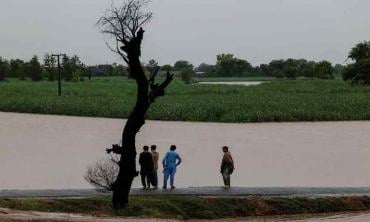
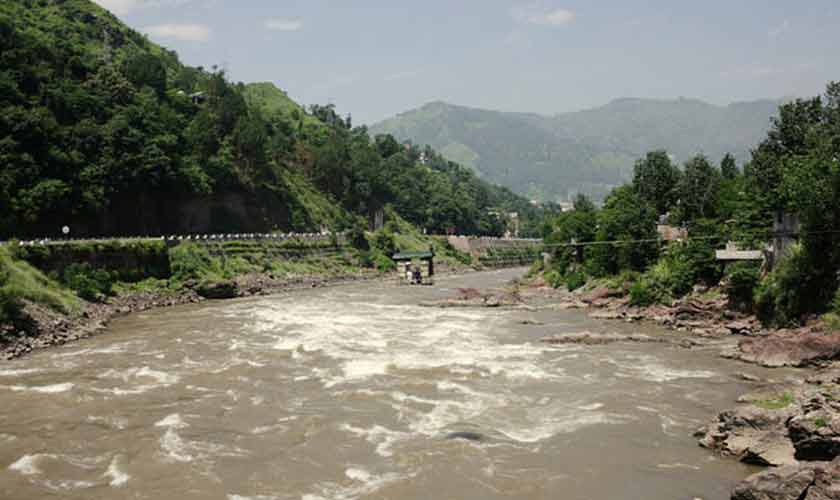
n the night of June 29, more than 120 people, including tourists, found themselves trapped in Pathayali, Garhi Dupatta, a small town located 20 kilometres from Muzaffarabad. A sudden flood and landslide blocked the road. Torrential rains caused boulders and debris to block the Manger Nala, cutting off access to the area. A catastrophe was narrowly averted through a swift, joint operation involving the State Disaster Management Authority, Rescue 1122, the Pakistan Army and local volunteers. The last stranded person was rescued at 2:30am. No casualties were reported.
While the coordinated response was commendable, the incident underscored how quickly conditions in Azad Jammu and Kashmir can spiral into a crisis and how heavily the region still relies on last-minute efforts. Despite years of warnings, extreme weather preparedness in AJK remains largely reactive. Every crisis, from the April 17 windstorm to the June flash floods, has revealed a disturbing gap between planning and on-ground protection.
The April 17 windstorm was particularly sobering. It claimed the life of a student and caused widespread damage to homes and public buildings. Like the recent flood, it was not an isolated event but part of a pattern that is growing in frequency and intensity. Reports like the Climate Change Gender Action Plan and the Climate Risk Management Frameworks lay out detailed paths to resilience. But their implementation is inconsistent, fragmented and often delayed until after disasters strike.
In anticipation of monsoon which was forecast to bring 10 to 15 percent higher-than-average rainfall, the AJK government recently launched a set of emergency measures. During a high-level meeting chaired by Prime Minister Chaudhry Anwar-ul Haq, authorities announced the establishment of a central control room, stockpiling of medicines and food in remote regions and 24/7 readiness of emergency departments. Public awareness campaigns were also planned to advise citizens against entering flood-prone zones. Additionally, relevant departments were tasked with clearing stormwater drains, monitoring river levels, arranging shelters for displaced communities and improving tourist safety.
Beyond immediate hazards, the AJK faces a slow-burning crisis of water scarcity. In Bhimber and Kotli districts declining rainfall and drying springs are forcing residents to migrate in search of water. This internal displacement—often overlooked—places new burdens on urban areas that are already under-resourced. Women and children bear the brunt of the water stress, walking long distances for daily water supply or leaving their homes altogether.
As piped water supply becomes unreliable, many communities have turned to private water tankers. While this stopgap arrangement provides temporary relief, it also creates long-term problems. The tankers are expensive, especially for low-income families, and represent a shift toward the privatisation of a basic service. Without serious investment in groundwater recharge, local water schemes and rainwater harvesting, AJK risks entrenching inequality in water access.
Nowhere is this more ironic than in Mirpur. Sitting beside the Mangla Dam, one of Pakistan’s largest water reservoirs, residents still face routine water shortages. The problem isn’t scarcity, but mismanagement. Outdated pipelines, poor distribution systems and rapid urban growth have made this water-rich city vulnerable. Proximity to resources means little without strong governance, planning and equitable delivery.
Yet amid the institutional lag and infrastructural frailty, hope is taking root through grassroots environmental campaigns. One such example is the tree plantation drive in Azad Kashmir, where over 20,000 deodar saplings have been planted under the leadership of Usman Abbasi and his team. These native trees, grown and nurtured in local nurseries, aim to revive some of the region’s most ecologically significant but degraded forest zones.
Talaab Campaign is another initiative that came from the community, not government. Over the past six months, Abbasi and his volunteers have constructed 825 water ponds across remote hill villages that now serve as crucial sources of drinking water for livestock, wildlife and villagers. These ponds have been built transparently, using modest donations and local labour. One such talaab in Union Council Rangla now supplies water to people and animals, highlighting how integrity, community ownership and grassroots leadership can fill gaps in public infrastructure.
Signs of institutional learning are beginning to emerge. Between June 23 and 27, Rescue 1122 Mirpur participated in a five-day Mass Casualty Incident simulation organised by the International Committee of the Red Cross and Pakistan Red Crescent Society. The team successfully set up an incident command system, performed triage and coordinated patient transfers.
According to Sardar Waheed Khan, the SDMA’s director general, AJK’s emergency infrastructure has several critical gaps. “Out of our ten districts, only seven have Rescue 1122 services,” he notes, highlighting that Neelum, Bagh and Haveli have no formal emergency setups. He emphasises the need to expand both Rescue 1122 and water rescue units beyond the district level, to all 32 tehsils, and ensuring localised preparedness. Khan points out that essential early warning systems and first responder training are not sustainable without consistent financial backing and political prioritisation. “Sometimes politicians don’t prioritise this because people do not demand it.”
Despite systemic constraints, the SDMA has made notable progress this year, including issuing timely advisories and leading swift rescue operations in recent emergencies. Khan says that while Rs 300 million was allocated over the last decade, Rs 700 million has been allocated this year as seed money for infrastructure and capacity building.
But the AJK needs to go beyond seasonal control rooms and emergency drills. The region must embed resilience into its core development strategy, ring-fencing funds for disaster-ready infrastructure, expanding monitoring systems, empowering local emergency committees and decentralising decision-making to ensure timely action on ground. Public participation must be strengthened through school-based drills, mock exercises and neighbourhood preparedness programmes.
In a region where a single cloudburst or landslide can destroy entire villages within minutes, planning on paper means little without matching preparation on ground.
As part of its recent awareness drives, the SDMA has issued advisories such as in Bagh after Friday prayers: “Photography near streams and water bodies is prohibited under Section 144. If you see children or the youth near the water, advise them to be cautious and call local police or Rescue 1122.” While these warnings reflect good intent, they also show how heavily the AJK’s disaster management relies on citizens’ support.
The writer is a freelance contributor from Azad Jammu and Kashmir, currently pursuing an MS in development studies at NUST, Islamabad. She can be reached at hunainmehmud101@gmail.com and on X: @hunain_mahmood