Print Story
X




Karachi’s built environment offers exceptional challenges, especially in the wake of erratic weather patterns
| A |
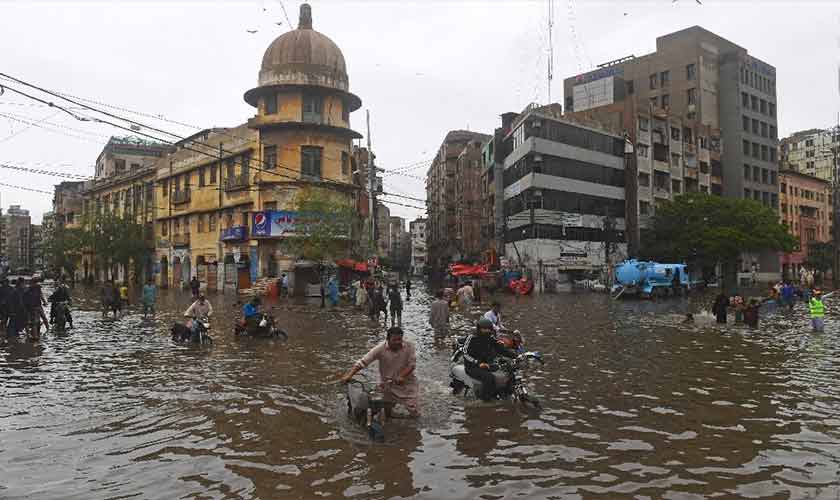
fter about 300 days, Karachi received its first spell of moderate rain in June. While most people heaved a breath of relief after having braced scorching heat, unbearable humidity and higher felt-like temperatures, the rains brought misery for others. There were deaths from electric shock after loose wires fell on people passing underneath. Leakage current in street poles became a major hazard. Drains overflowed in many neighbourhoods in North Karachi and Old Town causing mobility disruption. At scores of locations, a lack of maintenance and repair of roads and streets led to accidents. Cars, motorcycles, rickshaws and vans were stranded—many immersed in rain water gathered in puddles across the streets. Some of these challenges continue to haunt Karachi’s residents on a routine basis due to poor governance and absence of proper urban planning and prompt responses. It is important to mention that the city continued to experience mild earthquake shocks for several weeks. This may serve as a warning to improve our built environment.
The built environment of Karachi offers exceptional challenges for reform and improvement. Only a small number of buildings can be categorised as properly designed and carefully constructed. Planned neighbourhoods of the South, East and North East are examples of this. But a majority of the structures raised in the city for residential, commercial, manufacturing and other purposes have received no design and supervision input. Random choice of materials and whimsical layouts characterise most buildings. Many of our built units have long surpassed their originally stipulated life cycles and survived bonus years. Regulatory bodies have been unable to retrofit or replace them with appropriate alternatives.
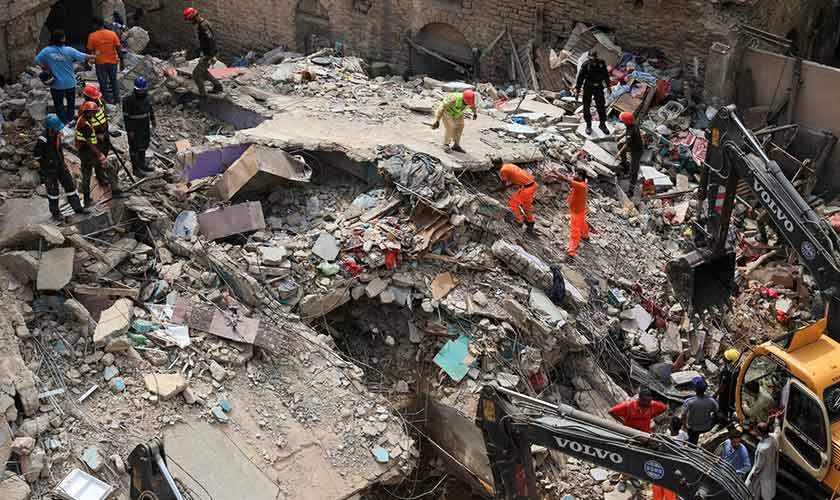
Inner city areas, including some heritage buildings, constitute this category. The current count of surveyed and notified heritage buildings in Old City quarters is over 1,500. Dozens of structures have been declared dangerous by various committees but remain occupied by tenants. On June 30, a part of an old building in Kharadar collapsed. Mercifully, there were no casualties. The occupants were safely evacuated. It may be noted that a properly worked out architectural and structural restoration strategy can transform such buildings and allied structures into safe abodes. It could also help protect and preserve depleting cultural heritage of the city.
Squatter settlements, which house about half of the city’s population, face very different issues. The inner city and southern squatters are fast rising vertically. Punjab Colony, Neelum Colony, Shah Rasool Colony, Upper and Lower Gizri and Delhi Colony are saturated with structures that comprise ground plus eight-storey accommodation, without passenger lifts. People choose to live in such conditions only to avoid the high cost of unreliable transport for the suburbs. Rising incidents of fire show the inadequacies in such contexts. Buildings have collapsed and life and property lost due to delayed responses and inability of relevant machinery to move in.
Karachi can be better served if strategic interventions are made to improve the life of its ordinary citizens. A comprehensive road repair and maintenance project should be the foremost priority. The daily experience of commuting shows that various categories of roads have been damaged.
Many accidents have been caused recently by the potholed roads. Karachi has more than 10,000 kilometres of ‘developed’ road length. About two-third of it requires major repairs. The work can be undertaken in several phases. In the first phase, the major road arteries should be repaired. The subsequent phases of the project can address repair of main roads in commercial locations, neighbourhoods and key industrial areas. Design and specification of such road repair works should be optimised so that they last longer. Lessons should be learnt from past road development programme of the KMC including the 1990s initiative that sought to construct roads that would need very little maintenance for the next twenty years. The present leadership of the KMC and Sindh Local Government Department may consider developing similar approaches for road and street rehabilitation work.
Many areas in Karachi are littered with unattended solid waste. Whether affluent neighbourhoods or low-income settlements, this issue impacts all places. Physicians and healthcare professionals say that the scale and intensity of infectious diseases has increased manifolds over the recent years, partly on account of the city’s poor waste management. Karachi produces more than 12,000 tonnes of solid waste every day.
Smart solutions are now available to deal with municipal solid waste. A waste-to-energy plant is capable of using solid waste for disposing waste and generating electricity. Such plants are common across the world. The energy can also be used to generate potable water through de-salination. The urban poor communities along coastal areas such as Hawkesbay and Mauripur can immensely benefit from such interventions. Desalination and related technologies can be strategically used to ensure water supply to all categories of consumers at affordable costs.
The writer is an academic and researcher based in Karachi