

Print Story
X




How Pakistan navigated the challenge of modern diplomacy during the recent Iran-Israel conflict
| P |
akistan managed to be Tehran’s ally in crisis as well as Washington’s partner in defence in the same week.
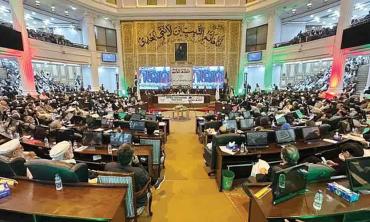
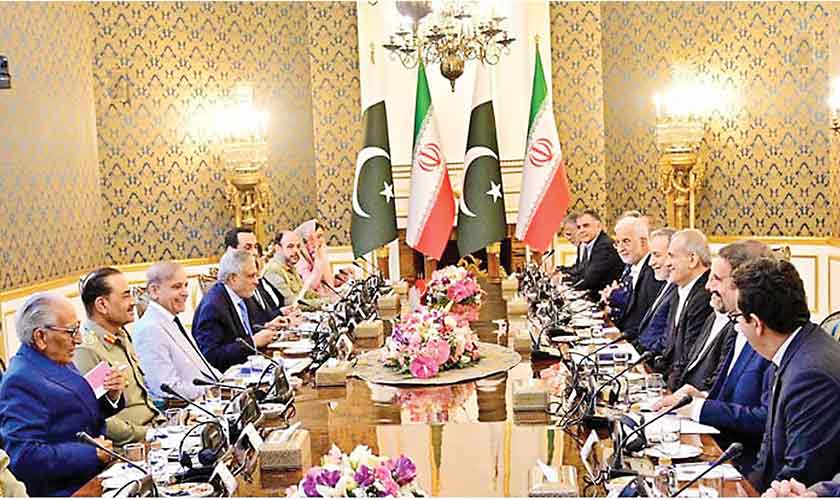
“Pakistan Tashakor, Tashakor” (Thank You Pakistan) echoed through Iran’s parliament on June 16 as lawmakers celebrated President MasoudPezeshkian’s announcement: Pakistan had pledged to stand with Iran wherever needed in its war with Israel. Behind this display of solidarity lay a $7 billion trap: Pakistan’s International Monetary Fund bailout was at risk. The IMF’s largest shareholder was about to bomb the country Pakistan had just promised to support.
On June 21, United States bombed Iranian nuclear facilities at Fordow, Natanz and Isfahan. The next day Pakistan condemned the attack as street protests broke out in Karachi.
It seems that Pakistan navigated the impossible calculus of modern diplomacy, skillfully and successfully in a world where economic survival trumps ideological solidarity. Just three days before Operation Midnight Hammer, where B-2 stealth bombers dropped bunker busters on targeted sites in Iran, there had been a meeting in the White House Cabinet Room. Field Marshal Asim Munir, the Pakistani chief of army staff,had been invited by President Donald Trump to thank him for his help in securing a ceasefire between Pakistan and India in the recent conflict. The invitation itself broke decades of precedent—no US president had ever hosted a Pakistani military chief who wasn’t also the country’s head of state.
After the meeting, President Trump mentioned that the Pakistanis “know Iran very well, better than most,“ adding that they were “not happy.” In a public address, the COAS reiterated Pakistan’s “clear and strong” support for Iran while also backing US efforts to de-escalate the situation. Behind this diplomatic maneuvering lay a crucial lifelinethat could save Pakistan from defaulting on its international financial obligations.
The lifeline is the $7 billion IMF package under its Extended Fund Facility if it meets the requirements and passes the reviews. The 37-month EFF was approved on September 25, 2024, at a time when Pakistan’s external debt stood at more than $130 billion, nearly 30 percent of it owed to China. This year, the country was able to curb inflation and slowly build foreign exchange reserves, rebuilding confidence in the economy in a challenging global environment. So far, Pakistan has received $2.1 billion out of the $7 billion.It is currently the fifth-largest IMF debtor globally with more than $6 billion owed from previous programmes.
Pakistan cannot afford to upset its key Western ally as it could singlehandedly block any IMF programme for Pakistan. At the same time, it will be difficult for Pakistan to go against its neighbour.
The alternative to the IMF package was potential economic turmoil, an import crisis, currency collapse and an almost certain default on external debt. The IMF, the world’s largest institutional creditor, is once again bailing out Pakistan; nearly doubling its reliance on the institution. With lower interest rates and longer repayment periods, this was practically the only course of action open to Pakistan as its foreign exchange reserves depleted rapidly. The IMF now holds incredible sway over Pakistan in its budget and fiscal policy, austerity reforms, external financing and basic economic survival but it is not the only power that has leverage over Pakistan.
The United States is the largest shareholder in the IMF with about a 16.5 percent voting power and the ability to veto major IMF decisions. While Pakistan owes the IMF only about 5.5 percent of more than $130 billion in total external debt, the IMF programme sets the ‘seal of approval’ that unlocks other financing. So the US leverage extends far beyond the numbers owed to the IMF.
Pakistan cannot afford to upset its key Western ally as it could single handedly block a new IMF programme for Pakistan, suspend an existing programme by voting against reviews and demand specific conditions before approving any loans. At the same time, it would be very hard for Pakistan to go against Iran, the neighbour with which it shares a 905-kilometre border, religious sentiment and energy corridor potential.
Pakistan’s diplomatic balancing was not entirely a choice;it was also an instrument of necessity. For the foreseeable future it will continue walking this diplomatic tightrope, mediating between rivals while serving its creditors.
The writer is a journalist and policy analyst based in Doha and Washington DC. He can be reached at wasaymir10@gmail.com