


Print Story
X




The law should empower the KWSC to make its operational and financial decisions
| A |
pall of gloom seemed to have descended on Karachiites when it was revealed that K-IV project will receive a sum of Rs 3.2 billion during the financial year against the Rs 40 billion requirement. This will further delay the completion of this vital water supply scheme needed to bridge the supply-demand gap.
The city needs more than 1,150 million gallons per day (mgd) but receives only 550 mgd. Then there are losses in the pipelines and other disruptions. Amid acute water shortages during June, a 36-inch diameter water pipeline burst during the Eid holidays near the University of Karachi. This aggravated the residents’ water woes. The water supply routinely collapses during the peak summer months. The concerned agencies - including the Karachi Water and Sewerage Corporation and the Karachi Metropolitan Corporation - come up with various excuses on such occasions.
It is disappointing to notice that while a broad-based water sector reform programme is in place since 2017 under the overall supervision of the international financial institutions and hefty loans have been taken, there has been no relief for the common consumer.
The Sindh High Court has suspended the appointments of the chief executive officer and chief operating officer of the KWSC. The matter remains under litigation. Yet, the water supply woes can be addressed if a few reforms are put in place without further delay.
One, the KWSC Act 2023 must be revisited. The law must empower the KWSC to make independent operational and financial decisions. This will be possible only once the financial capacity of the corporation is shored up. At present, the government of Sindh extends various types of budgetary support, including the payment of electricity bills. It goes without saying that financial dependence generates operational and functional dependence. Once the KWSC can run its affairs on its own, it will be able to break free from political tutelage.
Two, retail water distribution in the neighbourhoods and other locations is a grey area. A clandestine partnership between KWSC staff, some influential citizens and shopkeepers’ bodies, manages the supply. If this system remains intact, the water supply functions in a satisfactory manner. However, once there is a shortage or breakdown, the silent consumers bear its brunt. Water management committees must be created at the union committee. The councillors and UC chairs should have an oversight role. A robust mechanism of complaint redress must be put in place, using digital technologies.
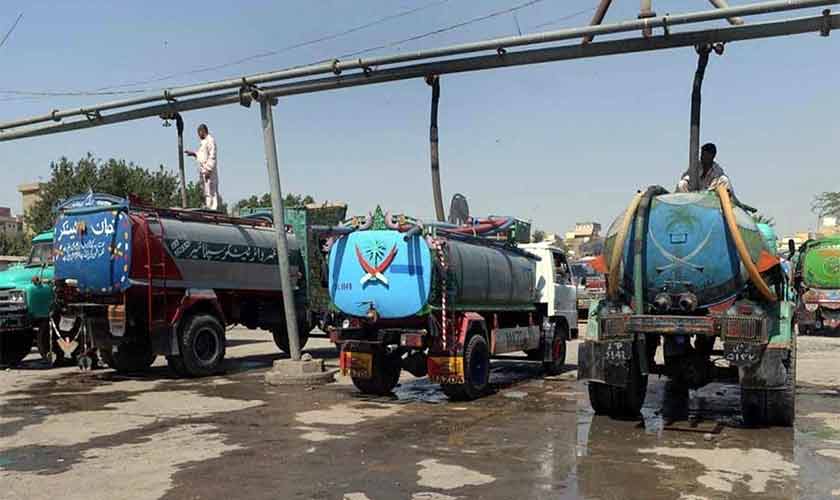
Three, emergency response in situations like pipeline failure or other calamities must be through a separate regime of water supply using dedicated tankers. The hydrant managements must be instructed to work out separate time-zones to despatch tankers in their jurisdiction to deal with emergencies on a priority basis. A portal link for facilitating such situations may be added in the existing digital dashboard of the utility.
Some improvement in recoveries has been observed. However, a higher level of efficiency is needed for the KWSC to become a financially self-sustaining organisation. The organisation must improve it popular image.
Four, water supply to squatter settlements (katchi abadis) must be made cost-effective. There is a false impression that the katchi abadi dwellers receive “free” water supply. This scribe and several other researchers have established that in many locations the katchi abadi residents end up paying a lot more to informal operators for small quantities of very poor quality water.
A need analysis should be done with the assistance of elected councillors and UC chairmen for each katchi abadi. A mechanism of appropriate scheduling and tariff fixation or spot supply to katchi abadis should follow. Third party evaluation must be undertaken to ensure that the system is working properly. Regularised katchi abadis should be brought into the fold of regular consumers to broaden the billing base of the utility.
Five, the KWSC must embark on recovery of its dues from bulk as well as retail consumers. Many public and private entities have been defaulters for years at end. With the active support of the provincial government, these matters must be settled to shore up the KWSC finances. Some improvement in recoveries has been observed but a higher level of efficiency is needed for the KWSC to become a financially self-sustaining organisation.
Six, the image of the organisation must be improved. The KWSC needs to embark on a corporate communication strategy whereby accurate information is shared with the consumers and the general public. The achievements should be highlighted and the challenges identified and addressed. This is a complex task. It can only be undertaken once the right people are appointed to lead the organisation.
Seven, the utility must initiate human resource reform as a top priority. Having suffered from intense political influences in the past, the KWSC management must transform its human resource through transparent performance assessment. Good performance and initiatives must be acknowledged and rewarded with appropriate incentives. Poor performance must be dealt with on merit. Over staffing must be dealt with under a professionally and legally valid strategy.
Eight, a comprehensive plan of water distribution upgrades at the neighbourhood level must be prepared and put into action. The oldest underserved neighbourhoods in Karachi South and West - including Lyari and Saddar - may be chosen for early rehabilitation. This will help ensure appropriate water supply for the current and future requirements of the neighbourhoods.
Nine, water use profile of non-domestic users may be studied carefully. In many industrial uses, precious potable water can be replaced with recycled water. Consultation with trade and industry bodies can identify such users and divert potable water for domestic uses.
Ten, non-essential uses (read waste) should be subject to close scrutiny. Car wash is one of those. Dry car wash and other alternatives should be promoted through a regime of incentives and enforcement.
The writer is an academic and researcher based in Karachi. He is the author of Water Supply in Karachi: Issues and Prospects published by Oxford University Press