

Print Story
X




Education Budgets of the Punjab and Sindh still miss the learning mark
| A |
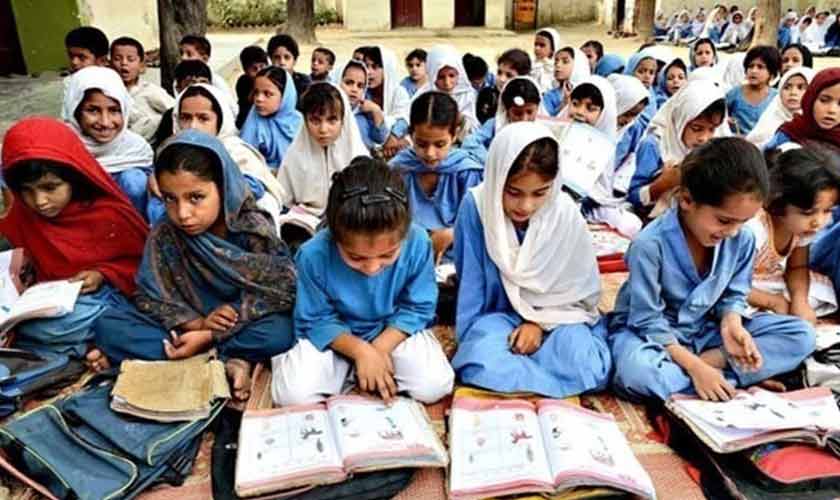
s Pakistan’s two most populous provinces unveil their education budgets for FY 2025–26, the emerging picture is one of fiscal ambition tempered by systemic constraint. The Punjab and Sindh, together home to more than 194 million people, now educate over 19 million children across 100,000+ schools. Yet, nearly 17 million children remain out of school. Critically, more than three in four children in Pakistan are unable to read a simple sentence by age 10, a grim indicator of learning poverty that casts a long shadow over any budgetary milestone. Both these governments have announced record education budgets, Rs 812 billion (17.7 per cent of Punjab’s total budget) and Rs 654 billion (17.6 per cent of Sindh’s). But the deeper question is whether these allocations are translating into equitable access, measurable learning improvements and institutional resilience.
The allocations indicate that education remains a provincial priority. Yet amid shrinking aid and fiscal constraints, the greater challenge lies not in funding levels but in how strategically resources are planned and utilised. Both these provinces meet the UNESCO Incheon benchmark of 15-20 per cent of total public spending on education, but must now deliver more, with greater precision, fiscal discipline and system-wide efficiency.
The Punjab, with a population of 134 million, has 60,127 schools with over 458,000 teachers and enrols more than 15 million children, yet 9.6 million remain out of school. Sindh, with a population of 60.3 million, operates 41,158 schools, employs 162,000 teachers and educates 4.15 million children, while 7.6 million remain out of school.
Over the past decade, both provinces have expanded education spending. Punjab’s budget has grown 334 per cent since 2010-11, reaching Rs 812 billion in 2025-26. Sindh’s has risen from Rs 109 billion in 2012-13 to Rs 654 billion. Yet, these increases have not yielded proportionate improvements in access or learning. Punjab’s education share dropped to 12 per cent in 2023-24 before recovering to 17.7 per cent.
In Sindh, the share of education budget has remained flat at around 17 per cent, highlighting a disconnect between spending growth and reform. Only 31 per cent of schools have electricity and 57 per cent have toilets. The Punjab reports 99 per cent coverage, though disparities in quality and access persist. In both provinces, limited non-salary spending weakens basic functionality, contributing to fragile learning environments despite expanding service delivery.
The Punjab has increased its education budget by 17.7 per cent in FY 2025–26, reaching Rs 812 billion. Of this, 83 percent is earmarked for recurrent expenditures and 17 per cent for development. Encouragingly, around 60 percent of the recurrent allocation is directed toward primary and secondary schooling, reflecting continued emphasis on basic education delivery. The development budget shows an intent to ease transition bottlenecks, 43 percent is earmarked for secondary and higher secondary education, reflecting investment in girls’ schooling and school upgrades.
Sindh’s education budget stands at Rs 654 billion, marking a substantial 29 per cent increase over the previous year. The split mirrors the Punjab’s, with 85 per cent of the budget allocated to recurrent costs and 15 per cent to development. Notably, Sindh’s development budget has surged by 139 per cent, driven primarily by infrastructure expansion and school rehabilitation. However, budget transparency remains a concern. Over 86 per cent of Sindh’s development allocation is categorised under the generic ‘others’ heading, covering flood recovery, decentralised management and miscellaneous maintenance.
In terms of functional classification, the Punjab allocates nearly 59 per cent of its total education budget to school education, including government institutions and low-cost private providers supported through the PEF and the PEIMA. Higher education absorbs a comparatively modest share, largely for public colleges and administrative costs.
Sindh’s budget reflects a more dispersed allocation structure: 54 per cent supports primary and secondary schooling and 19 per cent goes to higher education. The remaining 27 per cent is distributed across examination boards, teacher training institutes and autonomous bodies. This dispersal of funds across multiple institutions reflects a more decentralised approach but dilutes alignment between fiscal allocations and learning outcomes.
If the Punjab and Sindh are to reposition education as a vehicle for addressing learning poverty, advancing inclusion and enabling economic growth, they must adopt a fiscal strategy anchored in evidence, outcomes and system efficiency.
Both provinces face a common challenge: structural imbalance between recurrent and development spending; and within development budgets, persistent under-utilisation.
Despite increased development allocations in FY 2023–24, execution remained uneven. The Punjab utilised approximately 75 per cent of its development budget; Sindh spent only 65 per cent, continuing a decade-long trend of underspending. Although the Punjab has shown improved utilisation in recent years, this must be viewed against an earlier history of weak absorption. Sindh, by contrast, has consistently struggled with development execution, with low spending rates reflecting institutional bottlenecks and fragmented planning.
These figures highlight a broad governance issue: development allocations have grown faster than the system’s ability to spend them effectively. Delays in fund releases, procurement hurdles and limited project readiness at the district level continue to impede progress. In such a landscape, more money often adds to unspent balances rather than translating into results.
At the same time, the aid landscape is shifting, with traditional development assistance contracting and greater emphasis being placed on domestic resource mobilisation. As fiscal constraints intensify, the efficiency of development spending, not just its quantum, has become an essential priority for both provinces.
The Education Commission underscored a fundamental learning: more money alone won’t fix education, how it’s spent matters just as much. The Punjab and Sindh have initiated promising reforms, including school-based management and early grade interventions. Yet many remain off-budget, donor-dependent or poorly institutionalised. This weakens continuity, reduces visibility in planning cycles and limits long-term impact. Anchoring such reforms within core budgets, with clear lines and performance metrics, can bridge the gap between ambition and delivery. Strategic public spending must evolve from preserving education systems to transforming them, linking every rupee to results that actually improve learning.
The analysis highlights a structural reality: Pakistan’s education budgets are high in volume but weak in precision. Provinces tend to fund systems and institutions, rather than outcomes. Budgeting systems reward expansion in headcount and infrastructure, but not necessarily improvements in learning, inclusion or retention.
If the Punjab and Sindh are to reposition education as a vehicle for addressing learning poverty, advancing inclusion and enabling economic growth, they must adopt a fiscal strategy, anchored in evidence, outcome and system efficiency. This entails several strategic shifts. First, functional allocations should prioritise foundational learning, girls’ education and secondary transitions, using disaggregated data to guide equity-focused planning. Second, development spending needs greater discipline; project pipelines must reflect readiness, phased timelines and clear performance indicators. Linking fund releases to progress and tightening expenditure tracking can reduce delays.
Third, innovative finance, public-private partnerships, education bonds and results-based models can supplement core budgets, but require stronger regulation and institutional capacity. Fourth, embedding learning into budget structures through dedicated provisions for pedagogy, assessments and inclusion can institutionalise reform. Finally, system-wide efficiency must improve. Budgets should be performance-linked, procurement streamlined and coordination across government tiers enhanced. Spending reviews and outcome audits can ensure that investments yield measurable gains in access, equity and learning.
The education budgets of the Punjab and Sindh signal a commitment to maintain education spending amid fiscal headwinds. However, in the current climate, more money will only matter if it is spent more effectively. Without a stronger link between allocations and learning gaps and credible improvements in utilisation these budgets will remain large in size but modest in impact.
The question is no longer whether we are spending enough. It is whether we are spending wisely. To move from access to learning; from policy to performance; and from aspiration to achievement, provinces must now make education budgets not just bigger, but also smarter.
Note: This is the second in a three-part series on education financing. The first examined the federal budget; the next will focus on Khyber Pakhtunkhwa and Balochistan.
Ahmad Ali is affiliated with the Institute of Social and Policy Sciences. He can be reached at ahmadaley@gmail.com