Print Story
X




The Punjab budget for the fiscal year 2025-26 promises great development for the Lahore city, despite sizeable cuts in funds
| O |
ver the past couple of decades, Lahore has seen some mega-budget mass transit projects come to life. The recently unveiled Punjab budget for the fiscal year 2025-26 promises more. This includes transport and development projects that aim to modernise the city, improve public services and make Lahore greener and more environment-friendly.
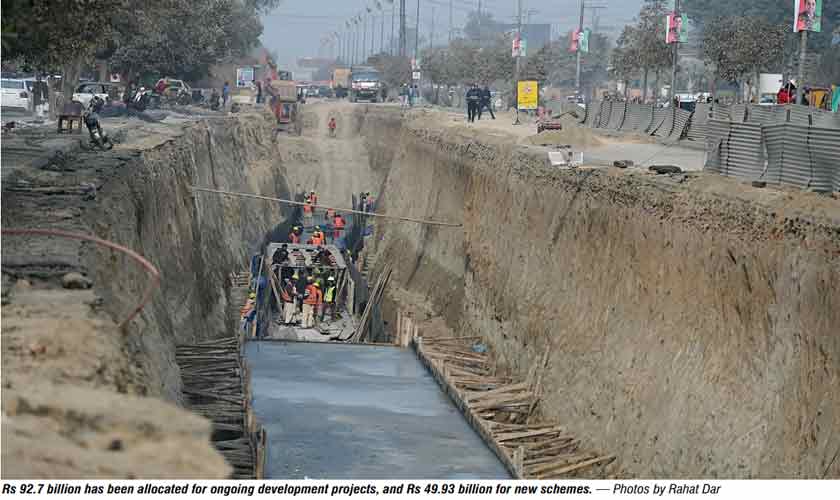
To start with, the Punjab government is going to launch six major transport projects for Lahore, at an estimated cost of over Rs 310 billion. These projects include four new extension lines for the Orange Line Metro Train; a cable car system; a 24-kilometre rail-based transit line named Yellow Line, along the Canal; and the introduction of shuttle bus service and 600 electric buses in different parts of the city. These projects are expected to complete in phases by 2026.
The Yellow Line project is being mounted on a budget of Rs 80 billion. This 24-kilometre line will run from Thokar Niaz Baig to Harbanspura. Besides, funds have been allocated for the construction of urban bus depots. These include one at Thokar (Rs 500 million), another near the City Railway Station (Rs 400 million) and electric bus depots (Rs 200 million).
The budget allocation for transport sector is Rs 85 billion. The funds will also be used for the uplift of the existing bus stands and establishing new ones across the Punjab, besides strengthening the Regional Transport Authorities and implementing digital transport governance.
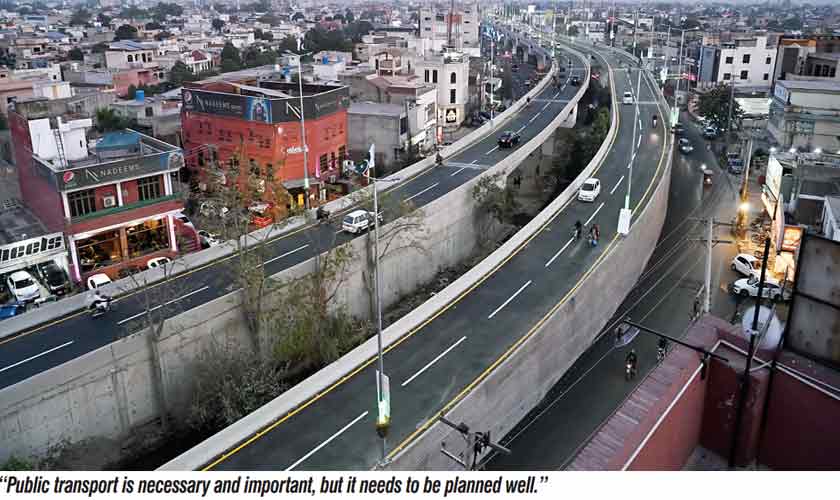
While the government’s plans for Lahore have been hailed by the general public, experts have raised concerns. Environmentalist Ahmed RafayAlam says that public transport is important but it must be planned wisely. He cites the 2006 SSTRA Study and the 2013 Lahore Urban Transport Study which suggest that the Orange Line passes through some low-density residential areas and, therefore, it may not benefit as many people as it should.
Next, Alam talks of the Lahore Canal being a heritage site, saying that any construction along the Canal is restricted under the Lahore Canal (Heritage Park) Act, 2013. He warns that if the government goes ahead with the Yellow Line project in its current form, it will have to face legal consequences. “Public transport is necessary and important, but it needs to be planned well,” he concludes.
| T |
he Punjab government has also allocated Rs 142 billion for municipal services in Lahore. Around 68 percent of this amount shall be spent on road construction, sewerage, drinking water, street lighting, sanitation, parks and greenbelts, graveyards, and waste management.
Rs 92.7 billion has been allocated for ongoing development projects and Rs 49.93 billion for new schemes. The latter include road rehabilitation in the Ravi Zone (budgeted at Rs 5.45 billion) and road construction in the Data Ganj Bakhsh Zone (Rs 2.16 billion).
Tollinton Market will get Rs 780 million for its renovation. Of these funds, Rs 100 million will be spent on its underground parking.
Rs 20 million has been allocated for various projects on The Mall and Rs 1.1 billion for the development of Raiwind. Rs 220 million has been allocated for the Dilkash Lahore project.
Aziz Bhatti Zone and nearby areas will benefit from the Rs 3.7 billion funds allocated for water supply. Rs 740 million has been allocated for sewerage restoration in Wagah Zone.
The restoration of historic walls in the Old Lahore will cost Rs 100 million. An additional Rs 2 billion has been allocated for the ongoing projects under the local government. This includes Rs 990 million for underground electric wiring in the Walled City.
Rs 120 million has been allocated for underground parking at Neela Gumbad. The Masala Market and Wazir Khan Baradari parking projects are expected to be completed with Rs 500 million in development funds.
A total of Rs 8.35 billion has been allocated for 30-odd development projects. This includes Rs 30 million to be spent on the rehabilitation of the Akbari Gate road; Rs 200 million on the restoration of Jahangir’s Tomb; another Rs 200 million on the restoration of Shalimar Gardens; Rs 680 million on the restoration of the Lahore Fort; Rs 800 million on the restoration of the historic mansions around the Fort; and Rs 50 million on Shahi (Royal) monuments in the Shahdara Complex.
Further, Rs 1.545 billion will be spent on improving digital monitoring and governance. The slum areas will benefit from the Rs 560 million funds allocated to them. UC 273 will receive Rs 60 million. A major sewerage and drainage project in Kala Shah Kaku will be executed at a cost of Rs 790 million.
Clearly, the budget places a strong premium on preserving Lahore’s historic sites. The idea is to preserve the city’s cultural heritage while also improving facilities for the tourists.
Lastly, the government plans to make Lahore a dust-free city. Noor-ul-Amin Mengal, the housing and urban development secretary, recently unveiled a plan to tighten the construction bylaws, especially for commercial buildings. He said that all neighbourhoods in Lahore will need to follow the set standards.
Although the Punjab government had asked for Rs 418 billion funds for various development projects, the Planning and Development Board approved only Rs 218 billion, cutting the proposed budget by almost half. A major cut was in the budget for the Walled City of Lahore Authority. The government had requested Rs 32 billion, but only got approval for Rs 10 billion.
Ahsan Malik is a media veteran interested in politics, consumer rights and entrepreneurship