

Print Story
X




In this collection of short stories, Balochi fiction holds a mirror to patriarchy and conflict
| Y |
ounus Hussain is widely regarded as one of the foremost short story writers in the Balochi language. He is known for enriching the landscape of regional fiction with compelling narratives and literary depth. His stories, including Not Chaste as Mahnaz; The Armless Scarecrow; Plastic Surgery; The Calm in Ocean-Deep Eyes; and The Lost Image, are cited in most discussions of Balochi literature on account of their artistic merit and narrative power.
A hallmark of Hussain’s writing is his exploration of individuals grappling with the tension between cultural expectations and the personal inner conflict. His debut anthology, Bey Dasten Sareechk (The Armless Scarecrow), captures these recurring themes with clarity and emotional resonance, offering a vivid portrait of the human condition shaped by tradition and transformation.
Younus Hussain’s stories are often rich in imagination. At times, the narrative structures are so intricate that a casual reader may find it challenging to follow the plot. The Armless Scarecrow is a case in point. At first, the reader may struggle to understand the drift of the story. Through his firm grasp of storytelling, Younus gradually offers the narrative thread to the otherwise disoriented reader. Once immersed, the reader gets carried by the story’s rhythm and emotional pull. This distinctive feature of his writing recurs throughout the anthology.
In Bada Panch Hazar (Rent: Five Thousand), Younus explores the psychological turmoil of a man caught between traditional values and carnal desire. The protagonist is drawn to two sisters, Geeta and Rani. Each of them is emotionally invested in him but does not reveal her feelings to the other. A mix of societal norms, internalised morality and a deep-rooted fear of transgression prevents him from acting on his impulses.
Struggling to reconcile his desires with the rigid expectations of tradition, he attempts to forge a path that preserves his moral integrity. This conflict between external pressures and internal longing plunges him into psychological turmoil. Through the protagonist’s account, the story explores the universal dilemma of balancing personal desire with societal expectation.
In the end, rather than breaking free from the constraints of morality, he chooses to suppress his urges, placing morals above personal fulfilment. The story poignantly captures the sacrifice, underscoring the weight of inherited moral codes on individual choice.
Taw Mahnaz Na Bay (Not Chaste like Mahnaz) stands out as one of Hussain’s most poignant short stories. Through the metaphor of a dog, the author compellingly explores the status, value, helplessness and intense desires of women in a patriarchal society.
In this narrative, the dog becomes a powerful symbol of how society views and treats women. As a girl matures, her character and integrity are subjected to scrutiny, shaped by a rigid patriarchal code of conduct. For a striking insight, the dog remarks, “That day I made a terrible mistake by bathing in the sea.” The line not only conveys the dog’s regret but also encapsulates the shame and judgment imposed on women for past actions - burdens they are often forced to carry for life.
The writer deepens this exploration through a dialogue between the protagonist and the dog, offering readers insights into the emotional turmoil experienced by women in such a society. The symbolism enriches the narrative, making it a thought-provoking and emotionally resonant read.
Set against the backdrop of Arabian sands, Zeren Chammani Aalad (The Calm in Ocean-Deep Eyes) delves into themes of love, fate, spiritual power and human frailty. The story follows Saeed Bin Hashim, a man endowed with immense spiritual power, including the ability to foresee death, and Rabia, the third wife of Aqrash, chief of the Albaj tribe. Through Saeed Bin Hashim, the story reveals a compelling contrast: he can banish evil spirits but is ultimately rendered powerless by love. His passion for Rabia costs him not only his spiritual strength but also his eyes.
Rabia embodies greed and desire. In her pursuit of enhanced beauty, she demands that Saeed Bin Hashim gift her his eyes. So consumed is she by her desire that she does not hesitate to harm others in order to fulfil it.
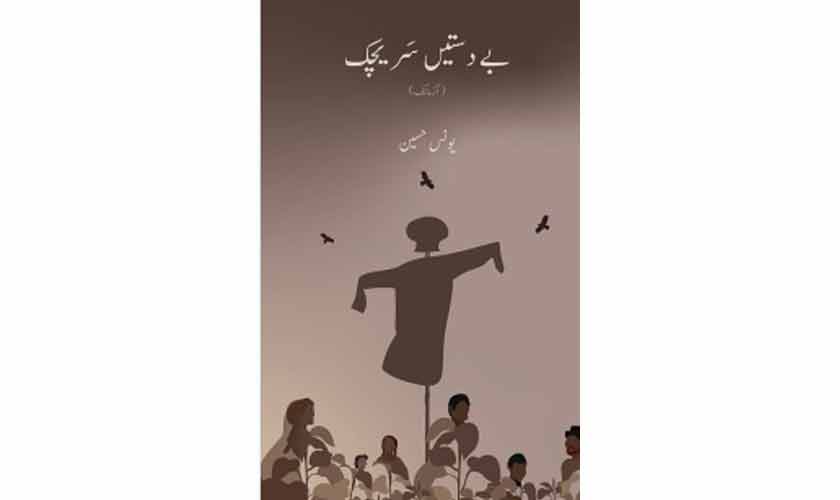
The helplessness of women and the oppression they face are powerfully portrayed in the titular story, Bey Dasten Sareechk (The Armless Scarecrow). The armless scarecrow becomes a potent symbol for a woman’s diminished social value in a male-dominated society.
A scarecrow is typically placed in fields to instil fear in birds and keep them away. However, in this story, it symbolises the suppressed woman, stripped of power and agency. The [missing] hands represent movement, freedom and creativity. The scarecrow’s armless-ness reflects how women are denied identity and autonomy, confined to a prison of perpetual fear and oppression.
Most of the short stories in this anthology explore the turmoil of individuals trapped between the constraints of societal values and their own internal conflicts and chaos.
Bey Dasten Sareechk
Author: Younus Hussain
Publisher: Balochistan Academy, Turbat
The reviewer, a Balochi author and translator, is an assistant professor at Atta Shad Degree College, Turbat. He tweets @FazalBaloch