

Print Story
X




The film stories by Khwaja Ahmad Abbas exposed the fault lines of glamour, class and creative conscience in post-independence India
| K |
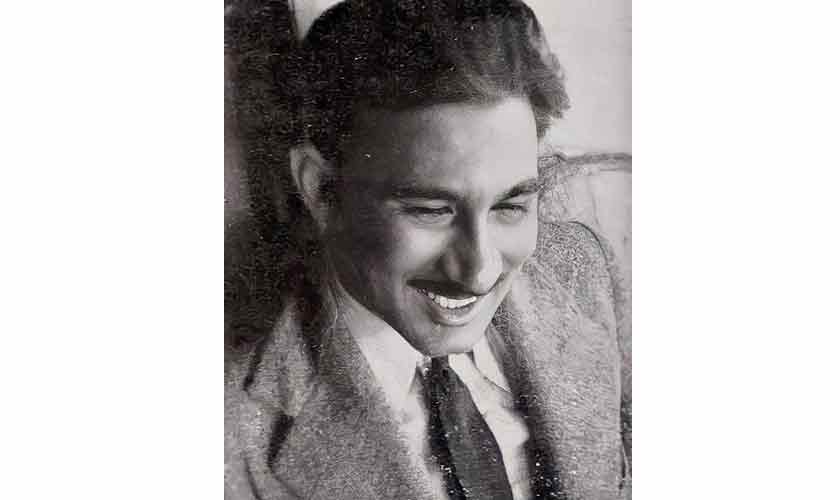
hwaja Ahmad Abbas was born on June 7, 1914, in Panipat, Haryana, to Ghulam-us-Sibtain Ansari and Masroora Khatoon, a paternal granddaughter of Maulana Altaf Hussain Hali.
He received early education at Hali Muslim High School, Qalandar Sahib branch in Panipat and received a BA from Aligarh Muslim University in 1933. This was followed by an LLB in 1935. He began his journalism career that same year, working at the National Call and The Hindustan Times. In 1940, he married Mujtabai Khatoon. She passed away in 1958.
Abbas was associated with The Bombay Chronicle from 1935 to 1947. He was the newspaper’s film critic and the editor of its Sunday edition. His involvement with the film industry began as a part-time publicist for Bombay Talkies. Later, he was affiliated with the Indian Motion Pictures Association, the Documentary Producers Association, the Film Directors Association and the Film Writers Association. He also served as president of the Indian Film Directors Association.
His first short story, Ababeel, was published by Jamia, Delhi, in 1937. In addition to short stories, he also wrote plays – including those in the collections Yeh Amrit Hai (1944) and Zubaida (1954). His reportage work includes Musafir Ki Diary and Surkh Zameen Aur Paanch Sitaray. His published novels include Inquilab, Chaar Dil Chaar Raahen, Raqs Karna Hai Agar, Distant Dream and The Walls of Glass.
His autobiography, I Am Not an Island, has been recently translated into Urdu. In 1939, his book on political science, Mussolini Fasciyat Aur Jang-i-Habsh, was released. Many of his articles, screenplays and short stories remain unpublished.
Khwaja Ahmad Abbas passed away on June 1, 1987.
Krishan Chander once wrote a significant line in the introduction to Abbas’s short-story collection Paon Mein Phool, “If some day there is a counterrevolution and the darkness of fascism surrounds us, Abbas’s writings will be the first to be burnt.” This is because Abbas expressed his views without mincing words, channelling anger at famine, poverty, deprivation, economic exploitation and political hypocrisy in a way that was sometimes seen as lacking in literary subtlety.
His first story, Ababeel, is a model of balance and moderation. Another well-regarded story, Aik Payeli Chaawal (A Pound of Rice), has been praised by many critics, but contains the sort of social and political commentary that dominates his fiction:
“A Khojan was blaming the Congress for the food shortage. A Christian woman thought it was all Gandhi’s fault. Had he not started a war with the government, there would be no restrictions. Are we Indians free of blame? Have are grain merchants and wholesalers relented on hoarding? Such people should be hanged. In some other countries, they would be. Here, they are awarded titles like Rai Bahadur and Khan Bahadur and get government contracts.”
Despite the praise it garnered, Aik Payeli Chaawal may not be Abbas’s most representative work. Barah Ghantay is even more striking. In Azadi Ka Din (Independence Day), Hameed – a recurring character in Abbas’s stories – is a disillusioned dissenter:
“I am not a Congressite or whatever. Gandhi? He’s a slave to capitalists like Birla and Tata. Jinnah and his League are landlords’ puppets. I support neither of them. The communists are communists in name only. They are all are aligned with the government.”
The most implausible moment of this story is when a prisoner, on the verge of suicide, abandons the idea upon hearing of Hitler’s defeat by Russia.
In Zaafaran Kay Phool, Abbas captured the unrest in the Kashmir valley and the helplessness around it with a measure of restraint. Charhao Utaar is cinematic in tone. Its hero finds satisfaction among the passengers in a lower-class train compartment, affirming a progressive sentiment:
“Real humans sat in this class – rough, dirty, ignorant, insolent, but human. Real, working, stumbling humans. He felt a strange affection in their love.”
Sardarji stands out as a memorable story about the Partition riots, marking a moment where Abbas’s signature sarcasm begins to flourish. The titular character is one of the most remarkable in Urdu fiction. Abbas’s characters often resist pain and degradation. The heroine in Paon Mein Phool dances on unsheathed swords; the heroine in Neeli Sari (Blue Sari) refuses to surrender after an acid attack. In Terylene Ki Patloon (The Terylene Trousers), a low-caste man, ashamed of his origins, ultimately finds the strength to embrace his community with compassion.
Characters like Sukha Ram in Do Haath and Shankar in Sonay Ki Chaar Churiyaan are tested hard but their innate humanity shines through. The middle-aged nurse in Maa prefers her own quiet world.
Abbas’s most notable writings include Sardarji, Kehtay Hain Jis Ko Ishq, Tiddi, Guriyaan, Memaar, Kaaya Kalp, Ajanta and Teen Auraten. His years in journalism and cinema had had a clear imprint on his fiction. He also brought a distinctive voice to Indian cinema. Of his film-centred stories, Kaaya Kalp is perhaps the strongest.
In stories written on a broader canvas, Kehtay Hain Jis Ko Ishq stands out. Guriyaan and Sardi Garmi explore the quiet purity of male-female relationship. Abbas’s characters retained their fighting spirit despite all frustrations. In Tiddi, a farmer tormented by locusts resists both the insects and the corrupt officials exploiting the crisis:
“So the whole swarm of locusts hasn’t been wiped out yet?” he asks.
Film was not merely as a means of livelihood to him. He saw cinema as a potent vehicle for creative expression. He approached it not as an industry, but as an artist seeking meaning, finding varied characters and stories rooted in the world around him. These are vividly described in Sonay Chandi kay butt and the most recent of Abbas’s work to be translated into English by his niece, Syeda Hameed.
That said, Abbas’s perspective did not always allow such subtlety to persist. In Maa Ka Dil, the anguish of poor working mothers results in more harm than good.
“‘It seems that your child has not died from fever. He has been poisoned. What did you give him to eat?
“Nothing, doctor except a little bit of opium to keep him quiet.’”
Filmi Tikon is technically more accomplished. In Parineeta Kumari Kay Paan, the looming tragedy in the life of a female artist is evoked effectively, even though the conclusion veers towards melodrama.
Kaaya Kalp presents a more disturbing interplay of authenticity and deception, glamour and compulsion in the film world. In one scene, an ageing actress, Rani Bala, seeks to replace herself with her daughter for an underwater shoot. However, the child cannot swim. Rain Machine reads more natural and spontaneous.
Abbas’s short story Madar-Zaad deserves to be placed alongside the most memorable work of Krishan Chander and Ahmad Nadeem Qasmi. Here, class prejudice is not only upheld by the father, who sees it as a divine decree, it is also embedded in the proverbs he invokes.
The reviewer is a Lahore-based critic, translator and researcher. He is currently translating Mumtaz Shireen’s short stories and unfinished autobiography. He may be reached at razanaeem@hotmail.com. He tweets @raza_naeem1979