

Print Story
X




It is important to use history to fight misinformation in the age of social media
| T |
he stigmatisation of a particular province or ethnicity reflects a lack of historical awareness. Such prejudice and ignorance are often manifest during significant national events. In the latest instance, campaigns that promote disparaging narratives against Punjabis were initiated on the social media. This behaviour was especially prominent during the recent Pak-India tensions. While a ceasefire between the two nuclear-armed neighbours provided relief to billions of people in the region and globally, certain people took to social media to propagate a campaign against the Punjab, referencing a contentious statement attributed to Khan Abdul Wali Khan: “Pakistan will never fight a war that will be fought in the Punjab.”
As a person who values education, liberal ideals and progressive thought, I find it disheartening to resort to a binary categorisation of Punjabis and non-Punjabis. Such a division is regrettable. I have consistently criticised such simplistic thinking and its reductive consequences. However, I feel compelled to adopt this binary framework in this specific context, as such assertions evoke shame and frustration.
The pertinent questions are: 1) Will Pakistan abstain from engaging in a conflict anticipated in the Punjab? and 2) Did Khan Abdul Wali Khan ever make such a statement?
I firmly believe that the straightforward answer to the second question is “No.” The statement is controversial and its attribution to Khan Abdul Wali Khan raises substantial doubt. It seems unlikely that such a prominent Pashtun leader say so, particularly in light of his known declaration that the final battle against the establishment will take place in the Punjab.
Despite thorough research, I have been unable to find any credible references or documentation to substantiate this claim. I request all researchers and scholars that any evidence or relevant documents they have in this regard be shared. Your insights will be greatly appreciated and could significantly enhance the national discourse.
The plain answer to the first question is: Pakistan is committed to responding to aggression or attacks on any of its provinces or territories, including the Punjab. This has been illustrated by the recent escalation between India and Pakistan, where Pakistan responded to Indian aggression from within the Punjab. Historically, Pakistan has fought its wars in the Punjab. This was the case in the 1947 conflict that followed the announcement of the June 3 plan and the Indo-Pak war of 1965.
In the first instance, the British Punjab was divided into two distinct regions: Charrhda Punjab (now part of India) and the Lehnda Punjab (present-day Pakistani Punjab). This monumental partition established an international border and triggered profound regional demographic shifts. It is estimated that between 10 and 15 million people undertook perilous journeys, migrating across the newly delineated boundary in search of safety, security and a sense of belonging. Tragically, this tumultuous period was marked by widespread violence. It is estimated that between 1 and 2 million lives were lost in the chaos. The plight of vulnerable individuals further compounded the horror, as around 75,000 women endured unimaginable suffering and sexual violence, forever altering the social fabric of the region.
Historically, Pakistan has fought its wars in the Punjab. This was the case in the 1947 conflict that followed the announcement of the June 3 plan and the Indo-Pak war of 1965.
None of the other federating units and regions, including the partitioned East Bengal, experienced similar devastation as the Punjab. Sindh, Balochistan and the North West Frontier Province (now Khyber Pakhtunkhwa) were largely unaffected throughout the transition. Although both Bengal and the Punjab underwent partition, the experience of the two regions was significantly different. Bengal was notably spared the chaos and suffering that beset the Punjab. The partition of Bengal was marked by an unexpected sense of order and systematic transition, facilitating a relatively smooth migration, in stark contrast to the tragic upheaval that characterised the pre-ponement of the partition in the Punjab.
In the second instance, the resilient spirit of the Punjab rose to confront the war imposed on the country with remarkable bravery, fully aware that the conflict would bring with it a wave of suffering and devastation. Leaving the extensive history of the Indo-Pak war of 1965, I will highlight two significant battlefields that have made a lasting impact in the annals of history: the fierce and relentless Battle of Chawinda, set against the backdrop of Sialkot and the harrowing confrontation at the Battle of Ichogil Bund in Lahore.
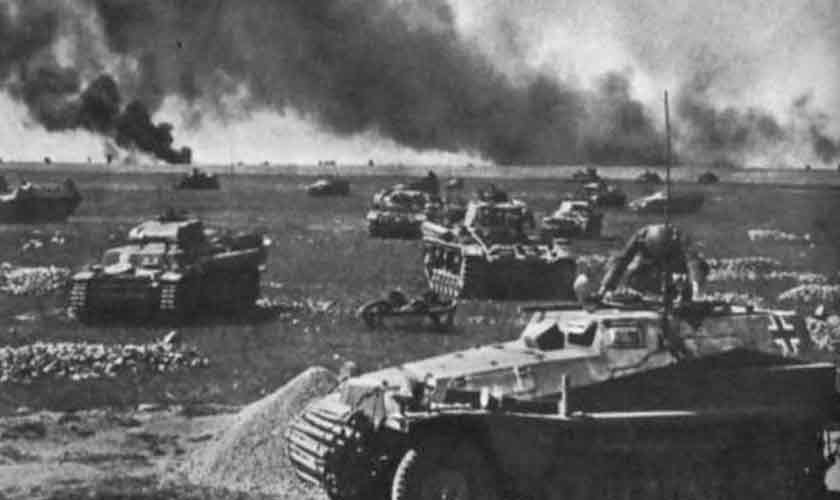
The Battle of Chawinda was one of the most significant engagements between Pakistan and India during the Indo-Pakistani War of 1965, forming an integral part of the broader Sialkot campaign. It is noted for its scale and intensity, being one of the most significant tank battles in military history. It has been compared to the Battle of Kursk between the Soviet Union and Nazi Germany during World War II. The conflict at Chawinda involved a substantial display of armoured warfare, with numerous tanks participating in combat across challenging terrain, reflecting the engagement’s strategic importance and high stakes.
The Battle of Ichogil Bund, also called the Battle of Bambanwala-Ravi-Bedian Canal, occurred from September 22 to 23. The Indian army was led by Lt Col BK Satyan, commanding the 9th Battalion Madras Regiment. Notably, this engagement occurred after a ceasefire had been agreed on September 22. The fighting began around midnight and lasted approximately two and a half hours. Reports indicate that Indian soldiers had crossed the canal on September 16 and were situated about six miles from Lahore. According to a spokesman for Pakistan, Indian advance along the Harike-Burki Road was repelled in the backdrop of 13 major offensives launched by India on this front.
To conclude, contrary to the controversial statement, Pakistan has fought its wars on the land of the Punjab. The province and its people have not expressed a grievance towards other provinces or regions in this regard.
Mazhar Abbas, author of The Aftermath of the Bangladesh Liberation War of 1971: Enduring Impact (Routledge, 2024), has a PhD in history from Shanghai University.
He is a lecturer at GCU, Faisalabad, and a research fellow at PIDE, Islamabad. He can be contacted at mazharabbasgondal87@gmail.com. His X-handle is @MazharGondal87