Print Story
X

| Z |
ahid Ali never imagined he could have a heart attack at 39. Fit-looking on the outside but hiding a growing bulge around his waist, he thought his occasional breathlessness was just stress. But one evening, the chest pain became unbearable. Rushed to the National Institute of Cardiovascular Diseases in Karachi, he underwent emergency angioplasty. The doctors had grim news: it wasn’t just genetics—it was belly fat that had triggered his near-fatal episode.
Zahid’s case is not an exception. It’s the shape of a crisis that’s spreading rapidly and silently across Pakistan. Health experts are now calling obesity a national emergency and the “mother of all non-communicable diseases.” It is not just stealing breath—it is stealing vitality, fertility and lives.
In recent surveys, over 80 per cent of Pakistani adults have been found with unhealthy waistlines. At least 70 per cent of the adult population is now obese, and this isn’t just about looks. Doctors say this is a malnutrition crisis too—people are consuming more but getting sicker. The abundance of calories, sugar and fat is paired with a dangerous lack of essential nutrients, leading to what doctors call “obese malnourishment.”
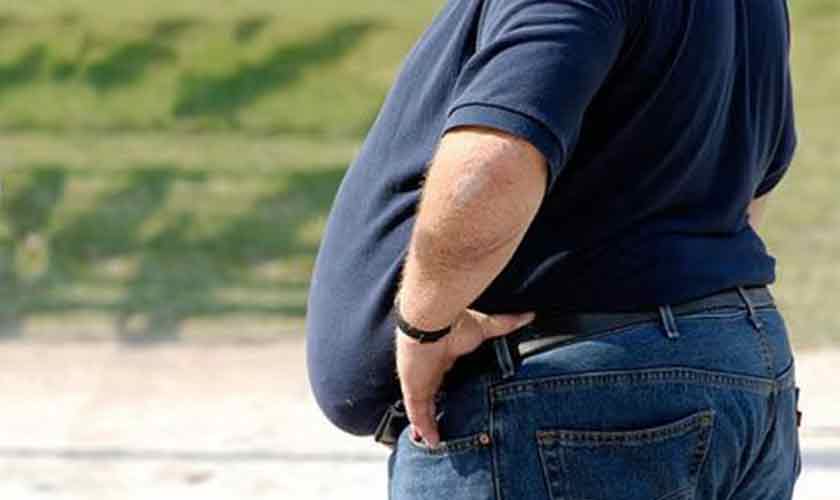
What’s most alarming is how this wave is silently destroying men’s health. According to endocrinologists, belly fat in men functions like a hormone factory, converting testosterone into estrogen through an enzyme called aromatase. As a result, many men begin to lose their masculinity—libido fades, energy crashes, muscles weaken, and in extreme cases, men develop breast-like tissue, a condition called gynecomastia.
Dr Khurram Shehzad, a senior endocrinologist, explains that testosterone deficiency caused by obesity is not only affecting sexual performance but also leading to mood disorders, sleep disruption and early aging. “Many men don’t even know their hormones are collapsing,” he said. “They come in only after their marriages, careers or mental health begins to suffer.”
He highlighted the case of Ahmed Ali, a 45-year-old man who saw his life unravel as his waistline expanded. “I was always tired, I couldn’t focus, and intimacy became a problem,” Ahmed said. “It destroyed my confidence.”
The hormonal impact of belly fat is particularly dangerous in South Asian men, who are genetically more sensitive to central obesity than Western populations. A waist circumference of over 90 cm (35 inches) is considered high-risk for metabolic syndrome and heart disease in Asian men. Many in Pakistan are far beyond that threshold.
But men aren’t the only victims. Obesity is now causing infertility in women, with hormonal imbalances from excessive fat leading to ovulation problems, menstrual irregularities and polycystic ovary syndrome.
Dr Asma Ahmed of Aga Khan University Hospital warns, “Weight gain in women is often at the root of reproductive problems. We are seeing this more and more, especially in younger women.” She cited alarming statistics: 35 per cent of women and 28 per cent of children in Pakistan are obese. “We are raising a generation that is both overfed and undernourished,” she added.
Health experts are now calling obesity a national emergency and the “mother of all non-communicable diseases.” It is not just stealing breath—it is stealing vitality, fertility and lives.
The link between childhood obesity and future health issues is becoming more evident. Sedentary lifestyles, screen addiction, fast food and sugary beverages are contributing to an epidemic of malnourished obesity in children. These children face a lifetime risk of diabetes, hypertension, liver disease and early heart attacks.
At a recent health screening camp held at the Karachi Press Club in collaboration with Getz Pharma, 77 per cent of journalists and their families were found to be overweight or obese. Even more shockingly, 26 percent were newly diagnosed diabetics, and many had elevated blood pressure and cholesterol levels, without ever having had a medical check-up before.
Dr Nazish Butt from Jinnah Postgraduate Medical Centre said, “We’ve normalised being unhealthy. Most people don’t exercise, eat poorly and don’t even know their blood pressure or sugar levels. In Karachi especially, we’re seeing obesity in women and children at levels we’ve never seen before.”
Solutions do exist, but they require commitment. Health experts say that even a 5 to 10 kg weight loss can dramatically improve hormone levels and metabolic health. Basic steps like daily brisk walking, a high-protein diet, cutting sugar, reducing screen time, stress control and 7-8 hours of sleep can help reverse early damage.
For those who struggle, medications now offer new hope. Semaglutide, a GLP-1 receptor agonist, has shown dramatic weight loss results by reducing appetite, improving insulin sensitivity and promoting fat burning. Originally developed for diabetes, it’s now being used worldwide for obesity management under the names Ozempic and Wegovy. Other drugs like liraglutide and tirzepatide are also being prescribed, but experts stress that they must be used under proper medical supervision.
Dr Wajiha Javed from Getz Pharma explained that the Pak Sehat survey, the country’s first mini-Framingham study, found over 80 per cent of Pakistani women and 70 per cent of men to be obese. She added that 50 per cent of adults are hypertensive, and one in every three is diabetic. “People are living with silent diseases they don’t even know they have,” she said. Getz Pharma has launched a three-year initiative called PREACH to tackle this crisis through early screening, community engagement, and healthcare worker training.
Renowned endocrinologist Prof Abbas Raza added that obesity must be treated like any other chronic disease. “It’s not just willpower or laziness. It’s a metabolic condition that needs medical attention,” he said. “We have effective tools—lifestyle changes, medicines, even surgery—but they need to be applied early and properly.”
Pakistan is now at a crossroads. Obesity is not just about size—it’s about survival. It is attacking the nation’s strength, its families, its children and its future. The belly fat that many joke about is no joke. It’s an organ that is poisoning the body from within. And unless we act now—change how we eat, how we move and how we think about health—this slow, silent killer will continue to steal more than just years. It will steal who we are.
The writer is an investigative reporter, currently covering health, science, environment and water issues for The News International