Print Story
X

| L |
ooking back on my childhood as the daughter of a Pakistan Air Force officer, I am overcome with a vivid flood of memories. I remember the pink bougainvillaea draped over colonial-style homes; the early morning race to PAF schools - a stone’s throw away; and the uniformed ‘uncles’ and ‘aunties’ carrying their briefcases with a quiet, unwavering stoicism. There was a rhythm to our lives — cycling late into the night with friends, attending base concerts and sharing dinners under a sky that seemed always safe. We lived in a world shaped by duty, camaraderie and an abiding trust in our parents who wore the uniform with dignity and pride.
But along with that calm came an early acquaintance with the harsh realities of war and loss. Patriotism was not just encouraged; it was instilled into our very being. Schools glorified martyrdom. The idea of dying for one’s country was painted as the ultimate honour. Textbooks exalted the valour of war heroes; morning assemblies echoed with national songs and rehearsed fervour. I remember how students who failed to recite the national anthem with sufficient zeal were punished by our physical training instructor. The zeal was a patriotic duty.
There was a constant possibility of loss. I witnessed a few martyrdoms firsthand. Young officers were killed in service, leaving behind widows with young children or babies still in the womb. These women were celebrated as the brave widows of shaheeds. Their grief was buried beneath solemn ceremonies and exalted narratives. But what lingered with me were the quiet moments afterwards—the children growing up without that calming, uniformed presence; the unspoken struggles that followed after the medals were placed in glass frames.
At school, we were taught to view India as the perpetual enemy. This sometimes extended to the distinction between Indian and Hindu being either blurred or entirely absent. Religious diversity within Pakistan was barely acknowledged, let alone explored. This only deepened our collective ignorance. It took me years—perhaps decades—to untangle the narratives I had absorbed. Only much later did I begin to understand how state institutions, educational frameworks and media played their part in building a simplistic “us vs them” mentality.
The contradiction was particularly stark when I revisited Article 22(1) of the constitution, which promises that “no person attending an educational institution shall be required to receive religious instruction, participate in religious ceremonies, or attend religious worship other than their own.” My own schooling did not reflect this promise. We all studied from a singular curriculum, often filled with messages—both subtle and overt—of exclusion and otherisation.
These thoughts returned with renewed urgency during the recent spike in tensions between India and Pakistan, triggered by India’s ‘response’ to the Pahalgam attack in Kashmir. As jingoistic rhetoric took over Indian media channels and war cries echoed across their public discourse, I was jolted into reflection. The once secular India that I used to reference respectfully in my political science lectures now felt like a relic of the past. What was most disheartening was the transformation of renowned journalists, celebrities and well-reputed academics turning bloodthirsty. Those who used to speak about anti-colonialism in India turned a blind eye to the entire discourse.
Pakistan’s education system, too, has undergone transformations—and not always for the better. In 2020, under the Pakistan Tehreek-i-Insaf government, a single national curriculum (SNC) was introduced with the promise of standardising education and providing equitable opportunities to all children. It was framed as a step toward fulfilling Sustainable Development Goal 4 on inclusive and equitable quality education, alongside lifelong learning opportunities for all. Initially praised by some as a move toward educational equity, the SNC quickly drew criticism upon implementation.
We must equip our children with critical thinking, empathy and historical nuance—not dogma, division and hollow patriotism.
The Centre for Social Justice Pakistan conducted a two-year review of the SNC—renamed the National Curriculum of Pakistan in 2023 under the new government. The study, What are we Teaching at School- A Content Review of School Textbooks Published by Federal and Provincial Textbook Boards in Pakistan, was published and launched recently at the Sanjh Literary Festival 2025. The findings were deeply troubling. The textbooks feature religious content even in compulsory subjects like Urdu and general knowledge. This obviously places religious minorities in a difficult position, especially when it comes to being tested on this material in the examination. The portrayal of minorities, women and persons with disabilities is either tokenistic or regressive. There is also glorification of war and a skewed and selective portrayal of history.
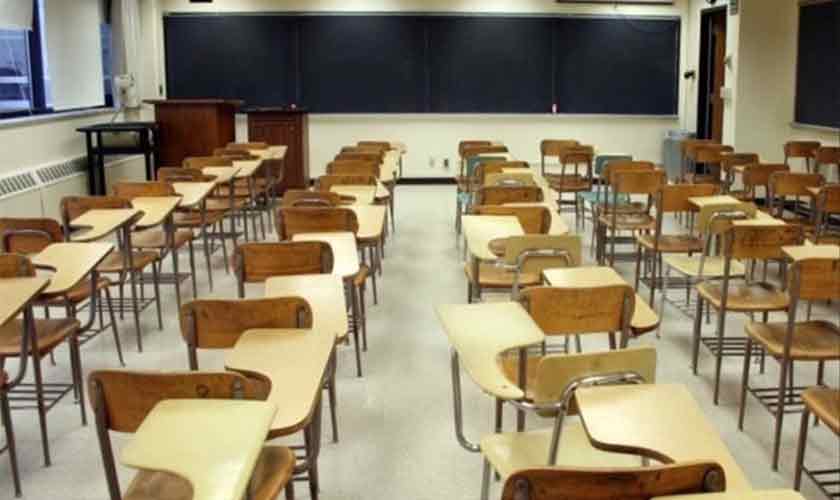
As someone who contributed to this research, I could not ignore how little had changed since my own school days. Despite constitutional commitments to diversity and religious freedom, our classrooms still reflect majoritarian ideologies. While the most blatant forms of hate speech may have diminished, the undertones of gender-based exclusion, glorification of militarism and religious centrality persist. These lessons, absorbed early and reinforced repeatedly, shape the worldviews of our future citizens.
The dangers of this are all too real. India’s current trajectory under Prime Minister Modi’s Hindutva-driven leadership offers a sobering mirror. The religious conflation I once grappled with in my childhood—equating Indian identity with Hinduism—is now being reproduced across the border. Majoritarian politics and the politicisation of faith are turning nations into echo chambers of nationalism and religious superiority and education systems have played a critical role in legitimising this shift. The media has played a vile role alongside.
What gives me hope, however, is how Pakistanis responded to the latest India-Pakistan standoff. Unlike the vitriol seen in Indian media, the Pakistani response was largely restrained. From the state exercising restraint to celebrities voicing mature calls for peace and youth-driven memes advocating humour over hatred, there was a clear shift in tone. After decades of war, maybe we now understand that war is not romantic. This moment of unity, however brief and elusive, was telling.
Our internal fractures remain. Religious minorities in Pakistan continue to live on the margins, often denied equal recognition and respect. This treatment raises difficult questions that many of us are not ready to seek answers to. Not only that but as a feminist, it was troubling to see how women were again used as a tool on both sides of the border to prove each nation’s might. Rape based ‘humour,’ memes undermining each other’s female celebrities and using overly emotional symbolism in naming military operations is a testament to this.
These hierarchies that stem from our behavioural patterns of othering based on gender, religion and nationality must be dismantled. Inclusion begins not at state ceremonies but in classrooms and communities. If we are to truly honour our diverse national fabric, we must celebrate all who contribute to Pakistan’s growth—regardless of their religion, ethnicity or gender. The binaries of “us” versus “them” must be broken down, not just politically but also emotionally and socially.
The international media praised Pakistan for its restraint during the conflict. This moment must not be reduced to diplomatic success alone. We must use this opportunity to reflect inward. Beyond the applause lie deeper questions: What are we teaching our children? What kind of nation are we preparing them to inherit? If we seek a peaceful, pluralistic future, it must begin with what we place in our textbooks. We must equip our children with critical thinking, empathy and historical nuance—not dogma, division and hollow patriotism. No child should ever feel like a second-class citizen in their own country. No student should grow up believing that identity is singular or that faith determines loyalty.
Pride must be tempered with introspection. And if we want a Pakistan that thrives in peace and equity, that introspection must begin in our classrooms.
Faaria Khan is a lecturer at LUMS and a human rights researcher. Her research interests lie at the intersection of education, gender and South Asian minorities.