


Print Story
X




There was a scramble in the rank and file of Bollywood directors to claim Sindoor as a title. What does that say?
| A |
war in South Asia is not only fought on the battlefields but also waged on screens. For decades, Bollywood has played an increasingly strategic role in shaping public perception, often under the garb of patriotic storytelling. Over the past few years, Indian cinema has aggressively leaned into militaristic and nationalist storytelling, pushing a growing number of hyper-patriotic films that glorify India’s military while vilifying Pakistan. Indian war films such as Border, Uri: The Surgical Strike, Shershaah, The Kashmir Files, Article 370, Mission Majnu and, more recently, the rush to claim Operation Sindoor as a cinematic title, illustrate how entertainment becomes a tool for reinforcing and influencing nationalism — often by sacrificing truth. Whether dealing with historic wars or covert operations, these films distort facts to reinforce a singular narrative of Indian heroism and Pakistani hostility.
The catch is that major global streaming platforms like Netflix readily host these films, giving them instant international reach and uncritical legitimacy.
More recently, the announcement of a film based on Operation Sindoor, a military strike that occurred only days before the film’s title was claimed, marks a disturbing trend where Bollywood races to capitalise on conflict. This is not just filmmaking; it is agenda-setting through art. These productions do not wait for facts to be ascertained or diplomacy to work. Instead, they rush to script victories on screen even before the dust has settled in the battlefield. The result is a powerful blend of myth-making and messaging that leaves little room for nuance — or truth.
Indian cinema, with its immense global reach, does not shy away from turning military conflicts into box-office blockbusters. These productions rely heavily on A-list actors, grandiose action sequences and emotionally manipulative scripts. The goal is to cultivate a one-dimensional narrative: India, the righteous victim-turned-hero; Pakistan, the perennial aggressor. This portrayal appeals to domestic audiences hungry for national pride, especially in times of political tension.
Take Uri: The Surgical Strike (2019) — a commercial and critical success that dramatises the 2016 Indian military strikes inside Pakistan-administered Kashmir. The film was a carefully constructed morale booster, released amidst rising nationalist fervour. “How’s the josh?” — the film’s catchphrase — became a rallying cry, even echoed by politicians, including the Indian prime minister. Little room was left for critical inquiry into the operation itself, or the broader geopolitical context.
Similarly, Shershaah (2021) painted a deeply emotive portrait of Captain Vikram Batra, a Kargil War hero. While the film was effective in humanising Indian soldiers, it predictably omitted the complexities of the war and presented Pakistan as a faceless enemy, a recurring trope in Bollywood. Pakistani soldiers, where shown, were either silent targets or caricatured villains. Such binary portrayal sanitises war, erases losses and fuels antagonism.
This rush to fictionalise real-time conflict is not innocent. It risks inflaming public opinion, misrepresenting complex histories and reducing human loss to cinematic spectacle.
The reality on and off the battlefield is often different. Pakistan, despite repeated provocations, has historically shown restraint in its military conduct. In many past conflicts it acted in self defence and not as an aggressor. It is India that tends to escalate through swift strikes or cross-border operations, only to be met with resistance that challenges its intended outcomes. What follows is a familiar cycle: once India fails to achieve its objectives or suffers a diplomatic setback, a film is announced. It is designed not to reflect truth, but to rewrite it.
This is where Bollywood steps in, not as a witness to history, but as a revisionist force. These films are not made to document victories or defeats; they are produced to redeem narrative losses. After failing to break Pakistan’s defence or global standing, the next best thing is to dominate the cinematic front. Films like Mission Sindoor or Phantom are less about actual triumph and more about mass psychological conditioning. They offer Indian audiences a version of events that soothes national ego, casting defeats or stalemates as moral victories. In doing so, they function as cinematic brainwashing - carefully curated, aggressively marketed and emotionally potent.
In contrast, Pakistan’s approach to narrating its side of the conflict has been remarkably restrained. It is often underfunded. Instead of blockbusters with billion-rupee budgets, Pakistan has relied on documentaries, short films and educational productions to reflect on military history. The tone is generally somber and objective.
For example, Pakistani productions on the 1965 and 1971 wars have tended to focus on defence rather than aggression, highlighting sacrifice over spectacle. Documentaries produced by the Inter-Services Public Relations or Pakistan Television often feature interviews with war veterans, historical footage and have a sense of introspection missing from Bollywood’s glossy portrayals. These narratives attempt to preserve dignity, not dramatics.
But documentaries do not sell like movies. While Pakistan’s attempts at cinematic storytelling, like Waar (2013) or Yalghaar (2017), have done well at the domestic box office, they pale in comparison to Bollywood’s juggernaut. Pakistani films, even the nationalistic ones, tend to have a more complex moral framework, often highlighting internal corruption or terrorism as much as external threats.
The announcement of Operation Sindoor as a Bollywood project, while tensions were still high following a deadly attack in Pahalgam, raised serious ethical concerns. Within days of the military strike, Indian filmmakers raced to register titles like Mission Sindoor and Sindoor: The Revenge. The imagery used — such as a woman applying sindoor before war — is symbolically powerful but dangerously reductive. It blurs the line between fact and fiction, war and mythology.
This rush to fictionalise conflict is not innocent. It risks inflaming public opinion, misrepresenting complex histories and reducing human loss to cinematic spectacle. The use of big stars only compounds this, giving the illusion of authenticity to what are essentially dramatised political statements.
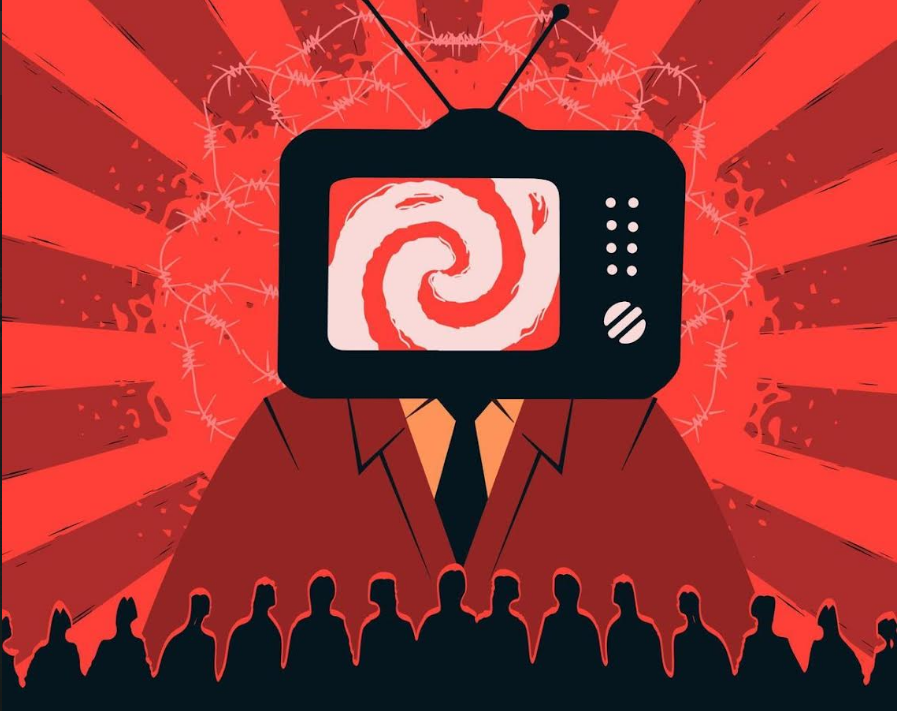
In the age of digital media, where information can be distorted within seconds, such films do more than entertain — they influence. The danger lies in how audiences, especially the youth, view history through the lens of nationalism, devoid of nuance or empathy for the ‘other side.’ When warfare becomes a genre and truth optional, what is left with is not art, but propaganda.
Both countries have, at times, weaponised narrative. But the sheer scale, frequency and polish of Bollywood’s war films give India an upper hand in the global perception battle. The power has been rarely used responsibly. Once truth is replaced by triumphal fiction, peace is a necessary casualty.
The writer has a degree in psychology with a minor in mass communication. She can be reached at ukmaryam2@gmail.com