

Print Story
X




Sectarian violence is taking its cruel toll on girls’ education in Kurrum
| K |
omal Dildar, a final-year BSc student at Shaheed Benazir Bhutto Women’s University in Peshawar, was determined to speak out. When she learnt that Blue Veins, a non-government organisation, was holding a Girls’ Education Summit titled Challenges, Opportunities and the Way Forward in Kurram district on April 30 in Peshawar, she immediately reached out to her teachers to request that she be allowed to deliver a speech at the event. She saw this is an opportunity to voice the concerns of most girls in her violence-hit hometown.
“I wanted to speak from my heart, to highlight the suffering and hardships of the girls in Upper Kurram,” Komal told The News on Sunday (TNS). “The topic is sensitive and the time was short; I couldn’t do justice to what we’re going through.”
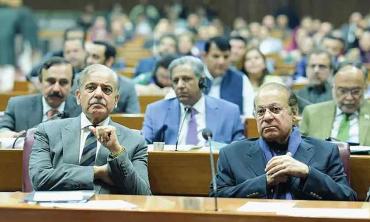
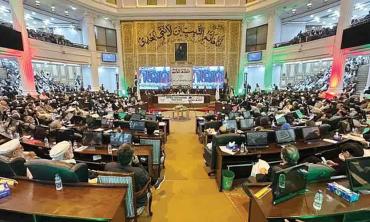
The summit was also attended by the elementary and secondary education minister, parliamentarians, government officials, human rights activists and civil society representatives. While Komal was praised for her speech, she says, she left the stage with a heavy heart. The moment had passed, and her people’s pain had not been fully communicated.
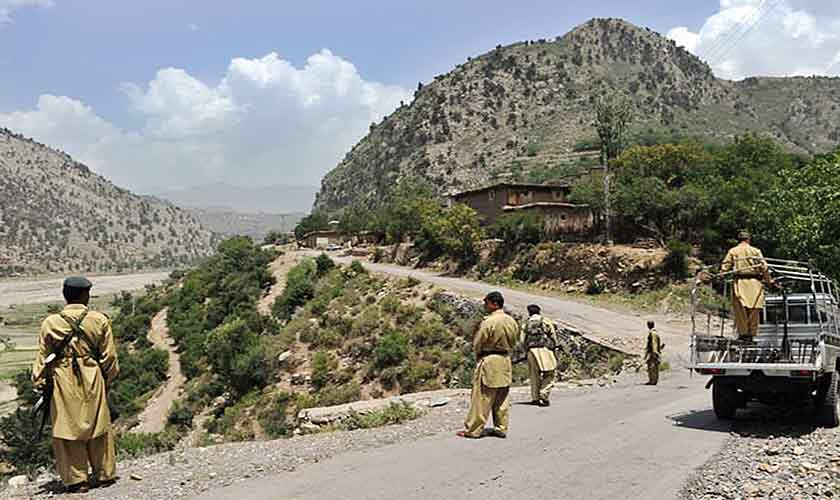
Education in Kurram has suffered deeply during 2020-25. The on-going sectarian violence has created an environment of fear. There has been much displacement and destruction. Many schools have been bombed and abandoned. Many families have lost loved ones and many students, especially girls, have dropped out. In some remote villages, girls are now forbidden from leaving home. Elsewhere, parents are too afraid or too poor to send their daughters to school.
“There are schools,” Rabia says, “but parents can’t afford the transport and the roads are too dangerous any way. Even if they manage to go, how can these students focus when they live in constant fear?”
According the KP Education Management Information System Annual Statistical Report, 2022, Kurram has 588 government schools. 35 percent of those are for girls. Currently, 92 of the schools are closed or partially dysfunctional. Eighteen are located in areas too dangerous to access. Twelve have had no teachers since 2021. Twenty-six schools have not reopened since the 2010 conflict. Nine have no students left. Fourteen were closed because no staff was ever posted there. Ten schools were shut due to the displacement of residents from the areas they were to serve.
The situation is alarming. Kurram already had a low literacy rate, with only 14.2 percent of girls being literate, compared to the provincial average of 36.8 percent. The ongoing violence has made things much worse.
The only direct route connecting Parachinar to Peshawar is Thall Road, which has been closed to all traffic for more than 10 months, turning into what locals call a “death corridor.” Several incidents of sectarian violence have turned the highway into a battlefield.
Human rights activist Irshad Ali describes the scale of the crisis. “This isn’t just a road closure,” he says. “It’s a blockade. Due to the lack of oxygen supply, more than 15 newborns died in a single day. Pregnant women died trying to reach hospitals. Cancer patients missed critical check-ups and passed away waiting. Students missed KPPSC, EATA, MBBS and university entrance exams. Dreams are being buried in silence.”
Sania, a senior teacher at a government high school in Parachinar, says that every time fighting erupts, schools become deserted. “As soon as sectarian tensions rise, attendance drops,” she says. “Parents are scared. They won’t send their children out… not even for education.”She says that due to the long road closure, the dropout rate in some areas has risen by over 75 percent.
Sundas a student at the SBBWU is one of around 20 girls from Parachinar who have not seen their families in seven months. She is living at a university hostel in Peshawar. “Many of us couldn’t go home even for Eid,” she says. “While others celebrated the Feast with their families, we cried in our hostel rooms.”
Thousands of students from Upper Kurram are living in hostels in Peshawar and Islamabad. For many, phone calls are their only connection to home. When violence escalates, mobile networks too are shut down, severing even that fragile thread.
Komal Dildar belongs to a financially struggling family. Her father has been unwell and most of her educational expenses are covered by community support.
“When the violence worsened and roads were blocked, the support stopped,” she says. “They are suffering. There’s no food, no fuel, no medicine. Petrol costs between Rs 1,200 and Rs 1,500 a litre. How can they help us?”
Laila Haider, another SBBWU student, adds, “We barely talk to our families. When the networks are down, we feel completely cut off. Mentally, we are exhausted.” During Eid holidays, Laila recalls, “All the girls [in the hostel] were crying. It was supposed to be a time of joy, but we felt abandoned.”
Shahida, a student living in a private hostel, recalled a terrifying experience: “As Eid approached, the hostel owner told us it was closing, and we had to return home. I panicked. I couldn’t go back so where I came from.”
Minister for Elementary and Secondary Education Faisal Khan Tarakai acknowledged the dire situation. “Girls’ education in Kurram is a top priority for us,” he said. “But due to security concerns, access has been limited. Once the security situation improves, we will ensure that all facilities are provided in the affected areas.”
He added, “I receive daily updates from the region. I have instructed the department to prioritise support for Kurram as soon as peace is restored.” Qamar Naseem, the programme coordinator at Blue Veins, stressed that this was not just a law and order issue but also a human rights emergency. “Thousands of children, especially girls, are cut off from education and opportunity,” he said. “We need a coordinated government response to restore peace, re-open schools and introduce alternative learning methods. This is urgent. We must act with compassion and commitment to protect the future of an entire generation.”
For students like Rabia, the struggle continues not only to do well at exams but also to survive, stay connected and keep hope alive. “My family members were recently attacked [and killed] when they tried to return home from Peshawar,” she says quietly. “I was the top student in my class. But after hearing about their deaths, I couldn’t focus. I lost my mental peace.” Komal says, “We just want peace. We want access to education. We want to live like the rest of Pakistan.”
Gulshan Asad is a freelance writer based in Upper Kurram, Parachinar