

Print Story
X




Line of Control heats up after India accuses Pakistan of supporting terrorism in Occupied Kashmir
| G |
unfire once again shattered the uneasy calm along the Line of Control in Jammu and Kashmir, as Pakistan and India exchanged volleys in the wake of the deadly Pahalgam attack that killed 26 civilians.
India has once again accused Pakistan of having a hand in the attack without sharing any evidence. Pakistan has strongly denied involvement and Prime Minister Shahbaz Sharif has called for a transparent investigation into the incident.
The fierce skirmishes that have followed the killings have reignited fears of a broader escalation. The United Nations has called for restraint by both nuclear-armed neighbours, urging dialogue over confrontation. For the people living along the LoC, familiar with the sound of artillery fire and the sight of abandoned homes, the latest violence is a grim reminder of their precarious existence.
Following the Pahalgam incident, Indian authorities have also launched sweeping operations across Indian-occupied Kashmir. In a move that drew international attention, homes of many suspected of participation in the attack were demolished. Nearly 1,500 people, including students and political activists have been detained. The collective punishment has intensified the psychological toll on Kashmiri people, compounding decades of political suffocation, and eroded civil liberties.
While border skirmishes are not new, the scale of the current crackdown inside Kashmir reflects the fragile political backdrop. The region has been on edge since India’s 2019 abrogation of Articles 370 and 35A, which stripped Jammu and Kashmir of its special constitutional status. Promises of economic revival have failed to materialise. Tighter security measures and a shrinking democratic space have fueled discontent, especially among the youth. As a result, the current crackdown feels less like a response to a singular incident and more like an extension of a deeper, unresolved political conflict.
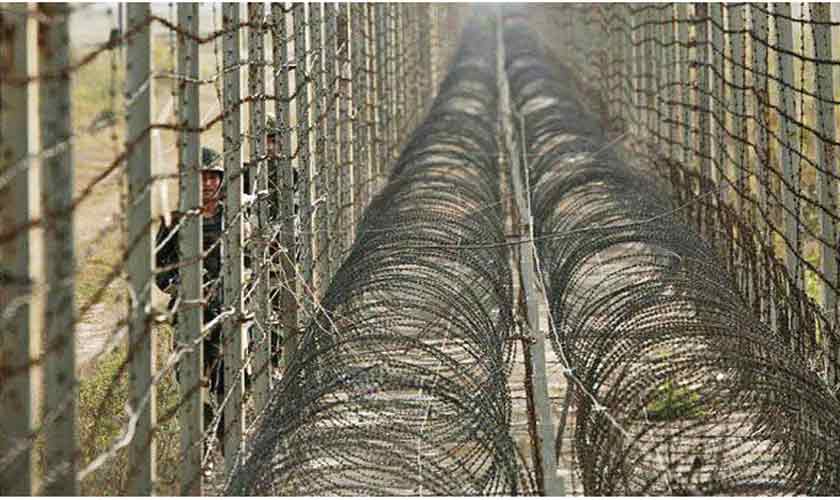
Historically, the LoC, stretching over 740 kilometres, has been a flashpoint for conflict. A ceasefire agreement reaffirmed in February 2021 had brought rare relief, allowing border villages to stabilise, schools to reopen, farming to resume and local trade to grow. That fragile understanding is now at risk of unraveling. Cross-border firing in recent days has forced thousands to flee their villages once again, abandoning farms and livelihoods as shells fall dangerously close to civilian areas.
Human rights organisations, including the UN High Commissioner for Human Rights, have expressed concern over the escalating situation. The large-scale detentions, the punitive demolition of homes and the suspension of civil liberties are all under international scrutiny. The UN’s call for restraint reflects concern that South Asia’s most volatile fault line may once again slide toward confrontation, with Kashmiri civilians, as always, suffering the most.
The recent escalation of tensions following the Pahalgam attack has exacerbated the already dire situation for border communities. Farmers living near the LoC, particularly in areas like Poonch, Havali and Leepa, are under immense pressure to harvest crops as soon as possible. Reports indicate that farmers, especially those with small landholdings, are struggling with limited resources. Their problems have been compounded by the fear of potential conflict, leaving many in a state of uncertainty. For these communities, the cycle of violence and military posturing has long been a reality. Their suffering underscores the urgent need for solutions that prioritise human security over geopolitical tensions. The ongoing instability continues to devastate lives and livelihoods.
The renewed violence following the Pahalgam attack has laid bare the unsustainable nature of a purely security-driven approach. Crackdowns and cross-border exchanges may serve short-term objectives but do little to address the root causes of the conflict.
In Neelum and Leepa Valleys, many families have started cleaning and repairing underground bunkers built years ago to survive shelling. Roadside walls, originally constructed to protect schoolchildren and travelers from cross-border fire, are a stark reminder of the lingering threat. “We’ve lived through this before,” says one resident, “but every time it starts again, the fear feels new.”
An unexpected surge in the River Jhelum water level has also caused panic among the residents of Muzaffarabad and surrounding areas. Some people fear that the surge might be a result of India releasing unusual amounts of water from upstream headworks. Although officials from Pakistan’s Met Department and the Water and Power Development Authority have reassured the public, confirming that the rise in water levels is typical for this time of year due to snowmelt and rainfall, anxiety remains. The river’s flow, recorded at 47,000 cusecs, just below the threshold for a low flood, had many residents watching anxiously for debris, a common indicator of dangerous flood conditions. The unexpected surge caused temporary flooding, and while no major damage was reported, authorities continue to urge caution as the situation unfolds.
What’s unfolding now is a stark contrast to the cautious optimism that followed the 2021 ceasefire. For four years, there was a semblance of normalcy, with children walking to school without fear; small businesses picking up; and farmers returning to their fields. That chapter, however brief, showed what peace could look like. The recent spiral in tensions risks undoing those gains.
Even low-intensity hostility in a militarised and politically charged environment can snowball rapidly, especially when fueled by populist rhetoric or internal political pressure. History has shown that what starts as a minor skirmish can escalate into a crisis with devastating consequences, particularly for those who live closest to the LoC, whose lives are most fragile and whose voices are least heard.
The renewed violence following the Pahalgam attack has laid bare the unsustainable nature of a purely security-driven approach. Crackdowns and cross-border exchanges may serve short-term objectives but do little to address the root causes of the conflict. Instead, they entrench mistrust, perpetuate cycles of trauma and make meaningful political engagement ever more elusive.
If there is any lesson to be drawn from the current crisis, it is this: peace cannot be built on the silence of guns alone. It must be rooted in justice, dialogue and the inclusion of Kashmiri voices. Both India and Pakistan must recognise that sustainable peace will remain out of reach as long as Kashmiris are treated as spectators in determining their future.
Unless the political core of the issue is addressed, the ceasefires will remain fragile and every pause in shelling will merely be the silence before another upheaval.
The writer is a freelance contributor from Azad Jammu and Kashmir, currently pursuing an MS in development studies at NUST, Islamabad. She can be reached at hunainmehmud101@gmail.com and on X: @hunain_mahmood