Print Story
X




Bhutto government’s 1972 labour policy was arguably the most refined and comprehensive in Pakistan’s history
| A |
welfare state is responsible for enacting policies that make governance participatory, egalitarian and judicious, especially for the workers. In his presidential address to the All India Muslim League in Delhi on April 24, 1943, Muhammad Ali Jinnah said: “Here I should like to give a warning to the landlords and capitalists who have flourished at our expense by a system which is so vicious, which is so wicked, and which makes them so selfish that it is difficult to reason with them.”
Ironically, the ‘system’ has survived and the state in Pakistan and its governance process generate policies suited to securing the interests of the oligarchs, plutocrats and corporations. Labour policies were announced in 1955, 1959, 1969, 1972, 2002 and 2018 (Sindh only). Embellished as these were with rhetoric of labour rights, egalitarian fairness, enhancement of democracy and implementation of rights, their promises were not redeemed.
At the time of India’s partition, Karachi’s population was nearly 300,000. It increased ten-fold within two decades reaching around 3 million. Other than the immigrants from India, the vast majority of Karachi’s new residents were labourers and peasants who had been rendered jobless and surplus due to rapidly mechanising agrarian economy. Some came to Karachi to work for the burgeoning textile industry. Others, relatively young, moved to urban areas to secure admission in colleges and universities in the hope of upward mobility in white-collar professions after completing education.
The ruthless pursuit of industrialisation as a plank of modernisation by Gen Ayub Khan made egalitarianism the principal concern of social and political groups in Pakistan during 1960s. Regional and class disparities were widening at breakneck speed and the regime was not allowing political activities. The demands for equality became a rallying cry of the people during the anti-Ayub movement which was pioneered by the labour movements demanding labour rights and land redistribution since in those days, power and rights were embodied in land ownership. Remarkably, a major landowner, Zulfikar Ali Bhutto came to represent and embody the politics of equality.
Bhutto’s politics galvanised the poor and the working class. The Poples Party’s promise of providing basic amenities to everyone in the country by raising the slogan roti, kapra aur makan, maang raha hai har insaan (food, clothes and a house, is everyone’s demand) was a socialist idea that went deeper than material gain. It added to politics of emancipatory possibilities in a deeply hierarchical society. It forged ahead agentive aspect of the politics of the people for the self-conception of the people in political terms as well as self-conscious collective action.
The PPP routed establishment’s allies in the 1970 elections. Its relentless campaign amalgamated ‘the poor’ and ‘the people’ and brought the oppressed and the exploited to the centre of the political discourse. Bhutto conducted this discourse in highly emotive language and style, signaling empathy, respect and a promise of social recognition for the poor and the workers. Although he was criticizing a regime he had served earlier as a minister, he managed to persuade the electorate that he would serve the poor.
Following the heady 1970s, Okara emerged as an important industrialised town in one of the canal colony districts. The canal colonies were characterised by less inequality in the size of land-holding as compared to other areas of the country. Being home to one of the largest cotton mills in the country, Okara was a significant venue for the politics of the left and mobilisation of workers’ movements. It was due to these characteristics that Okara became a stronghold of PPP politics and home of jiyalas (steadfast political workers). Later, the workers and labourers staged exemplary resistance against the seizure of Okara Farms land by the military.
With the imposition of martial law by Gen Zia-ul Haq, the new regime banned political associations and trade unions. The workers were deprived of many rights; strikes and lockouts were banned. Employees’ unions in organisations such as PTV, PIA and Railways were banned. The matters did not improve in successor democratic dispensations under Benazir Bhutto and Nawaz Sharif.
The 1972 labour policy was arguably the most refined and comprehensive in Pakistan’s history. The most recent policy promulgated by the Sindh government in 2018 is broadly based on it. The 2018 policy has expanded on the issues of labour rights, including the right to organise representative and collective bargaining structures, with an in-built democratic implementation mechanism.
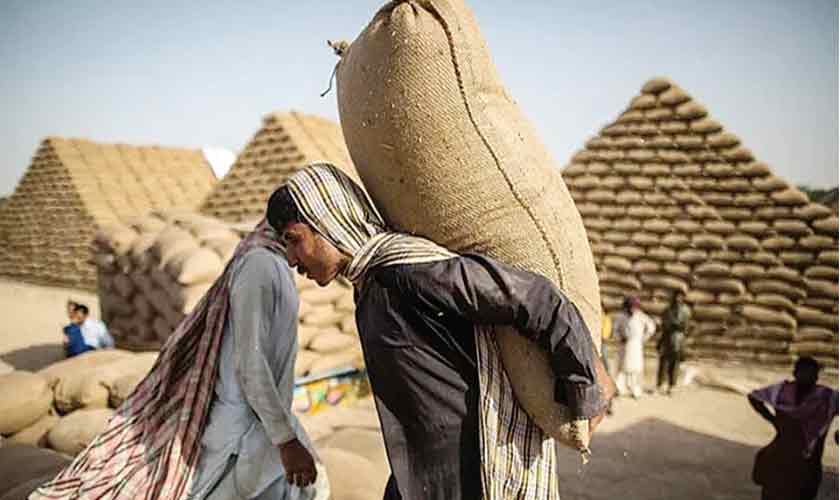
With the economic growth picking up, there is an urgent need to comprehensively guarantee rights of labour and workers, including the right to form associations and unions. For instance, garments industry, employing 15 million people, is one of the most vulnerable to contract and precarious work. Workers need to have effective unions to bulwark their plight.
The writer heads the History Department at University of Sargodha. He has worked as a research fellow at Royal Holloway College, University of London. He can be reached at abrar.zahoor@hotmail.com His X handle: @AbrarZahoor1