Print Story
X




Manto and Ghalib are iconic artists who challenged the hypocrisies of their times
| I |
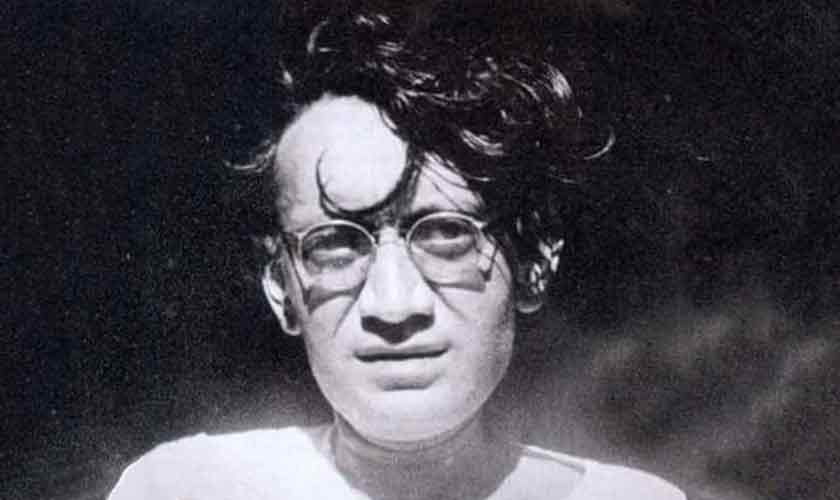
t can be said that Saadat Hasan Manto was luckier in death than he was in life. Come Partition, he left a semi-flourishing career in Bombay – now Mumbai – behind and migrated to Pakistan, where he faced a host of challenges. Branded as a writer of obscenity and accused of being anti-Pakistan, Manto even had his mental health questioned. Some of his work was banned, and he was treated as a persona non grata, caught in the crossfire of ideological camps that heavily influenced creative expression at the time.
He was imprisoned, sent to a psychiatric hospital and at times lacked the means to support his family. Manto died an exploited man – successful as a writer, but by his own admission, a failure in life.
Manto wrote about several subjects that were forbidden. Partition, which exposed the mass erosion of dignity and the assault on humanist values on a colossal scale, gave him a broad canvas for expression. His focus on the wretched of the earth – especially the sexually exploited – fascinated later playwrights and filmmakers, offering material they deemed commercially viable.
At the time, much of literature was viewed as morally corrosive – something to be consumed in private. Manto, in particular, was associated by many with pornography. Elders would frown upon finding his books hidden under pillows or mattresses. When it came to young women, reading and writing were seen as dangerous pursuits – gateways to moral decline. The fear was that literacy would encourage them to write and read love letters.
Manto died an exploited man – successful as a writer, but by his own admission, a failure in life.
Manto may well be the most dramatised writer in the subcontinent, with numerous plays, films and television serials based on his life and work. He was the archetype of a creative soul who burned the candle at both ends, mocking his own success and failure alike. He stood against the grain, often ridiculing the powerful, the sanctimonious and those who championed causes while standing on shaky ground.
His association with the film industry enabled him to write, often scandalously, about its personalities. Film stars, seen as untouchable icons, were treated either with adoration or contempt – there was rarely any middle ground. Manto understood this. His portrayals were devoured by readers, reinforcing the myths surrounding those figures. He was well aware of the public’s fascination with scandal and used it to potent effect to increase his literary visibility.
It could be argued that Mirza Ghalib, too, has caught the imagination of filmmakers and dramatists, finding a place in the visual culture of the subcontinent.
However, portrayals of Ghalib have fixated mainly on his indulgence with wine and women. His political and intellectual vision, as distinct from his role as a classical poet, has rarely been explored. Ghalib lived through the chaos of 19th-Century India, when various powers competed for control, often at the expense of the people. He was not particularly sympathetic to those later romanticised as freedom fighters. His trip to Calcutta – now Kolkata – further expanded his mental horizon, leading him to reflect on civilisational values in a more objective way than before.
Ghalib’s association with Delhi College and his intellectual evolution, which ultimately found expression in the Aligarh movement, have been mostly overlooked in studies of his emotional and philosophical growth. Likewise, his nuanced relationship with the rising colonial powers has seldom been examined.
The writer is a culture critic based in Lahore.