

Print Story
X




The renovated colonial-era hospital stands tall, a gatekeeper of stories of healing and resilience
| A |
hundred years ago, few could have imagined that a hospital built on donations from Jews, Christians, Sikhs, Hindus and Muslims would one day save millions of lives and become a beacon of hope in Khyber Pakhtunkhwa. Today, Lady Reading Hospital,known in Pashto as Gernali Huspatal, stands at the heart of Peshawar, its gates shadowed by the historic Bala Hisar Fort.
Lady Reading Hospital is located behind the fort, south of the Grand Trunk Road in the old city. It is surrounded by the Mahabat Khan Mosque, Ander Shehr Bazaar, Qissa Khwani Bazaar and Khyber Bazaar.
The LRH has grown into a sprawling complex with multiple entrances. The busiest of these is the emergency gate on the Ander Shehr side. Over the past two decades, the gate has borne the impact of more than 300 bomb blasts. It has also provided critical care to thousands of the wounded and dying.
Beyond serving Peshawar, the LRH extended care to hundreds of thousands of Afghan refugees during and after the Soviet‑Afghan war. Its legacy of compassion transcends borders and politics.
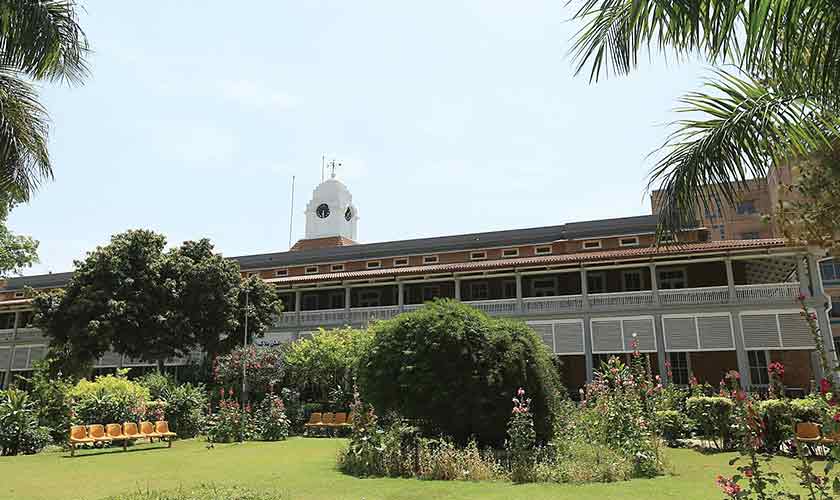
Another major entrance, farther down the road, grants access to modern wards and specialised units. Visitors here are greeted by the Bolton Block—a serene, historic edifice surrounded by lush greenery at the heart of the hospital grounds.
Over the years, the LRH has been expanded with the addition of state‑of‑the‑art medical blocks. Yet the Bolton Block endures as a quiet keeper of history. Adjacent to it, stands the new Med‑Surg Tower; across it are the original surgical ward and the administrative offices.
Bolton Block was the hospital’s first building. Its founder, Alice Edith Isaacs or Lady Reading, a Jewish woman and wife of the Viceroy of India, had been diagnosed with cancer.Appalled by the scarcity of local medical facilities, she donated Rs 50,000 of her money to establish the hospital. Lady Reading championed women’s health, with a special focus on maternal and child care. The block was named in honour of the then‑commissioner, Bolton.
Inside the Bolton Block, an honorary donor board lists Lady Reading alongside contributors who gave regularly from 1927 to 1938. Donors of every faith are included.
Today, the Bolton Block marries architectural grace with modern comfort. Its 29 private rooms are fully equipped with nurse call systems and oxygen supply. After nearly two years of careful restoration, delayed occasionally by political instability and funding challenges, the heritage structure is once again open to private patients.
Now among the most advanced healthcare facilities in Khyber Pakhtunkhwa, the LRH offers treatment for every ailment with cutting‑edge equipment and technologies. Yet when people speak of the LRH, it is the Bolton Block’s vintage façade that lingers in the mind, a portal to a century past.
With its colonial‑era elegance, the Bolton Block remains an aesthetic marvel amid steel and glass. Its manicured lawn adds to the sense of calm, a tranquil oasis maintained with great care.
Perhaps the most remarkable part of the story is the spirit of unity. Christians, Muslims, Jews, Hindus and Sikhs all contributed to it. That spirit endures. The LRH belongs to everyone, regardless of religion or ethnicity.
Every day, thousands of patients from across the province, locals and refugees alike, are treated without discrimination. The hospital stands as a timeless emblem of compassion, resilience and collective humanity, its legacy preserved for future generations.
Ahmad Nadeem Awan, aged 63, a retired government employee from the Walled City, remembers his neighbourhood hospital with affection. “Back in the 1960s and ’70s, the LRH was clean and quiet. It was a local landmark,” he says. “In evenings, the residents would often gather in the garden opposite the Bolton Block.
Awan says locally, the LRH was known as Loye Huspatal [a huge hospital]. “Many prominent political figures received treatment here,” Awan recalls. One memory stands out from 1983: “Bacha Khan was sitting in the corridor of the Bolton Block, listening to the radio. A few friends and I were nearby. I still remember Khan Abdul Ghaffar Khan sitting there.”
Reflecting on the changes, Awan says, “There was hardly a crowd ever. Now, the LRH is bustling with people.”
Dr Mukhtar, a former medical superintendent at the LRH, says the Bolton Block is the heart of the hospital. “Its most distinctive feature is its soundproofing,” he says. “The LRH administration has performed a significant feat by renovating this historic block.”
The writer is a multimedia producer. He tweets@daudpasaney