Print Story
X




A peculiar iftar gathering of the artistic community invited reflections on ‘exoticisation’ of religious ceremonies pertaining to food and social gatherings
| T |
his Ramazan, a peculiar iftar invitation came forth, gathering the artistic community to reflect on ‘exoticisation’ of religious ceremonies pertaining to food and social meetups among the affluent, while the despondent hunt for crumbs within piles of scraps.
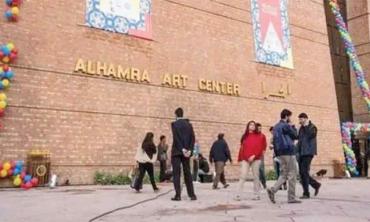
The place where this gathering had been organised also held a pre-Partition semblance containing an enclosed façade and narrow corridors with a capacious verandah opening at the back. Sidra Khawaja designed a vivid and aromatic iftar table, wide enough to accommodate a large family, with the floor as seats. The items and food shared among the invitees had a cultural significance of the archival of memories, nostalgia, fables and festivals entwined with mundane lives, while concurrently establishing similarities, initiating discussions and connecting the divides between individuals and communities.
This concern was fuelled by a growing perception of the allure of grand dinner parties, which seem to swap the candidness of iftars with extravagant offerings. This concern should prompt us to critically examine the impact of capitalism and consumerism, and ultimately enable us to exercise restraint and abstain from such lavish feasts in favour of something purer.
Khawaja’s project meticulously crafted an immersive experience that emphasised the importance of intimate togetherness in our community. It featured staple foods from South Asian cuisines that celebrated simple yet rich foods such as samosas, pakoras and the much loved Rooh Afza, highlighting local and seasonal ingredients. The focus was on dishes that evoked nostalgia and connected the participants to a shared past, reminding one of the values and traditions that bind us via activity based observation. Each guest was asked to draw their chosen items on a handkerchief to commemorate association, to rekindle the spirit of togetherness and savour the subtle joy of communal dining and thereby create lasting memories that honour our heritage.
This gathering defined the diminishing practices of togetherness and simplicity, leading the participants to reflect on the memorial items they chose to represent on their napkins.
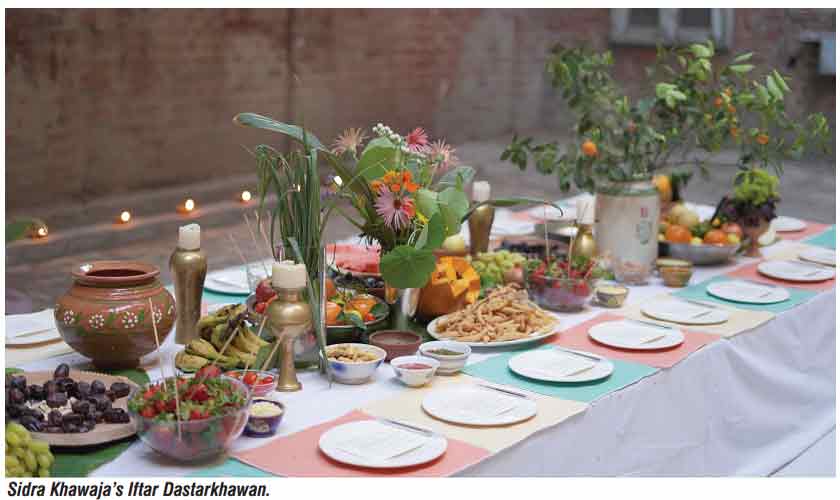
Each guest was asked to draw their chosen items on a handkerchief to commemorate association, to rekindle the spirit of togetherness and savour the subtle joys of communal dining, and thereby creating lasting memories that honour our heritage.
| N |
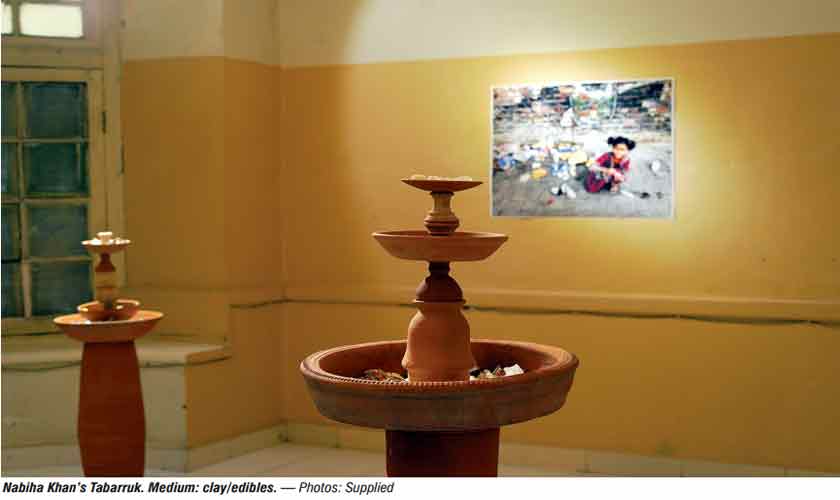
Nabiha Khan’s work transcended conventional boundaries within religious connotations and evolved into a profound symbol that embodied the blessings derived from the communal practice of sharing food and nourishment, not just among humans but also with various living beings.
Khan’s Tabarruk was placed in large bird feeders, showcasing the significant impression that acts of generosity could have. It underscored the value of empathy and the essential role it plays in fostering connection and community well-being. There was an implicit comment on the superfluous hoarding of food and the scarcity of it as a chain reaction.
The clay vessels of her installation, placed under a peepal tree, symbolised the fragility of food security and the pressing issue of malnutrition in many communities across the globe.
Clay pots have long served as essential containers in various cultures, embodying a rich heritage of sustenance and survival for all living creatures. They represent the ongoing struggle for access to food, illustrating how, despite the Earth’s generous bounty, countless individuals still grapple with the harsh reality of inadequate nutrition. This disparity underscores that food security is a multifaceted issue that transcends the mere act of filling vessels with food. It demands a comprehensive approach guaranteeing that every person has access to healthy options.
Providing nourishment to all is not just about quantity but also about quality. It is crucial to ensure that the nutrients provided not only nourish our bodies but also uplift our spirits. The existence of empty clay pots in homes is often a stark reminder of hunger and deprivation, a call to action for equitable access to resources.
Sousan Qadeer is a Lahore-based interdisciplinary artist and educator.