


Print Story
X




The eco-tourism sector in KP stands at a critical juncture
| W |
ith tourism season just around the corner, Khyber Pakhtunkhwa has firmly established its appeal as a major tourism destination with its lush green forests in Upper Dir and serene valleys in Swat. 16.9 million tourists had visited in 2023, including 4,554 international visitors. Despite these encouraging figures, significant systemic challenges remain. According to geo-spatial analysis, 40 per cent of rural residents must travel over 60 minutes to access basic healthcare. Addressing such infrastructure gaps is critical for unlocking KP’s full eco-tourism potential and ensuring sustainable, inclusive growth.
KP’s eco-tourism economy is primarily concentrated along three distinct corridors. The Northern Circuit which encompasses areas like Chitral and Upper Dir, attracts tourists with unique cultural sites such as Buddhist heritage landmarks and the culturally rich Kalash valley. Visitor statistics highlight significant disparities with Upper Dir recording only 417 international visitors in 2023 compared to millions in more accessible areas like Galyat signifying vast untapped potential.
KP’s central highlands, including regions such as the Naran-Kaghan valley, experience intense seasonal pressures with over 5 million visitors in 2023 with numbers only expected to increase in the future. The consequential infrastructure strain highlights the urgent need for enhanced planning and sustainable management practices to prevent environmental degradation.
The southern valleys, including regions such as Swat, home to the renowned Malam Jabba ski resort, contribute significantly to the local GDP hosting around 3.54 million tourists annually. Despite the economic success, environmental challenges such as waste management and deforestation are persistent and pose serious threats to its sustainability.
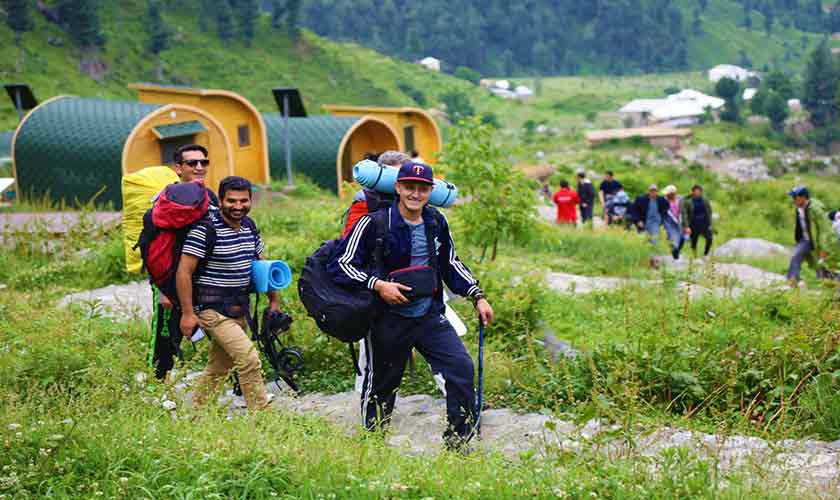
The government has not turned a blind eye to these challenges; several initiatives such as the KP Integrated Tourism Development project, funded by a $70 million World Bank loan, have been implemented, Concurrently, the UNDP has successfully established eco-camping sites with robust sustainability practices such as solar-powered pods and wastewater treatment systems, particularly in Gabeen Jabba (Swat) and Bamburait (Chitral).
Infrastructure development planned for 2024-2027 includes significant investments in Integrated Tourism Zones like Ganool (Mansehra), Mankiyal (Swat) and Madaklasht (Chitral). The Asian Development Bank has helped with a $320 million investment to upgrade 900km of flood-vulnerable rural roads, promising to substantially reduce travel time to essential services.
Despite proactive government initiatives, KP’s eco-tourism faces severe environmental challenges. In Galyat, daily waste production surges from 3.8 tonnes off-season to 12.7 tonnes during peak season, overwhelming local waste management capacity. Only 34 percent of the hotels fully comply with solid waste management policies. Open dumping by the rest is a threat to natural water sources.
Additionally, deforestation goes on, especially in districts like Upper Dir and Buner, where it is driven by unsustainable fuel wood demand. This leads to significant annual tree cover losses, in turn exacerbating ecological degradation. Initiatives such as UNDP’s recycled plastic greenwood construction have begun to address these pressures effectively, saving hundreds of mature trees. However, this needs massive scaling up to make a meaningful impact on the numbers.
By prioritising environmental conservation, KP can ensure that its breathtaking landscapes become enduring assets that deliver long-term economic, ecological and social benefits.
For the immediate term (2024-2026) strategic measures that manage tourist influx sustainably are imperative for KP. The implementation of dynamic pricing models can effectively disperse and distribute visitors more evenly throughout the region reducing the ecological strain and infrastructure stress on highly frequented areas. Additionally, the establishment of integrated regional waste management authorities equipped with IoT-enabled technologies would help in significantly enhancing environmental management by effectively monitoring waste generation and disposal.
KP also needs to scale up eco-friendly accommodation solutions such as modular greenwood camping pods. These structures, built using sustainable practices would both increase tourist capacity and offer environmentally conscious and appealing alternatives to conventional lodging, fostering sustainable tourism growth.
In the longer term (2027-2030), the KP government needs to develop the KP Eco-tourism Index that will essentially be a comprehensive assessment tool integrating environmental social and governance (ESG) metrics. This index can serve as a benchmark for measuring sustainable tourism progress and guiding policy formulations towards both ecological integrity and community welfare. These ESG metrics may be added to the already developed National Tourism Competitiveness Index developed by the PTDC and enhance its utility.
Transitioning KP’s tourism infrastructure to at least 60 per cent renewable energy usage by 2030 is a pivotal strategy for promoting long-term ecological sustainability. The goal can be realised through a multi-faceted approach.
First, solarisation of tourism facilities by leveraging KP’s solar potential through the installation of photovoltaic systems in hotels, resorts and tourist centres can significantly reduce reliance on non-renewable energy sources.
Second, the development of micro-hydropower projects can help utilise the province’s abundant water resources and can provide clean energy to remote tourist destinations.
Third, the introduction of incentives for tourism enterprises that adopt renewable energy solutions and achieve green certifications will both enhance the environmental credibility of businesses and appeal to the growing segment of eco-conscious travellers.
Fourth, collaboration between the government and the private sector can help facilitate investment in renewable projects tailored for the tourism industry, for instance the Sustainable Energy and Economic Development programme has been key in increasing public and private investment in KP’s renewable energy sector, providing a framework for future initiatives.
Finally, engaging local communities in implementation processes ensures sustainability and local ownership. Firsthand interactions with the communities suggest that there is a willingness to develop eco-tourism in the region. However, the locals demand training programmes that can equip them with the skills needed to maintain renewable energy systems.
The eco-tourism sector in KP is at a critical juncture. Strategic, sustained investments in infrastructure improvement, community engagement and adherence to sustainable practices can transform KP into an exemplary eco-tourism destination. Interactions with the enthusiastic local communities suggest that with the right support, KP forests could become thriving eco-tourism destinations. By prioritising environmental conservation, KP can ensure its breathtaking landscapes become enduring assets that deliver long-term economic, ecological and social benefits.
Mobeen Ali Khan, an economist, is a graduate of the University of Liverpool