

Print Story
X

| I |
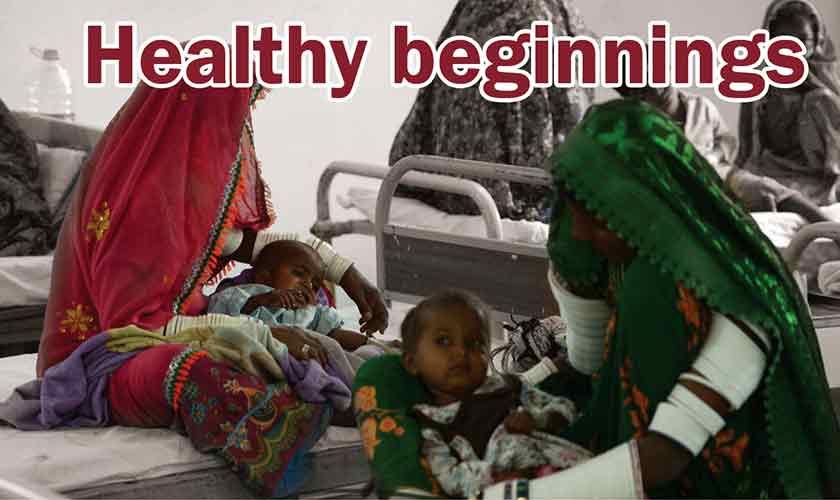
n a small village near Wazirabad town in the Punjab, 17-year-old Razia embarked on the journey of marriage and motherhood. She was already anaemic due to a lifetime of poor nutrition. Her health deteriorated further as her pregnancy progressed without proper antenatal care, iron or folic acid supplementation. When she gave birth, prematurely, the baby struggled to survive in an incubator and was fed only with infant formula. Despite her dire socio-economic conditions, the family continued formula feeding, overlooking the importance of exclusive breastfeeding. Six months later, Razia conceived again. Her body even weaker. Thus continued the vicious cycle of malnutrition and maternal risks.
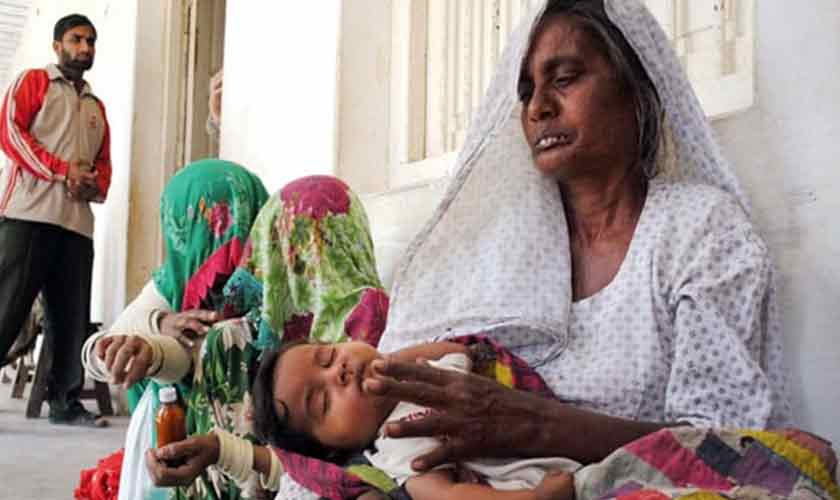
Her story reflects the grim reality of thousands of adolescent girls across Pakistan as anaemia and malnutrition perpetuate intergenerational health crises, leading to high maternal and newborn mortality rates.
Pakistan faces one of the highest maternal and infant mortality rates in the world. The maternal mortality ratio in Pakistan is 186 deaths per 100,000 live births. The neonatal mortality rate, referring to deaths within the first 28 days, stands at 42 per 1,000 live births. The infant mortality rate, covering deaths within the first year, is 57 per 1,000 live births, and the under-five mortality rate is 67 per 1,000 live births. These numbers reflect a critical public health emergency, where young mothers lack access to essential health services and malnutrition exacerbates pregnancy-related complications.
In light of these alarming statistics, the World Health Organisation has come out with “healthy beginnings, hopeful futures” theme for World Health Day 2025, calling for urgent action to end preventable maternal and newborn deaths. Dr Tedros Adhanom Ghebreyesus, the WHO director-general, has urged countries to scale up maternal and child health interventions, stating: “Every woman and baby deserves access to quality care before, during and after childbirth. Too many lives are lost due to preventable causes—this must change.”
According to WHO, a woman dies every two minutes due to complications in pregnancy or childbirth. 2.4 million babies die within their first month. The leading causes of these deaths include haemorrhage, infections, hypertensive disorders and obstructed labour. Most of these are preventable with timely medical interventions.
Dr Anshu Banerjee, the WHO director of maternal, newborn, child and adolescent health, highlights the role of nutrition in improving survival rates: “Malnutrition during pregnancy significantly increases the risk of pre-term births and low birth weight. Both are linked to high neonatal mortality. Strengthening maternal nutrition programmes is key to breaking this cycle of poor health outcomes.” WHO calls for universal access to antenatal care, improved post-natal services and stronger policies to ensure every mother and baby has a healthy start, laying the foundation for a thriving future.
Anaemia remains a silent but severe public health challenge in Pakistan, particularly among adolescent girls. Dr Shabina Raza, Nutrition International’s country director, explains: “Anaemia is a serious public health concern in Pakistan, impacting more than half (56.6 percent) of adolescent girls in the country. It has major consequences for their health and wellbeing: poorer school performance, loss of productivity and participation, and negative maternal and infant outcomes for those who become pregnant.”
Pakistan faces one of the highest maternal and infant mortality rates in the world. The maternal mortality ratio in Pakistan is 186 deaths per 100,000 live births.
To combat this crisis, weekly iron and folic acid supplementation has emerged as a cost-effective intervention. WHO recommends WIFAS as one of the eight key nutrition interventions for adolescents. Pakistan’s Adolescent Nutrition and Supplementation Guidelines also emphasise its importance. Dr Raza underscores the significance of local manufacturing of WIFAS. “A wider and more readily accessible supply of WIFAS can prevent millions of adolescent girls from suffering from iron-deficiency anaemia. Investing in local manufacturing of iron and folic acid supplementation, in line with WHO guidelines, is another way of ensuring its sustainable access in the country.”
Beyond supplements, food fortification offers a long-term strategy to address micronutrient deficiencies. “Fortifying staple foods is one of the most cost-effective and sustainable strategies to combat malnutrition at scale. By ensuring that essential vitamins and minerals reach every household through everyday foods, we can prevent micronutrient deficiencies, improve health outcomes and enhance productivity,” says Dr Raza.
The economic toll of malnutrition is staggering. According to the Cost of Inaction Tool, Pakistan loses over $17 billion annually due to productivity losses, healthcare costs and reduced cognitive potential in children. Dr Raza warns of the socio-economic consequences. “Micronutrient deficiencies compromise immune systems, hinder child growth and development and affect pregnancy outcomes. Failing to address malnutrition has serious socio-economic consequences for Pakistan.”
WHO also stresses the need for community engagement and education in maternal and newborn health. Dr Banerjee notes: “Empowering women with health knowledge and ensuring male family members support maternal care can significantly reduce complications and deaths. Health literacy must be a core strategy in national programmes.”
Studies show that when women are educated about proper nutrition, family planning and the importance of antenatal visits, maternal and child health outcomes improve significantly.
Experts emphasise that multi-sectoral approaches are required to combat maternal and child malnutrition. Pakistan must scale up WIFAS programmes and make iron-folic acid supplements widely available, ensure universal access to antenatal care and nutrition counselling, strengthen food fortification policies to include essential micronutrients, invest in maternal and child health infrastructure in rural areas and raise awareness about exclusive breastfeeding and proper infant nutrition. By implementing these measures, Pakistan can break the cycle of malnutrition, reduce maternal and child mortality and secure a healthier future for its next generations.
The WHO’s call to action urges global and national stakeholders to prioritise maternal and newborn health as a fundamental right. “Investing in maternal and newborn health is not just about survival but about giving every child the chance to thrive,” Dr Tedros reiterates. With strategic investments and coordinated efforts, Pakistan has the potential to transform its maternal and child health landscape and create a future where no mother or baby dies from preventable causes. The responsibility lies with policymakers, healthcare professionals and communities to drive this change forward and ensure that every woman and child in Pakistan has the right to a healthy beginning and a hopeful future.
The writer is an investigative reporter, currently covering health, science, environment and water issues for The News International.