


Print Story
X




Identifying roadblocks in Pakistan’s maternal and child healthcare
| P |
akistan, a country of over 240 million people, continues to grapple with a severe maternal, neonatal and child health crisis. Despite an extensive network of basic health units offering maternal-child and primary health services, our maternal mortality remains alarmingly high at 186 deaths per 100,000 live births and neonatal mortality stands at 42 deaths per 1,000 live births. These figures place Pakistan amongst the worst performers in the region. Without urgent reforms that focus on women’s agency in their lives, access to quality maternal-child care, family planning and primary health awareness at the community level, millions of mothers and children will die needlessly.
A cycle of challenges: Saeeda’s Story
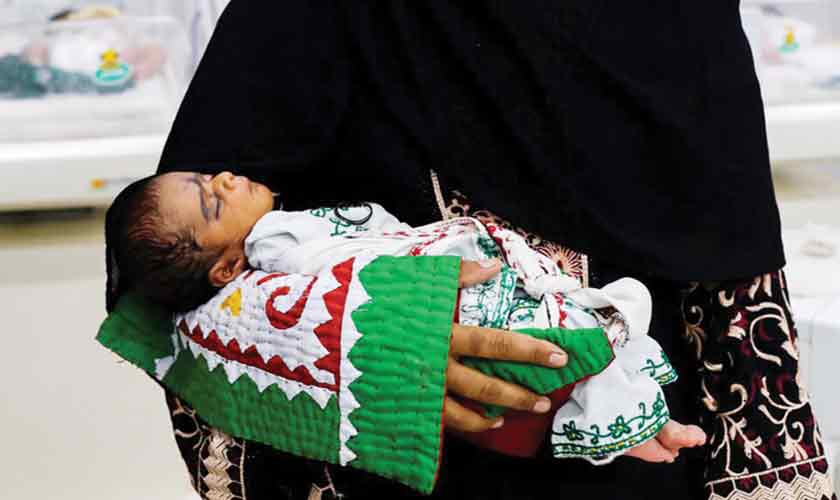
Married at 18, Saeeda Bibi never had a real say in her marriage or the number of children the new couple would have. In her village, just outside Rawalpindi’s bustling urban lights, rigid gender roles dictated by family elders left little room for discussion. Three pregnancies in five years with no discussion on family planning left her weakened. The lady health worker in her area did not initiate conversation about family planning with new couples and in-laws frowned upon the idea of contraception. Her youngest child was born premature, struggled to survive and passed away.
Saeeda’s story, like millions of others, is not just about a lack of healthcare access, it is also about the urgent need for social reform that empowers women to take charge of their health and futures.
Access, an unequal landscape
Access to maternal and child healthcare remains highly unequal across socio-economic, geographic, ethnic and educational lines in Pakistan. While larger and mid-level cities may afford better access to quality tiers (primary, secondary and tertiary care) of functional healthcare facilities, the situation in remote rural areas, particularly in conflict-prone areas like Balochistan and Khyber Pakhtunkhwa is dismal with little signs of improvement (comparison of PDHS 2012 and 2017). Maintenance of staffing, supplies and basic standards of care is not guaranteed. Public sector credibility and trust is low and declining in these communities. Routine ante-natal care is only 66 percent. Less than 40 percent mothers receive essential post-natal care (trained health provider examination within two days of delivery). Less than 52 percent of births (in urban areas > 70 percent in Sindh, the Punjab and Khyber Pakhtunkhwa) occur in health facilities. An even smaller percentage (< 20 percent) opt for or are offered post-partum family planning. These are tremendous missed opportunities that can be rapidly addressed through targeted training of service delivery personnel and better programmes.
Cost of survival
While poverty remains the biggest barrier to safe maternal and child healthcare, health awareness, nutrition, safe birthing intervals and decision-making power are also critical. Many poor families do not have the wherewithal to prioritise maternal health because they are caught between the daily grind of survival, making healthcare seem like a luxury rather than a necessity. Nudging low-cost community level “social” experimental measures along with targeted health insurance or social safety net (Sehat Sahulat, BISP) programmes for the poorest families can mitigate the helpless survival choices that poor people have to make when seeking essential maternal healthcare, leading to delayed or no medical interventions. Even in public hospitals, hidden costs of medications, tests and transport may make maternal healthcare financially inaccessible for many when they need it the most.
Under-utilised power of family planning
Pakistan has one of the lowest contraceptive prevalence rates in the region, at just 34 percent compared to over 60 percent in India and Bangladesh. Low contraceptive use contributes to high maternal mortality and poor child health outcomes as frequent and closely spaced pregnancies lead to maternal malnutrition, anaemia and childbirth complications. The low uptake of contraception is a major driver of high maternal mortality and poor child health outcomes. 50 percent of the women in Pakistan are anaemic.
The barriers to contraceptive use in Pakistan are both cultural (demand side social taboos and opposition) and structural (supply side interrupted FP methods, lack of FP counselling). In many conservative communities, family planning remains a taboo subject with unmarried (i.e. soon to be married) adolescent girls and boys and/ or young couples deliberately excluded from lady health worker family planning dialogue and services.
However, Pakistan has several successful local models that have increased CPR by over 10 percent annually in large populations. Scaling up such models could bridge the country’s unmet family planning needs, empowering millions of women to control their reproductive health.
Pitfalls of women’s low agency
A major obstacle to improving maternal and child health is the limited decision-making power of women. Many, especially in rural and conservative households, have restricted mobility or require their husband’s or in-laws’ permission even to seek medical care. This sometimes leads to fatal delays. According to PDHS 2017, only 48 percent of women participate in decisions about their healthcare. Many women are not allowed to visit hospitals alone, forcing them to wait for a male chaperone and delay seeking medical care. Domestic violence and gender inequality further restrict women’s ability to seek education, employment, medical care or use contraceptives curtailing their potential and creating a lifecycle of dependency.
When women lack agency, child health suffers. Mothers who cannot make decisions independently are less likely to ensure timely vaccinations, provide proper nutrition and medical care for their children contributing to high malnutrition and stunting in children under five.
Encouraging health-seeking behaviour
To improve MNCH outcomes, demand creation for maternal health services is essential. This means making maternal healthcare not just affordable and accessible but also timely for women, their families and communities. Global experience has shown that social media campaigns and mobile technology (smart phones) to counter myths around institutional deliveries, postpartum family planning and engaging men to reduce resistance to contraceptive use can helps transform mindsets to actively adopt favourable health practices in shorter durations.
For millions of women in Pakistan, maternal and child health is at a crossroads. In today’s changing landscape, simple technology solutions and building new private health sector partnerships with a greater emphasis on local community outreach can help government decision makers reduce costs while improving MNCH efficacy to resonate with the people.
Improving access to healthcare, addressing poverty barriers and empowering women to make their healthcare decisions are key to addressing this crisis. These are not costly solutions. Pakistan can achieve this goal even within its low health budget allocations (1 percent of GDP).
The question remains: Will Pakistan rethink its approach to results-focused MNCH healthcare instead of building more infrastructure and personnel, or will another generation be lost to a broken system?
The writer is the CEO of the Akhter Hameed Khan Foundation (www.ahk-foundation.org), an Islamabad based community organisation working on women’s primary and reproductive health and economic empowerment