Print Story
X




Many Afghan refugees fear for their future as deadline for voluntary return looms
| T |
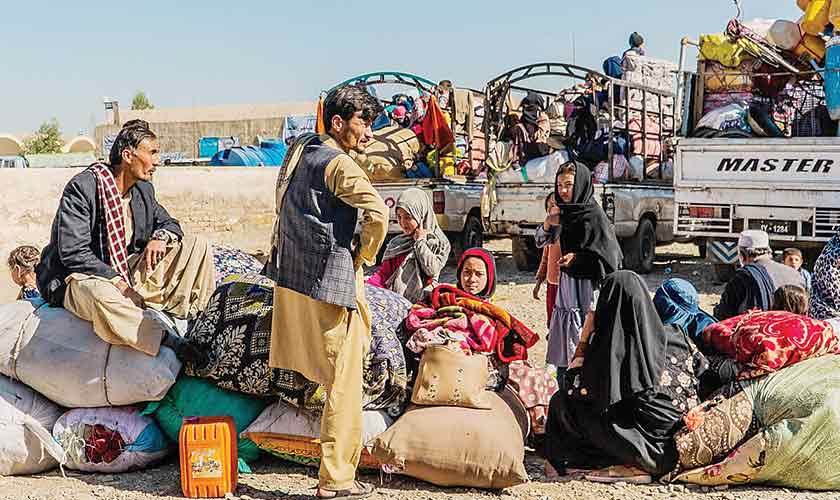
The federal government has set a March 31 deadline for many Afghan refugees to leave Pakistan voluntarily.
Niamat Ullah Alizai, 42, formally an Afghan citizen, was born in Pakistan. After the Soviet invasion of Afghanistan, his family had migrated to Pakistan. For Niamat and his family, Pakistan has long been their home. They have lived and grown up here. However, following the Pakistan government’s decision that illegal immigrants and Afghan Citizen Card holders must leave the country by March 31, they face an uncertain future.
A large number of Afghan families have been settled in Pakistan for longer than 45 years. Many have established businesses in major cities and find it difficult to wind those up quickly. “We don’t have many options,” Niamat acknowledge. “If we do not comply with the Pakistan government’s order, we could be imprisoned. We have been set a very short deadline to leave the country.”
Niamat says previously Afghan refugees in Pakistan did not take the Proof of Registration card seriously and many failed to register themselves with the government. They now regret this decision and have to pay a heavy price, particularly in cases where some of their family members, especially women, were left unregistered.
On March 7, the Ministry of Interior issued an official statement reaffirming the decision that Afghan Citizen Card holders must leave Pakistan by March 31. The Illegal Foreigners Repatriation Programme has been in effect since November 1, 2023. In continuation of the government’s decision to repatriate all illegal foreigners, the national leadership has now extended this order to include ACC holders.
“All illegal foreigners and ACC holders are advised to leave the country voluntarily before March 31, 2025; thereafter, deportation will commence on April 1, 2025,” the statement reads.
The statement points out that sufficient time has been granted for a dignified return. It emphasises that no one will be mistreated during the repatriation process. It mentions that arrangements for food and healthcare for returning individuals have been put in place. Pakistan continues to fulfill its commitments and obligations as a responsible state. The government has reiterated that individuals staying in Pakistan must fulfill legal requirements and abide by the country’s laws.
Niamat says those affected by the decision are unable to enjoy the holy month of Ramazan and Eid will bring them no joy. “We are under immense pressure. We are restricted to our homes and are unable to go to work. We can’t even take our children out for Eid shopping due to the fear of arrests.”
On March 17, Foreign National Security Cell of the Ministry of Interior sent a letter to the Khyber Pakhtunkhwa government, requesting data on Afghan students enrolled in educational institutions there. The letter said that the data must be provided by March 27.
“Police are raiding our homes. We will celebrate Eid only if we are not forcibly deported. Perhaps we will celebrate Eid al-Azha when things calm down.”
Niamat mentions that some of the Afghan refugees have approached the UNHCR. However, they have not been promised any relief.
On March 17, the Foreign National Security Cell of the Ministry of Interior sent a letter to the Khyber Pakhtunkhwa government, requesting data on Afghan students enrolled in educational institutions. The letter said that the data must be provided by March 27.
Benazir Raofi, an Afghan citizen married to a Pakistani citizens, owns the Afghan Women’s Solidarity Restaurant in Rawalpindi. An ACC holder, she is under immense pressure. She says she had not anticipated that forced repatriation would happen. “I believe that this time, nothing will work. The Pakistan government’s decision is very clear. It seems that we have no choice but to leave the country,” she says.
The subject of Afghan refugees falls under the jurisdiction of the Ministry of States and Frontier Regions. As a result of the Soviet invasion of Afghanistan in 1979, factional fighting in the post-1992 era, droughts in 1999-2000 and post-9/11 conflicts, over 4.4 million Afghans sought refuge in Pakistan between 1979 and 2001.
According to SAFRON’s open data sources, there are currently about 2.9 million Afghan nationals in Pakistan. This number includes registered population (POR cardholders): 1.4 million; newly documented (ACC holders): 0.81 million; and unregistered (estimated), 0.7 million.
On March 16, Chief Minister Ali Amin Gandapur criticised the federal government’s policy on Afghan refugees, saying nobody should be expelled from Pakistan. “The Centre’s policy on Afghan refugees is flawed. The approach taken in the past violated people’s human rights.”
However, the KP governor has supported the federal government stance on Afghan refugees’ repatriation. “We have supported our Afghan brothers for many years… However, a lot of chaos in Pakistan is now linked to Afghanistan,” Governor Faisal Karim Kundi said on March 23.
“We are thankful to the Pakistan government for hosting us for more than 45 years. However, for a dignified repatriation, Afghans need an extension,” Niamat Ullah Alizai says.
The writer is a multimedia producer. He tweets @daudpasaney.