

Print Story
X




A great warrior who achieved through his indomitable courage what many could only dream of
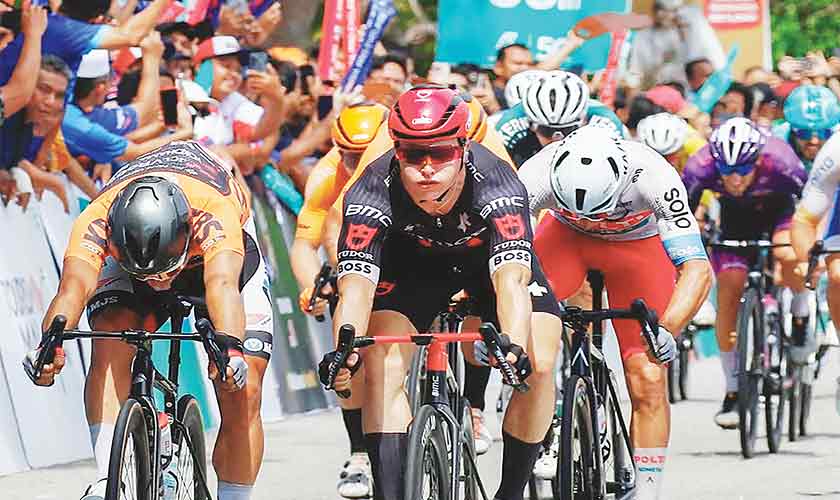
Malaysia’s Shaharudin Jaffar, who died recently, was a cycling warrior who refused to give up against seemingly unsurpassable obstacles.
When others walked away from Malaysian National Cycling Federation (MNCF) in the 1960s, Shaharudin, then a national cyclist, stepped in.
He took over the federation with just 44.60 Malaysian ringgit ($10 approx) in its coffers. Many thought he was crazy.
But he went on to rebuild MNCF and develop exciting talents, showing daring the likes of which many can only dream of.
“Money alone is not the defining factor for success,” Shaharudin told Free Malaysia Today (FMT) on his 84th birthday last October.
His relentless dedication and sacrifices cemented his legacy as the “godfather” of Malaysian cycling.
The story of Shaharudin is one of battles fought both on and off the field.
For years, he battled diabetes and kidney malfunction, requiring dialysis three times a week, three hours a day.
He suffered three heart attacks, one of which required him to undergo a bypass surgery.
Despite his failing hearing and eyesight, he kept himself fit by growing fruits and vegetables, as a hobby, on a vacant land near his Section 8 home in Shah Alam.
Shaharudin watched Azizulhasni Awang and Josiah Ng complete a one-two finish in the men’s keirin at the Asian Games in Guangzhou, China, in 2010.
He was happy that he had fulfilled his wish to see Malaysia ending the 40-year gold medal drought in cycling at the Asiad.
In January 1970, MNCF was crippled by carelessness. The crisis came after the MNCF made the wrong purchase of bicycle tyres for races on the cinder track at the Southeast Asia Peninsular (SEAP, now SEA) Games in Rangoon (Myanmar), in December 1969.
The blunder resulted in the Malaysians competing with borrowed bicycles. They came home without any medal.
The disastrous outing forced the Olympic Council of Malaysia (OCM) to drop cycling from the biennial regional games scheduled to be held in Kuala Lumpur the following year.
Then, it emerged that MNCF was broke, with a paltry bank balance of RM44.60.
At an extraordinary general meeting, the president, the late V Manickavasagam, an MIC leader, and his executive committee resigned en bloc.
A new committee without a president was formed in 1970, with Shaharudin appointed secretary. He held the post until 1983. It was the first time that an active sportsman had simultaneously managed a national sports body.
Until the then Selangor menteri besar (chief minister) Harun Idris became the president, Shaharudin remained the main caretaker of Malaysian cycling.
Shaharudin persuaded Harun to become the president at the Munich Olympics in 1972.
He was in Munich as the cycling coach and team manager while Harun was the chef-de-mission and team manager of the football team.
“I didn’t bring him in because we needed money. No, instead I brought him in because I needed a leader,” Shaharudin said in the interview with the FMT.
From also-rans to Asian champions
On his watch, Malaysian cyclists were transformed from also-rans to Asian champions. Talents bloomed, sponsorship grew and competitions were aplenty.
Both men developed a close friendship, and when Harun lost the benefits of being a chief minister after he was charged with corruption, Shaharudin volunteered to become his driver.
Within months of Shaharudin running MNCF, Malaysian cycling regained respect.
In August 1970, Malaysia secured the overall team title and the individual crown through Ng Joo Ngan in the Tour of Java race for the Suharto Cup.
The victories were followed through in December that year, at the Asian Games in Bangkok, where Daud Ibrahim and Joo Ngan won a gold medal each.
Their achievements convinced the OCM to reinstate cycling in the 1971 SEAP Games, where Daud was a three-gold hero.
For Shaharudin, it was an enriching and satisfying time in his life.
A trailblazing
sportsman
Born in Sitiawan, Perak, Shaharuddin rode to Malaysia’s first cycling gold medal at the SEAP Games.
He won the 800m sprint in 1965 in Kuala Lumpur without a coach or the benefit of training full-time.
A year earlier, he was a reserve cyclist for the Tokyo Olympics, itching to display the international experience he had gained at the Commonwealth Games in Perth, Australia, in 1962.
Shaharudin missed the Mexico Olympics in 1968 due to injuries suffered when a car crashed into him during road training in Serendah, Selangor.
He called it a day at the end of 1970 to focus on the development of cycling in the country as secretary of MNCF.
Shaharudin formed cycling associations, built teams and restored racing events in Kedah, Melaka, Selangor, Johor, Negeri Sembilan and Pahang from the 1960s to the 1980s.
After his retirement from the civil service in 1994, he remained the go-to person in cycling and was inducted into OCM’s Hall of Fame in 2008.
Shaharudin changed the fate of Malaysian cycling not with money, but with heart, vision and sacrifices few would dare to make today.
Veteran journalist Terence Netto said: “He epitomised the ideals of sport – selfless dedication, quest for excellence, and the goodwill and friendship it spawned.”
One wishes there was a leader like him in sports in Pakistan where people gain positions by spending money and go on to make a lot more money until they die or someone of their offspring or cronies take their place.