Print Story
X

| I |
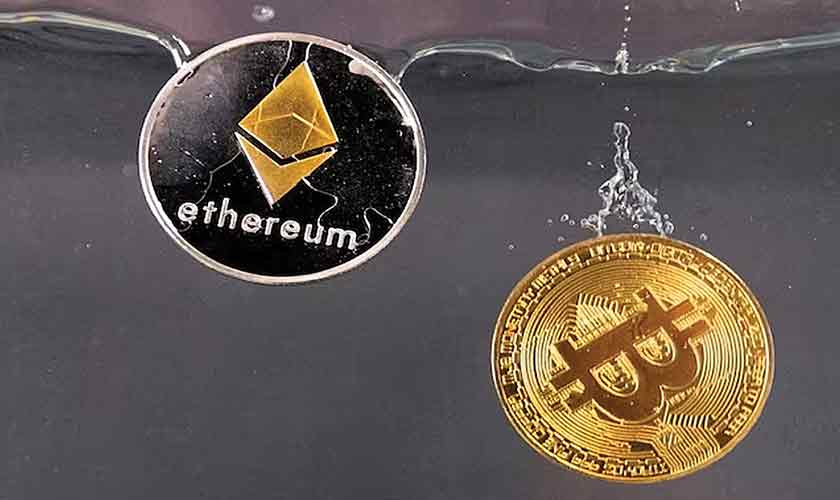
In a historic decision, US President Donald Trump has announced that Bitcoin (BTC), Ethereum (ETH), XRP, Solana (SOL), and Cardano (ADA) will be added to the US national reserves. This move marks a major shift from traditional financial policies and highlights the growing influence of digital currencies in the global economy. By integrating crypto-currencies into national reserves, the US government has recognised the increasing significance of block-chain technology and decentralised finance (DeFi).
This decision has sparked widespread debate among politicians, economists and technology experts. Supporters argue that adding crypto-currencies could help stabilise the economy, protect against inflation and position the US as a leader in the digital financial revolution. Bitcoin, often called “digital gold,” is valued for its limited supply and decentralised nature, making it a strong candidate for preserving national wealth.
Ethereum, the second-largest crypto-currency, offers smart contract technology, which could revolutionise government financial processes. Experts suggest that its block-chain could reduce bureaucracy, enhance transparency and improve the efficiency of transactions. The inclusion of XRP, Solana and Cardano in the national reserves suggests that the US is focusing on store-of-value assets as well as block-chain utility.
XRP is widely used for international money transfers and could facilitate faster, cheaper cross-border payments. Solana, known for its high-speed transactions and low fees, has potential applications in national financial systems. Cardano, which follows a research-driven approach, focuses on sustainability and security in block-chain development.
Despite the excitement, some critics have raised serious concerns about the risks involved in this decision. Crypto-currencies are highly volatile. Their decentralised nature makes them difficult to regulate. Unlike traditional reserves such as gold or foreign currency, digital assets can experience sudden price fluctuations, leading to potential financial instability.
Another major concern is security. Crypto-currency exchanges and wallets are frequent targets for hackers, raising fears about the security of national crypto holdings. If the US fails to implement strong security measures, a major cyberattack could compromise national financial stability.
Regulatory uncertainty is also a key challenge. The US government has struggled to set clear policies for digital assets, with the Securities and Exchange Commission frequently taking legal action against crypto firms. A lack of regulatory clarity could create confusion in financial markets and affect investor confidence.
Trump’s decision reflects a growing global trend. Some countries, such as El Salvador, have already adopted Bitcoin as legal tender. Central banks worldwide are researching digital currencies, including Central Bank Digital Currencies, as they explore alternatives to traditional financial systems. The US move could encourage other nations to reconsider their stance on cryptocurrencies.
Following Trump’s announcement, crypto-currency prices surged. Bitcoin jumped over 10 percent, reaching $93,000 before stabilising at around $90,000. Ethereum experienced a 12 percent increase; XRP rose by 18 poercent to $2.63, Solana gained 13 percent to reach $159.75; and Cardano saw an impressive 48 percent rise to $0.96. These price spikes indicate strong market confidence in Trump’s crypto-friendly policies.
However, reactions from global financial institutions have been mixed. The International Monetary Fund has called for caution, warning that the integration of volatile digital assets into national reserves could pose economic risks. The European Union has voiced similar concerns, stating that crypto-currencies should not replace traditional financial systems without strong regulations. China has strongly criticised Trump’s decision, calling it “reckless” and accusing the US of attempting to undermine the digital yuan.
In Pakistan, Trump’s move could have significant implications for crypto-currency regulation. The State Bank of Pakistan currently disallows financial institutions from dealing with crypto-currencies due to concerns over fraud, money laundering and a lack of oversight. However, as global acceptance of crypto grows, Pakistan may face pressure to reconsider its stance.
Despite restrictions, Pakistan ranks among the top 10 countries in global crypto adoption, mainly through peer-to-peer platforms. Many freelancers, startups and entrepreneurs rely on digital assets for international transactions, using offshore exchanges and informal networks. If more countries embrace crypto-currencies, Pakistan’s strict policies could hinder economic growth.
A well-regulated crypto market could attract foreign investment, support digital remittances and boost the fin-tech sector. The Financial Action Task Force has recommended strong know your customer (KYC) and anti-money laundering (AML) measures to ensure the safe adoption of digital assets. If Pakistan implements these safeguards, it could benefit from the global shift towards digital finance.
In a related development, the government has appointed Bilal bin Saqib as the chief adviser to the finance minister for the newly announced Pakistan Crypto Council. On February 25, the finance ministry revealed plans to establish a National Crypto Council to explore the adoption of digital currencies.
Finance Minister Muhammad Aurangzeb recently met with a foreign delegation, including advisers from Trump’s team, to discuss digital assets. A statement from the Finance Division emphasised that Saqib’s appointment highlights Pakistan’s commitment to digital innovation and financial security. Saqib, who is featured in Forbes’ 30 under 30 list, is also the co-founder of Tayaba, a social enterprise addressing water shortages in Pakistan.
This development signals Pakistan’s willingness to explore digital finance, despite the government’s cautious approach. If the Crypto Council can draft policies that balance innovation with regulation, Pakistan could become a key player in the emerging digital economy.
For Pakistan and other developing nations, this shift presents both opportunities and risks. The key will be to develop balanced policies that support digital finance while ensuring security and stability. As the world moves towards digital economies, governments will need to navigate these challenges to reap the benefits of block-chain technology without compromising financial security.
Trump’s move has set the stage for a new era in financial policy. Whether this decision proves to be a game-changer or a risky gamble will depend on how well governments, financial institutions and regulatory bodies adapt to the evolving landscape of digital currencies.
The author is a researcher, writer and analyst in field of cyber security. He has an MPhil in cybercrime and is currently pursuing a PhD in computer science