Print Story
X




The fourth Dosti Peshawar Literature Festival, which brought together writers, academics and scholars rejuvenated the city’s social scene
| T |
he fourth edition of Dosti Peshawar Literature festival concluded on Saturday at Area Study Centre, University of Peshawar. During the 12-day event, a number of writers, experts, scholars, professionals and analysts shared their insights, experiences and observations with the audience.
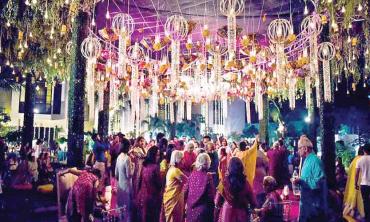
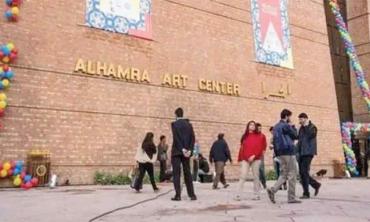
The festival line-up included open debates, book launches, author talks, workshops, art exhibitions, theatrical performances and live music at venues in and around the city. Over 300 volunteers, working under the supervision of scholars and academics, made sure the festival was a success. The organisers called the festival a ‘milestone’ in the cultural landscape of the city.
The festival was held from February 11 to 22. The event was inaugurated as a remarkable celebration of intellect, creativity and cultural discourse under the evocative theme of Ranaiy-i-Khayal (the elegance of imagination).
Organised by Dosti Welfare Organisation, in collaboration with the University of Peshawar, the Peshawar division commissioner, the National Commission for Human Development, the UNICEF, the KP Child Protection Welfare Commission, the KP Culture and Tourism Authority and the Department of Arabic at the University of Peshawar, this year’s festival transcended geographical boundaries, engaging audiences in Peshawar, Karak, Dera Ismail Khan, Bannu, Mardan and merged tribal districts.
Organised under the visionary leadership of Dr Syed Hanif Rasool Kakakhel, the festival was inaugurated by Farhatullah Babar. Dr Abdul Rauf Rafiqui was the chief guest at the closing ceremony. Their presence underscored the festival’s significance in fostering intellectual enrichment and cultural revitalisation across Khyber Pakhtunkhwa.
The fourth DPLF featured 12 keynote addresses delivered by eminent scholars including Dr Shahid Siddiqui, Dr Akbar Zaidi, Dr Khalid Mufti, Dr Abdul Rauf Rafiqui and Prof Arif Khattak.
The festival’s multifaceted agenda encompassed 39 panel discussions, 17 author and translator talks, three book talks, 11 workshops, three masterclasses, 19 standalone talks, nine book launch sessions and five dialogues, besides a special session on foreign affairs at Qurtuba University, Peshawar. These intellectual engagements were complemented by three exhibitions on art, culture and science.
The festival placed a strong emphasis on education and inclusivity, hosting a children’s festival with dedicated sessions on special education and a Higher Education Summit. In alignment with its commitment to societal well-being, the documentaries curated for the event offered profound insights into contemporary social and psychological challenges.
The fourth edition of the festival explored the intersections of literature with diverse fields of philosophy, ecology, politics, technology and spirituality, showcasing its capacity to transform the society.
A spectacular cultural segment at Nishtar Hall enraptured audiences with the mesmerising performance of Kathak Katha —a classical Kathak dance narrative by Khanzada Asfandyar Khattak. This was followed by Sannata, a compelling musical theatre production directed by Nisar Tanoli of Hazarewal Theatre, which explored the profound themes of silence and resilience. The festival concluded with a deeply moving celebratory musical performance, the Songs of Peshawar, by the Jwand Parasta Band, honouring the rich and diverse musical heritage of the region.
Beyond its literary and artistic engagements, the fourth DPLF was a catalyst for social transformation through its social wellbeing initiative, Healthy Minds, Healthy Society, resonating with the government’s Drug and Beggar-Free campaigns.
A landmark session on The Silent Epidemic: Addressing Drug Addiction Through Awareness and Education, used the evocative power of storytelling, poetry and theatrical performances to foster empathy and awareness around substance abuse, reinforcing the festival’s mission of societal improvement.
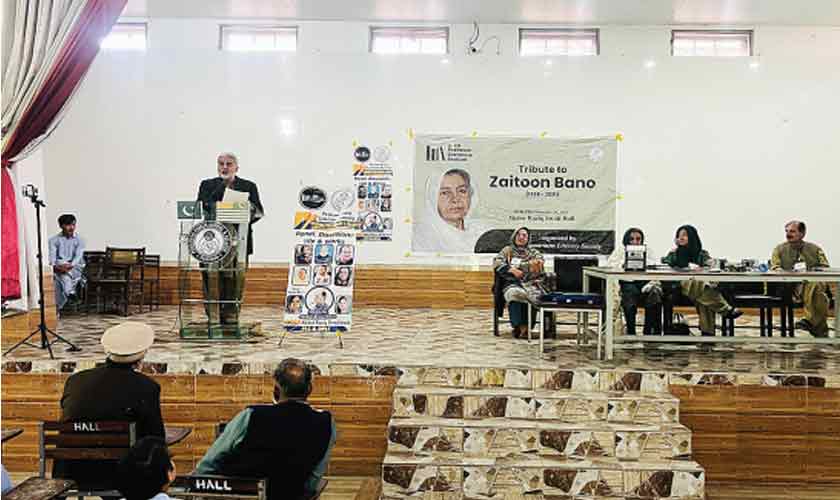
A day-long event on Zaitoon Bano, the first lady of Pashto fiction, was organised at the main hall of Peshawar Public School and College where she had served for over 14 years. Professor Abasin Yousafzai; Professor Nasir Ali Syed; Kalsoomzeb, president of Khwindy Adabi Lakhkar; Bushra Farrukh, the chief of Karwan-i- Hawa; Samina Qadir; and Ejaz Khan spoke on the life and contribution of the writer.
Professor Iftikhar Ahmad Khan, head of the institution, also paid tribute to Zaitoon Bano. Professor Afshan Bano, president of Peshawarianns Literary Society and daughter of the late writer, highlighted several aspects of Zaitoon Bano’s work.
The mega event attracted youth, women and professionals.
The fourth edition of the festival explored the intersections of literature with diverse fields of philosophy, ecology, politics, technology and spirituality showcasing its capacity to transform the society.
The sessions dedicated to women’s contributions, youth and children were the most engaging. Women scholars, experts and writers turned up at several functions and open debates regarding issues being faced by womenfolk. The number of young entrepreneurs and professionals and university graduates showed a rising trend.
The fourth DPLF left a lasting impact on the intellectual and cultural horizon of Khyber Pakhtunkhwa, reinvigorating dialogue, discourse, scholarship and artistic expression. By embracing diverse geographies, voices and perspectives, the festival solidified its commitment to inclusivity, academic excellence and the transformative power of literature.
The writer is a Peshawar-based journalist. He mostly writes on art, culture, education, youth and minorities. His X handle: @Shinwar-9.