Print Story
X




The challenges of policy and development work in Pakistan’s women movement
| A |
s Pakistan marks the National Women’s Day, each year serves both as a moment of reflection and a call to action. It commemorates the resilience and struggles of the women’s movement in Pakistan for legal, economic and social rights. Yet, despite decades of advocacy, the disconnect between policy frameworks and grassroots realities remains a glaring challenge.
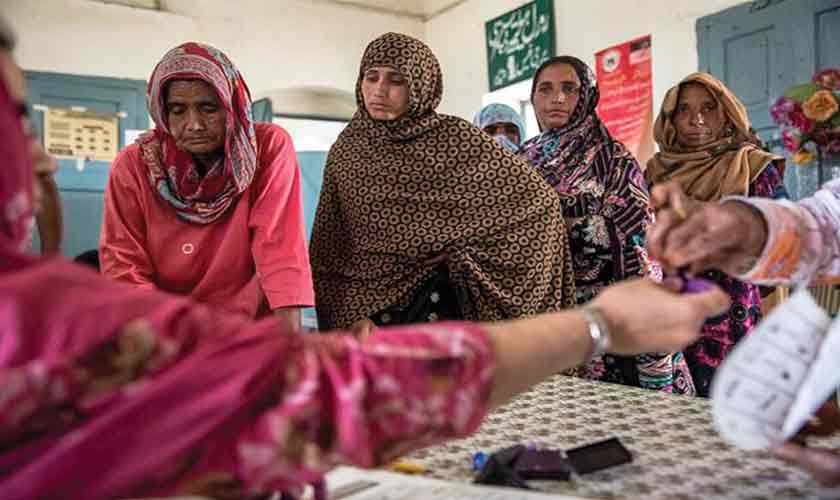
Having worked in the development and policy sector, I have witnessed firsthand the structural and administrative hurdles that hinder meaningful progress. While Pakistan has enacted various laws and policies aimed at empowering women, whether in terms of workplace protections, financial inclusion, political participation or economic empowerment, implementation remains weak. The lived experiences of women, especially those in informal economy and rural communities, often do not reflect the commitments outlined on paper. This persistent gap between rhetoric and reality raises critical questions about institutional inefficiencies, governance challenges and the limitations of top-down policymaking.
Beyond administrative bottlenecks, the very framework within which policies are designed is often disconnected from grassroots activism and realities. Women’s voices, particularly those from marginalised and working-class backgrounds, are frequently missing in policy discussions. Policies often reflect the priorities of top-down approaches rather than the needs of the communities they aim to serve. This structural exclusion deepens inequalities, making real transformation elusive.
Over the years, the women’s movement in Pakistan has continuously pushed for legal protections, economic empowerment, political participation and social justice. The key demands include fair and equal representation in decision-making spaces at all levels of governance, ensuring women’s perspectives shape policy outcomes and ensuring bottom-up policy making processes. Some major demands are strengthening laws against gender-based violence, ensuring effective enforcement and accountability mechanisms. A lot has been done over the years by the government based on the demands, to ensure access and protection of women against gender-based violence. Abolishing discriminatory laws and practices that restrict women’s mobility, employment and property rights have further brought many policy and legislative changes. Yet, the targets have not been achieved.
With new issues emerging in the labour sector, female labour force participation remains stagnant at 23 percent. The recognition of informal labour and social protection measures that support women working in vulnerable employment sectors remains a strong demand for policy push and standard implementation frameworks. Addressing gender disparity in economic and political participation by ensuring equal opportunities in leadership roles and workplace advancements is another significant demand. With access to financial resources and credit facilities to support women entrepreneurs and home-based workers, a new policy push is required under banking on equality policy. Reforms in education and healthcare policies to ensure gender-responsive services are also needed. The most pertinent one which revolves around the implementation of all pro-women laws is the demand for the revival and strengthening of local government structures to ensure effective implementation of women’s rights and human rights laws at the community level.
Several structural and administrative barriers including the following continue to hinder progress:
Low participation of women in decision-making: Women remain underrepresented in legislative bodies, local governance and policymaking forums. Token representation without substantial influence weakens the impact of gender-focused policies.
Weak institutional frameworks: Policies often lack clear implementation plans, monitoring mechanisms and dedicated resources to achieve their objectives.
Bureaucratic inefficiencies and lack of coordination: Government agencies working in silos lead to slow progress and duplication of efforts.
Absence of local government structures: The dissolution or weakening of local governments has resulted in a widening of the gap between grassroots communities and national policymakers, making it difficult to implement and monitor women’s rights laws effectively.
Societal and cultural resistance: Deep-seated patriarchal norms continue to limit women’s participation in public and economic life.
Financial and capacity constraints: Government departments tasked with gender mainstreaming often operate with insufficient budgets and human resources, reducing their ability to drive change effectively.
Persistent gender disparity: Women continue to face systemic discrimination in education, employment, wages and leadership opportunities, widening economic and social inequalities.
As we reflect on National Women’s Day, it is imperative to reassess not just the policy landscape but also the mechanisms of implementation and accountability. How can we ensure that women’s demands translate into action? How can we bridge the disconnect between policy and practice? These are critical questions that require an intersectional and feminist lens to address the economic, political and social barriers that persist in Pakistan.
The writer can be reached at lailazharali@gmail.com