Print Story
X




Governments should avoid combating falsehoods through overbroad and expansive regulation

| T |
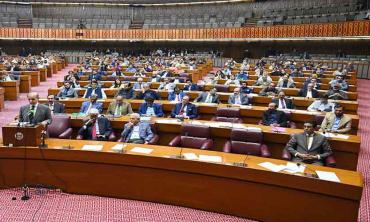
he government has hurriedly pushed through the parliament an amendment to the Prevention of Electronic Crimes Act, 2016. The stated aim of the amendment is to prevent online harm that takes place through spreading of misinformation. While misinformation poses a serious risk, the use of a vague and broad legislation that entrusts the Executive with sweeping powers to achieve this purpose is highly questionable.
The use of propaganda and misinformation has a long history. During the succession struggle following Julius Caesar’s killing, his adopted heir, Octavian, exploited Marc Antony’s romance with Egyptian Queen Cleopatra to claim that Antony was unfit to lead Rome due to his loyalty to Egypt.
The problem has become more severe with advances in information technology. A piece of misinformation can now reach a much wider audience and spread at a faster rate than ever before.
Dissemination of misinformation may thus jeopardise the health and safety of a significant portion of the population. During Covid-19 pandemic, misinformation about the origin of the virus led to racial attacks against people of Chinese origin in the United States. Conspiracy theories concerning vaccines have caused many to forego inoculation. Similarly, in politics, the spread of false claims of electoral fraud contributed to the attack on Capitol Hill, posing a risk to the smooth transition of power following the 2020 US presidential election.
Faced with these risks, governments across the world grapple with a dilemma on how to combat misinformation. On one hand, unchecked misinformation endangers public safety while on the other hand, efforts to regulate it risk overreach, potentially silencing legitimate dissent and minority voices.
The risk of abuse of misinformation regulations is very real and raises fears of censorship. Various regimes have used the pretext of regulating false speech to brutally suppress dissent and campaigns challenging their political authority.
Bangladesh passed a Digital Security Act in 2018 that provides for imprisonment of up to 10 years for spreading “propaganda” against the “liberation war and the father of the nation.” In the three years following the passage of the law, almost 1,000 people, including 100 journalists, faced prosecution under its provisions.
In our country, in 2024, the Punjab government enacted a defamation law attempting to regulate fake news. Digital rights activists and journalists have voiced their concerns about the law’s expansive scope and the threats it poses to fundamental rights.
The effectiveness of defamation laws in reducing misinformation is uncertain. Harmful online speech may not target a specific person’s reputation, thereby precluding the possibility of a defamation lawsuit. Even when speech is defamatory, trials could paradoxically amplify the misinformation they seek to address by providing it with wider coverage and increased visibility.
Punitive laws may also be less efficacious because of the challenge of enforcement. Identifying the original source of misinformation is notoriously difficult. In the digital age, the identified source may reside outside the territorial jurisdiction of the regime, making it nearly impossible for authorities to take a direct action against the originator of harmful content.
Past experience suggests that laws like the PECA 2016 and the Punjab Defamation Act, 2024, are not likely to be used to stop fake news and will, instead, become a tool to silence voices against incumbent governments. The passage of these laws undermines the commitment to the freedom of expression, which is essential for democracy to take root. Ironically, the PML-N, which is spearheading the stringent legislation, condemned censorship during the PTI regime.
Past experience suggests that laws like the PECA 2016 and Punjab Defamation Act 2024 are not very likely to be used to stop fake news and will, instead, become a tool to silence voices against incumbent governments.
The PML-N’s stance seems to embody Milton’s curse — a selective appeal to freedom of expression. (John Milton, the renowned English poet and intellectual, passionately defended press freedom and, later, joined the body of licensors to enforce censorship against Catholics.)
Given the undesirability and ineffectiveness of combating misinformation through broad regulatory authority, how should the problem of misinformation be handled? One potential solution is to encourage the use of counter speech to refute misinformation.
Public figures, in particular, have the platform and means to present their point of view to correct the record. Promoting the ability to respond with counter speech indeed requires granting platforms immunity from prosecution for content posted by third parties.
However, the counter speech approach has the limitation that all individuals may not have equal ability to engage in counter speech. Moreover, refutation or correction may not eliminate the harm caused by the original misinformation. However, the use of regulation is undesirable due to its potential for abuse in curbing freedom of speech while counter speech promotes individual autonomy without creating a chilling effect.
Therefore, counter speech — though less effective — should be preferred over regulation. James Madison, one of the founding fathers of the United States, warned against the dangers of laws regulating press and speech freedom: “Some degree of abuse is inseparable from the proper use of every thing; and in no instance is this more true, than in that of the press [...] It is better to leave a few of its noxious branches, to their luxuriant growth, than by pruning them away, to injure the vigour of those yielding the proper fruits.”
Another solution is to educate the public to protect themselves against misinformation. Cambridge social psychologist, Sander van der Linden, in his book, Foolproof: Why We Fall for Misinformation and How to Build Immunity, argues for building public immunity against the virus of misinformation. Such immunity is built by forewarning people about potential manipulation tactics on an issue. It helps reduce individuals’ susceptibility to falling victim to misinformation. However, as it is impossible to anticipate all kinds of misinformation, Van der Linden advocates for a strategy that enables people to identify the structure of content characterised by misinformation.
The common elements of misinformation propaganda include discrediting facts through irrelevant evidence; casting doubt on a settled matter to keep the controversy alive; and framing the matter in a polarised way to tap into existing prejudices and divisions. Schools can kickstart media literacy programmes that familiarise students with the elements of misinformation. Some countries (e.g. Finland) have already implemented programmes where students analyse a social media story and distinguish facts from opinion and verified facts from falsehoods.
In sum, governments should avoid combating falsehoods through overbroad and expansive regulations. Instead, more opportunities and avenues should be provided to offer correct information, and the public should be educated to protect themselves against information. Free speech should be protected to provide a competitive marketplace of ideas and individuals should be trusted with the ability to discern the truth from falsehood.
The writer, a Rhodes scholar, is currently based in the UK. He can be reached at naumanlawyer@gmail.com