Print Story
X




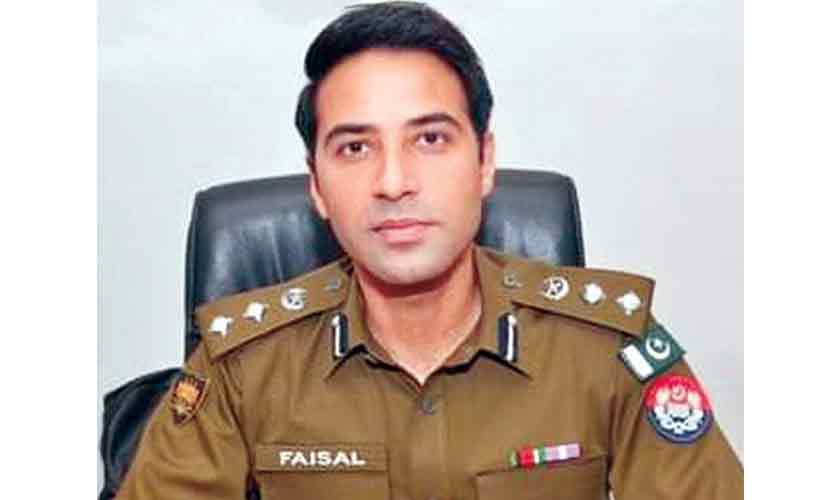
— Faisal Kamran, Lahore DIG Operations
The city police have launched an anti-beggars campaign in Lahore. The police claim to have arrested 902 beggars and registered 889 cases in January alone. Those arrested during the month include 840 men and 54 women.
Just how is this latest drive different from the past ones, most of which fell through due to lack of willingness on the part of the police and the influence of the beggars mafia? Will this campaign also lead to the arrest of drug addicts and other anti-social elements operating in the garb of beggars in the city?
The News on Sunday spoke to DIG Faisal Kamran, in charge of operations in the city. Excerpts from the interview follow:
| T |
he News on Sunday: What kind of policy do you have against the beggars?
Faisal Kamran: Police are strictly implementing a zero-tolerance policy against beggary. I am of the strong view that groups involved in begging, particularly those exploiting children and women, do not deserve any leniency. So, I have strictly directed that those behind organised beggary operations be spotted when they come to drop the beggars at various city points and arrested without fail.
TNS: What made you take on large-scale beggary in the city?
FK: Well, the answer lies within the question. The scale of beggary in Lahore has assumed alarming proportions. You name any street, road, traffic signal or crossroads in the city and chances are there will be beggars there.
The fact is, beggary has become a menace. It gives a very bad impression of Lahore, a city of over 15 million people. Every year, a large number of foreigners, overseas Pakistanis and residents of other cities visit Lahore, which is not a city of beggars.
Yet, the moment you hit the streets, it takes you no time to notice a number of beggars, including women and children rushing towards you for alms. Not all of them are destitute; most of them are professional beggars. Chief Minister Maryam Nawaz has asked for a special initiative to rid the city of this menace. She has directed the authorities to take stern action against the beggars and drug addicts, especially those on city roads.
TNS: How do you hope to end beggary after many such campaigns launched in the past have failed?
FK: I don’t think that all of anti-beggary drives initiated in the past failed to deliver. Many of those were quite successful. However, you can say that their impact was short-lived. There are several reasons for that. For one, we lack an effective system to deal with them after the arrest.
What is needed is a two-part programme. The first part is to remove the hordes of professional beggars from the city streets; the second part is their rehabilitation. For long-term impact, the rehabilitation mechanism needs to be strengthened.
TNS: On what basis do you believe that drug addicts and other anti-social elements are linked to the beggar mafia?
FK: Both addicts and beggars represent social perils. In the past, most of the addicts were seen sitting or lying in public parks and along sidewalks throughout the city. Some would die unattended and were later buried unidentified. Others would sometimes resort to violent crime.
Many of the recently arrested beggars have been found to be drug addicts. Some of those are also involved in serious crimes such as narcotics peddling.
It is in the light of these findings that the Lahore police have intensified their campaign against the beggar mafias. However, a lack of reliable data and lax enforcement are hindering comprehensive rehabilitation planning.
TNS: Have those leading the beggar mafias been identified?
FK: There are several organised groups of facilitators who are patronise and control professional beggars. The police have apprehended four facilitators. Besides sending these individuals to jail, the police have started collecting data about their other networks to bring them to justice. Secret teams have been mobilised to dismantle the networks of beggars in the city. Suspicious activities at key locations, traffic signals and major markets are also being monitored closely using the Safe City cameras.
TNS: Despite being unlawful, why has beggary proved so resilient?
FK: Professional beggary has negatively impacted our social fabric. That’s why the Lahore police have stepped up their efforts to combat this menace with full force. However, it is also a social evil. The desired results can only be achieved if the public lends us a helping hand to eradicate this menace. Citizens should be careful to help only the genuinely needy people, instead of routinely giving out money to whoever asks for it. People should not hesitate to report those involved in the begging business. They can call at the police helpline, 15. Begging is now an organised crime and a cognizable offence under the Punjab Vagrancy Ordinance-1958. The criminals are making millions of rupees every month and exploiting vulnerable people.
The writer is a print and broadcast journalist based in Lahore