

Print Story
X

| I |
n the rapidly evolving world of technology, companies like Google and OpenAI have long held dominant positions. However, a formidable new contender has emerged—and it’s not from the West. China’s DeepSeek, a powerful artificial intelligence system, is capturing global attention by challenging the United States’ dominance in AI, reshaping the balance of technological power.
DeepSeek’s emergence is not just a technological feat; it is a testament to China’s strategic ambition to become a leader in advanced technologies. The competition between China and the US in AI has far-reaching implications for the entire world, including countries like Pakistan that are seeking opportunities to harness technology for growth and development.
DeepSeek is a sophisticated AI system developed by China’s top scientists and engineers. With its ability to understand more than 50 languages, analyse vast amounts of data and solve complex real-world problems, it stands out as a groundbreaking innovation. The system’s applications span multiple sectors, including healthcare, finance, agriculture and communication. For instance, DeepSeek can assist doctors in diagnosing diseases faster, predict fluctuations in financial markets and help farmers optimise crop yields.
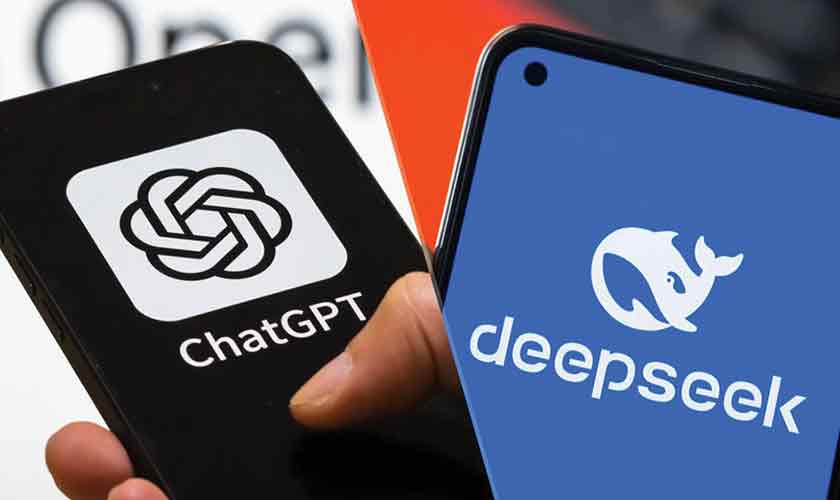
What makes DeepSeek particularly significant is its competitive edge over US-based AI systems such as ChatGPT. According to a report by the International AI Benchmark Consortium, DeepSeek outperformed its American counterparts in language processing and data analysis by 15 percent. Its multilingual capabilities make it especially valuable for global businesses and international communication. This innovation underscores China’s capacity not only to compete with but also to surpass American technological advancements in certain areas.
China’s rise in AI did not happen overnight. A decade ago, the nation was primarily associated with manufacturing inexpensive products. Today, it is a leader in cutting-edge technologies such as AI and quantum computing. This transformation has been fuelled by strategic government initiatives and massive investments.
In 2017, the Chinese government unveiled the Next Generation AI Development Plan, aiming to position China as a world leader in AI by 2030. Since then, the country has invested over $60 billion in AI research and development. DeepSeek is one of the crowning achievements of this ambitious plan, representing years of research, collaboration and strategic investment.
The success of DeepSeek has prompted a significant response from the US government and American tech giants. To maintain its competitive edge, the US passed the National AI Initiative Act in 2020, allocating billions of dollars to AI projects. Technology companies like Google, Microsoft and OpenAI have intensified their efforts to develop more advanced AI systems.
Despite these efforts, China is showing no signs of slowing down. The nation is already exploring the integration of AI with emerging technologies such as 6G networks, autonomous vehicles and smart cities. By 2030, China aims to be the undisputed global leader in AI, with DeepSeek paving the way for this ambition.
For Pakistan, the rise of DeepSeek presents both challenges and opportunities. The China-Pakistan Economic Corridor provides a unique platform for collaboration between the two nations. By leveraging AI technologies like DeepSeek, Pakistan can drive innovation and growth in various sectors.
In agriculture, which forms the backbone of Pakistan’s economy, AI can revolutionise farming practices. A 2023 study by the Pakistan Agricultural Research Council highlighted that AI-driven farming solutions could increase crop yields by up to 25 percent. DeepSeek can provide real-time information on weather patterns, soil conditions and crop health, enabling farmers to make informed decisions and improve yields. This technological intervention can significantly enhance food security and economic stability.
What makes DeepSeek particularly significant is its competitive edge over US-based AI systems such as ChatGPT. According to a report by the International AI Benchmark Consortium, DeepSeek outperformed its American counterparts in language processing and data analysis by 15 percent.
Healthcare is another sector that stands to benefit immensely. In a country where access to quality medical care is often limited, AI-powered tools can bridge the gap. DeepSeek’s diagnostic capabilities can assist healthcare professionals in detecting diseases at an early stage, saving countless lives and reducing the burden on hospitals. According to a survey conducted by the Pakistan Institute of Medical Sciences in 2022, the adoption of AI in diagnostics could reduce patient diagnostic times by 30 percent.
By investing in AI education and training programmes, Pakistan can equip its youth with the skills needed to thrive in a technology-driven world. Initiatives such as coding boot camps, tech competitions and scholarship programmes can play a pivotal role in building a skilled workforce. A 2024 report by the Pakistan Software Houses Association indicated that training 100,000 youth in AI could generate over $1 billion in exports annually.
Education and research institutions in Pakistan must also play a proactive role. By establishing AI research centres and fostering academic-industry collaborations, the country can stay competitive in the global AI landscape. Universities can introduce specialised AI degree programmes, focusing on emerging areas such as machine learning, natural language processing, and robotics. Encouraging interdisciplinary research will further enhance Pakistan’s ability to innovate and contribute to global advancements in AI.
AI can also significantly impact governance and public service delivery in Pakistan. By adopting AI-driven systems, government departments can improve efficiency, transparency, and decision-making. For instance, AI can be used to analyse public grievances, streamline service delivery and predict resource needs in various sectors. A pilot project in the Punjab, launched in 2023, demonstrated that AI-powered resource allocation systems reduced processing times by 40 perdent.
The global race for AI supremacy is not just about technological advancements; it is also about power and influence. Countries that lead in AI will wield significant global influence and economic power. For nations like Pakistan, this is a critical juncture. Embracing AI and fostering innovation can help solve pressing challenges and improve the quality of life for its citizens.
To achieve this, Pakistan must adopt a forward-thinking approach focused on education, innovation and strategic partnerships. Collaborating with China through CPEC can provide valuable opportunities for knowledge transfer and technological advancements.
The rise of DeepSeek serves as a powerful reminder that the future belongs to those who embrace technological change, invest in their people, and plan strategically for long-term growth. Pakistan has a unique opportunity to position itself as a key player in the AI-driven global landscape.
As China continues its journey towards AI supremacy, Pakistan must seize the moment and take proactive steps to harness the potential of this technological revolution. By learning from China’s success, empowering its youth and integrating AI solutions across various sectors, Pakistan can build a prosperous and sustainable future.The time to act is now; the future won’t wait.
The author is a researcher, writer and analyst in field of cyber security.He has an MPhil in cyber crimes and is currently pursuing a PhD in computer science.