Print Story
X




Pakistan is engulfed in a multifaceted crisis, of politics, governance and more
| S |
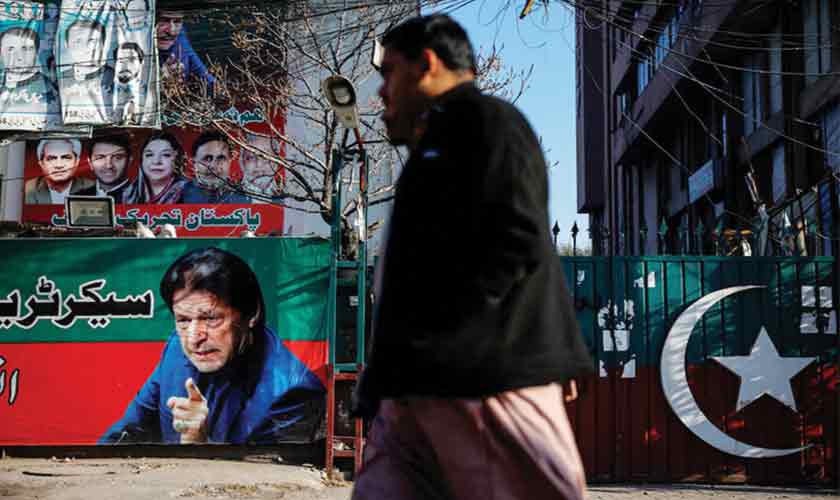
ince 2022, when Imran Khan was ousted through a no confidence move, Pakistan has been trapped in an unprecedented political and governance crisis, characterised by four interwoven dilemmas: significant public support commanded by Imran Khan and his Pakistan Tehreek-i-Insaf party; the ruling government’s struggle to establish legitimacy; the establishment’s diminished credibility as a political arbiter; and the worsening security conditions in Balochistan and Khyber Pakhtunkhwa.
The country is caught in a clash of competing narratives. One the one hand, former prime minister Imran Khan enjoys immense public support. Imran Khan and the PTI have cultivated an image as an anti-establishment, populist opposition representing the aspirations of those tired of dynastic politics. Arguably, PTI’s rhetoric against corruption, elite capture and military meddling in politics resonates widely, especially among the youth. Following his imprisonment, Imran Khan’s narrative of victimhood has strengthened his political base, leading to unprecedented mobilisation against the government. Despite its repeated attempts to launch a widespread movement against the current political arrangement, the PTI has been unable to topple the government. However, this failure cannot in any way be attributed to the popularity of the government. In other words, while the PTI can win popular approval of its narrative, it cannot enter the power corridors because of a hostile relationship with the powerful establishment of the country.
On the other side, the ruling coalition, led by Pakistan Muslim League-Nawaz and the Pakistan Peoples Party, is struggling to establish its legitimacy. The government formed following Khan’s ouster in 2022 failed to gain popular trust. The PTI as well as some other parties insist that the 2024 elections were massively rigged. They thus dispute the political legitimacy of the parliament and the government. Opponents allege that that the government was facilitated into power by the establishment and raise concerns over electoral manipulation and democratic backsliding.
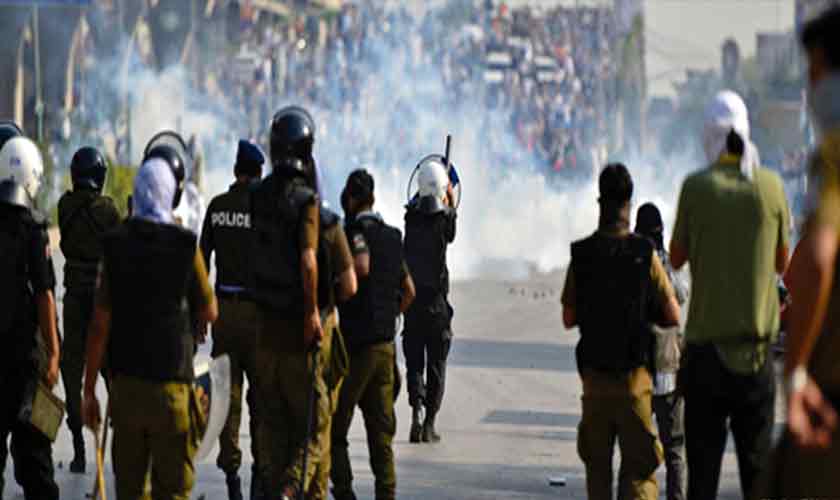
The economic turmoil and governance failures have amplified public resentment. There is a perception that the current administration lacks both credibility and a coherent policy vision. In the absence of broadly acknowledged legitimacy, the ruling coalition finds itself unable to effectively govern or push forward necessary reforms. Instead, it relies on suppressive tactics—media censorship, arrest of political opponents and persecution of PTI members—to maintain control. This has deepened political polarisation, making democratic reconciliation harder.
This dichotomy of narratives has caused a political deadlock. The establishment has had an outsized role in the country’s political affairs, acting as the ultimate arbitrator. This pattern, deeply entrenched in the country’s history, has prevented the development of stable democratic institutions. The establishment’s role has not been limited to straightforward coups but also included manipulation of the judiciary, media censorship and political engineering. However, during the last two and a half years, its institutional capacity for political management has declined considerably. From arrest of PTI leaders to media blackouts of pro-Khan coverage, the establishment is considered the ultimate approver of the coercive measures to suppress dissent. In some instances, these actions have backfired, galvanising public support for Khan and exposing the authority’s diminishing ability to control the political narrative.
While political instability dominates national discourse, the worsening security situation poses another grave threat. Balochistan and Khyber Pakhtunkhwa have seen a resurgence of militant activities, with separatist groups and extremist factions targeting both security forces and civilians. The Baloch insurgency, rooted in historical grievances and economic marginalisation, has intensified, leading to frequent attacks on state infrastructure and personnel. The intensification of the Tehreek-i-Taliban Pakistan militancy in Khyber Pakhtunkhwa has raised concerns about the country’s counterterrorism strategy. It has been argued that the government’s focus on suppressing political opposition rather than addressing the insurgency threats has allowed these groups to gain strength.
Independent surveys have shown that people’s trust in the institutions—the legislature, the judiciary and the executive—has declined. Key institutions, including the superior judiciary and the Election Commission of Pakistan, are viewed as partisan. The inability of political actors to engage in constructive dialogue has also deepened political polarisation so that compromise is seen by some as a betrayal rather than a necessity for democratic stability.
The fourfold crisis poses severe long-term threats to Pakistan’s stability and global standing. Whereas national leaderships across the world are scrambling to assess their strategies to deal with emerging fault lines in North America, Europe, Middle East and beyond, Pakistan is engulfed in its domestic crisis. The continued political instability has profound implications for Pakistan’s national interests. The country’s poor democratic credentials are affecting its global standing. The lack of credible leadership and institutional strength is undermining its ability to negotiate favourable trade deals, attract foreign investment and play a more influential role in regional geopolitics.
Additionally, the governance paralysis has hampered social development. Education, healthcare and infrastructure projects have taken a backseat. The absence of a long-term vision has deepened socioeconomic inequalities, fuelling radicalisation and instability.
Pakistan’s political crisis is not just about Imran Khan’s popularity and the government’s lack of popularity. It is a reflection also of deeper structural issues that have plagued the country for decades. The long-term consequences of democratic deficit and poor governance are dire, threatening Pakistan’s economic growth, social cohesion and international credibility.
Breaking this vicious cycle requires a fundamental shift in the political culture. Civilian supremacy must be restored; all political stakeholders must commit to democratic principles. Institutional reforms, including judicial independence, free and fair elections and media freedoms, are essential to rebuilding public trust. Only through sustained democratic development can Pakistan achieve true stability and prosperity, ensuring that political crises become a thing of the past rather than a recurring national predicament.
The writer is a professor of government at Houston Community College, USA. He recently published his book The Rise of the Semi-Core: China, India, and Pakistan in the World-System. He can be reached at suklashari@gmail.com