


Print Story
X




Climate change is disrupting Pakistan’s avian highways
| P |
akistan’s position as a vital crossroads for migratory birds is under threat from rising temperatures and habitat loss, endangering the ancient flight paths.
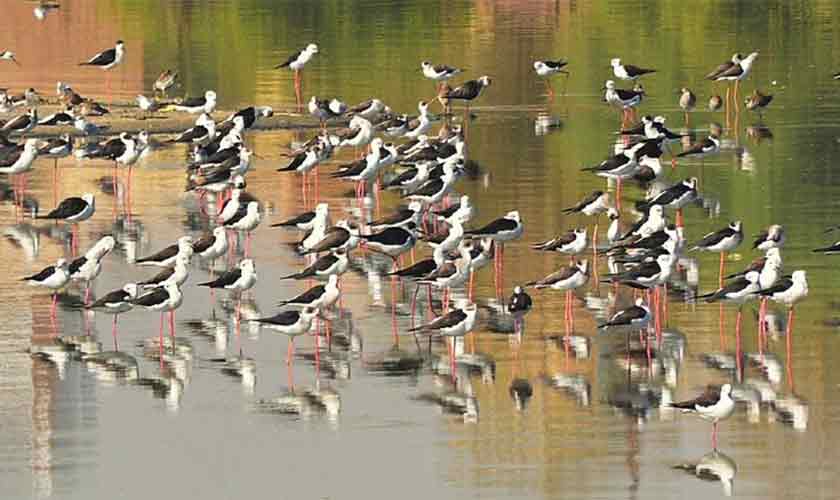
There was a time when approximately one million birds from Central Asian countries annually migrated through the International Migratory Bird Route Number 4 —also known as the Indus Flyway or the Green Route. This flight path stretches from the Karakoram ranges to the Indus Delta (covering a distance of about 2,800 miles (4,500 km), according to a research published by the Punjab University. However, the numbers have been declining because climate change is dramatically reshaping bird migration patterns across Central Asia. The changing weather patterns are forcing birds to undertake unprecedented adaptations in response to rapidly shifting ecological conditions including illegal fishing and water pollution, deforestation and bird trapping.
Another study suggests that birds traditionally wintering in regions like Pakistan’s southern provinces — Sindh and Balochistan —are now extending their journeys to find more hospitable environments, driven by critical changes in wetland ecosystems caused by glacier melt and irregular monsoon patterns.
Besides, every year, celebrity hunters visit southern Punjab and Sindh to hunt the Houbara Bustard. In 2023, approximately 1,200 Arab falconers visited Pakistan for hunting trips, representing a 12 percent increase over the previous year. According to some reports, these visitors hunted between 2,000 and 3,000 Houbara Bustards. Each hunting permit allowed the capture of up to 100 birds over ten days. This increase in hunting raises concerns about the survival of Houbara Bustard populations, which are seen as vulnerable because of habitat loss and too much hunting.
Pakistan is one of the focal points on the complex migration routes of birds around the world. Here, millions of birds migrate along paths that are now threatened by the disastrous impacts of climate change.
According to the WWF-Pakistan, significant wetland changes are occurring from the great wetlands of the Indus Delta to the complex mangrove forests of Karachi without notice. The changes impact not only bird populations but the entire ecosystems.
A continent of wings
Pakistan occupies a unique position on the Central Asian Flyway, which is one of the world’s most important bird migration routes. According to the Pakistan Wetlands Programme (WWF-Pakistan) which ran from 2005 to 2012, it is an important stopover for more than 500 bird species, forming a complicated path that links nesting areas in Central Asia, Russia and northern Europe to winter homes across the Indian subcontinent.
The migrating birds generally arrive in Pakistan in autumn, during October-November and depart during spring in March-April. Some of the birds, such as the critically endangered Siberian crane (Grus leucogeranus), impressive bar-headed goose (Anser indicus) and elegant white stork (Ciconia) depend on such ancient paths for their survival.
The climate crisis
The climate data obtained from the Pakistan Meteorological Department shows an alarming trend. Temperatures have increased by almost 0.5°C in every decade since the 1960s. This has significant environmental implications. Changes in temperatures have seriously impacted bird migrations.
Muhammad Jamshed Iqbal from WWF-Pakistan, talking exclusively to this scribe, said: “The impact is comprehensive. We are seeing dramatic shifts in migration patterns along the Indus flyway. Wetlands are shrinking, water is increasingly scarce; entire species are vanishing from their traditional territories.”
Migratory birds are living indicators of broad environmental health, offering critical insights into ecological changes occurring across our planet.
“Rising temperatures have altered the seasonal cues birds rely on,” explains Abdur Razzaq Khan, a wildlife expert with nearly four decades of experience. “While bird migration behaviour is mostly controlled genetically, we are observing unprecedented flexibility and disruption in migratory patterns.”
“Wetlands, including Ramsar sites like Haleji Lake, Keenjhar Lake and Taunsa Barrage, are drying up or shrinking due to erratic rainfall, reduced water flow in rivers and human activities,” says Dr Zulfiqar Ali, a zoology professor at the University of the Punjab. “Migratory waterbirds like bar-headed geese, northern pintails and greater flamingos depend heavily on these wetlands for feeding and resting during migration.”
Ecological indicators: Population decline and threat levels
The International Union for Conservation of Nature (IUCN) has reported that about 31 percent of bird species in Pakistan are now at risk. Some types are close to disappearing forever. The Indian vulture (Gyps indicus) and Bengal florican (Houbaropsis bengalensis) are just two of the many species in great danger.
Multifaceted challenges
The impact of climate change extends far beyond simple temperature increases. The intricate web of ecological challenges includes:
- Habitat transformation: Wetlands, critical for migratory birds, are rapidly shrinking. The Indus Delta and areas around Mangla Dam have seen significant habitat degradation due to reduced water flow and resource over-exploitation.
- Urban expansion: Cities like Karachi, Lahore and Islamabad are expanding aggressively, destroying crucial green spaces and wetland habitats. A wildlife expert says, “Mangrove forests in the Indus Delta are declining due to urban development and industrial pollution. Artificial lighting confuses birds’ navigation systems. Urban noise increases stress and disrupts communication.”
- Extreme weather events: Floods, droughts and cyclones are becoming more frequent and intense. The devastating 2010 floods in the Indus River basin displaced numerous bird species and destroyed critical habitats.
Local perspectives
Abdul Qayum from the Coastal Association for Research and Development (CARD) - offers a ground-level perspective: “Many birds are not arriving in large numbers any longer. Coots, ducks, cranes, flamingos and pelicans are either absent or arriving in small numbers. The Damb area, once famous for migratory birds, has seen a significant decline in avian visitors.”
Conservation
Despite these challenges, conservation efforts provide hope. A few organisations are actively working to restore habitats and protect migratory bird species.
Future outlook
Experts agree that urgent, comprehensive action is needed to implement stricter habitat conservation policies and to develop comprehensive monitoring systems for bird populations.
There is a need to restore and protect critical wetland ecosystems while promoting sustainable urban development. The experts call for raising public awareness about the importance of migratory bird conservation.
A broader perspective
Migratory birds are living indicators of broad environmental health, offering critical insights into ecological changes occurring across our planet.
As climate change continues to reshape global ecosystems, migratory birds represent more than just beautiful natural phenomena—they are complex, adaptive beings navigating an increasingly challenging world.
“We’re not just protecting birds,” emphasises Razzaq Khan. “We’re preserving the delicate balance of entire ecosystems that sustain life on our planet.”
The illegal hunting of migratory birds should be stopped once and for all.
The writer is a technology enthusiast and climate justice advocate. He can be reached at muhammadtalaljokhio@gmail.com or on X: @muhammadtalalj