

Print Story
X




It is with a slightly different, wider, lens that citizens should look at the year past, keeping the self-flagellation mode aside. The flip side is looking far ahead than the narrow interests — slowly building an alternative agenda for what a new peaceful, progressive and equal Pakistan must look like
| I |
t seems right that a new year should begin with hope. Unfortunately, for the human rights community, it becomes an occasion for stock-taking, to count the rights violations, which in a country like ours, on balance, leaves little room for hope. With each passing year, despondency appears to triumph. Thus, a glance at this year’s chart would look dismal, likely a little more than the year before.
“The way we see things is affected by what we know or believe,” wrote John Berger in another context. But, perhaps, a change of perspective is in order for all Pakistani citizens and not just those observing human rights — to look at the flip side too and not just the one they usually see. This way, they might get a complete picture which, if I am allowed to say, is not as bleak as they tend to believe or know.
It is with a slightly different, wider, lens that the citizens should look at the year past, leaving the self-flagellation mode aside for a while. They have to look beyond the reported and unreported violations of fundamental freedoms, elections, instances of violence by the state and against it and challenges to rule of law, fair trial and independence of judiciary. Change the framework of looking and they will discover that the despair and gloom is offset by countless instances of resistance and acts of defiance against the ancien regime. The flip side, they would notice, is looking far ahead than the day to day firefighting and narrow authoritarian interests articulated in a crude show of power. It is slowly building an alternative agenda for what a new peaceful, progressive and more equal Pakistan must look like.
It might be easier to dismantle this new picture that the citizens are being asked to imagine and look at the parts; one by one.
Governments function because they are supposed to reflect the will of the people who in turn recognise them as legitimate rulers. The pact between the citizen and the state is crucial for a government’s moral authority, which is exercised in how it applies rule of law, democratic values and constitutional supremacy. The realists might balk at the use of the word ‘moral’ but the truth is that the state also uses certain abstract terms to justify a lot of its human rights violations. Often there is a ‘moral acceptance’ attached to these terms, like ‘national security’ for instance; a smart move till it gets called out, because it must compete with a counter moral argument that resides in the will of the people. This is what happened this year. The state’s narrative and the government’s legitimacy were both called into question, a sentiment that hardened with each human rights violation.
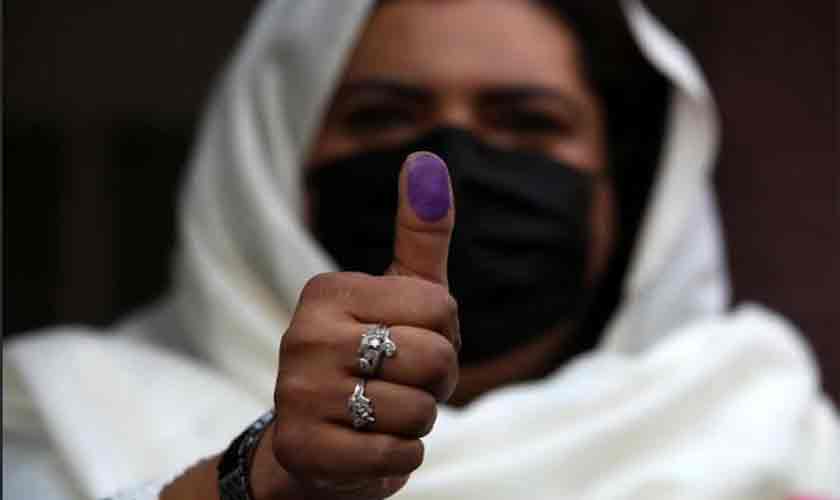
The most poignant moment in this regard came on February 8, the day of the general elections, held after much delay. Not unlike previous elections, a few parties were discouraged from contesting. One particular party was in the eye of the storm: the leadership was put in jail; there were arbitrary arrests of party workers, many of whom were forcibly disappeared; there was crackdown on the supporters’ right of peaceful assembly or election campaign and pressure on candidates to resign or exit politics; and their nomination papers were rejected. Finally, the Supreme Court allowed the Election Commission to take away its election symbol.
The polling day was reflective of the transformative power of vote; undeterred voters found the right symbol and the right candidate. The ancien regime did what it specialises in – it halted and then changed the results to get its desired political outcome. It lost face in the process.
Cries for banning the party reverberated throughout the year, losing all steam the moment these were uttered. In July, the state managed to proscribe a group that claims to aim to protect the interests of all Pashtuns living in the country while staying within the constitutional parameters. It tried all it could but could not stop it from holding a national jirga in October. Touted as the biggest and the most representative jirga ever, it sought peace and demilitarisation, not just in terms of militancy of the Taliban but also enforced disappearances and extrajudicial killings.
The year was also marked by Baloch voices that spoke of peace, seeking rights guaranteed in the constitution. The unarmed, non-violent resistance movement is led by young educated Baloch women who have defied the traditional power centres, including tribal sardars siding with the regime or the ones who are said to have blocked the development of the ordinary Baloch. No amount of allegations of terrorism or being placed on the Exit Control List can take away the legitimate, moral, formidable power of this new youth-led movement.
Each incident of extreme violence in Kurram has been followed by ordinary people across the sectarian divide coming out in huge numbers and demanding peace for their region.
If courts — touted as the avenue of last resort for those wronged — are being projected as having finally been ‘neutralised,’ the euphoria may prove premature. The regime may be unpleasantly surprised to find that the independence of the judiciary has already found its feet; or almost.
So, there is hope. Let us celebrate all acts of resistance and defiance. They have the potential to transform this country. Here’s to a happy new year.
The writer is a former editor of TNS. She is currently the Human Rights Commission of Pakistan director