Print Story
X




Marketing tactics used to promote breast milk substitutes discourage breastfeeding
| D |
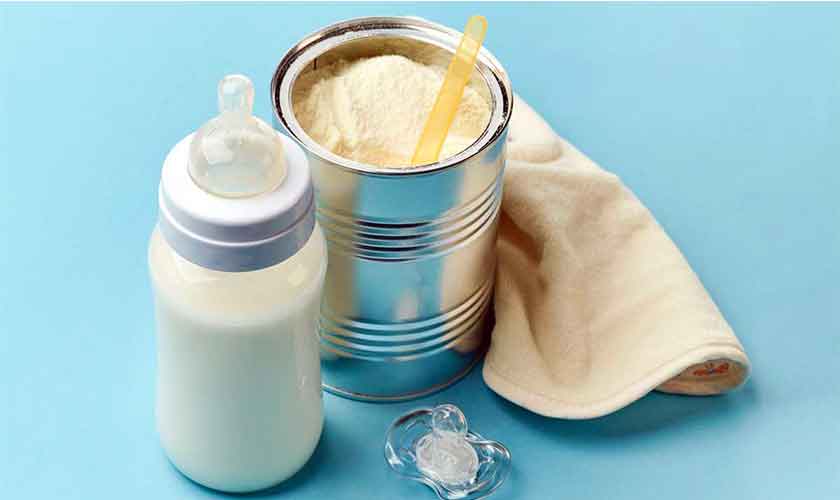
ue to the recent increase in prices of infant formula milk products in Pakistan, Jamal Nasir is now spending around Rs 40,000 monthly to feed his five-month-old twin sons after a renowned paediatrician asked his wife to give a breast milk substitute to their children instead of breastfeeding, claiming that the formula milk will not only make her children healthy but also protect them from some diseases.
“My wife used to breastfeed them in the first few weeks after their birth, but when her doctor advised her to give them infant formula milk, she abandoned breastfeeding despite my opposition. Instead of becoming healthier, both the kids have frequent diarrhea. They have also contracted respiratory infections. I’m a salaried person, and spending more than Rs 40,000 on feeding two infants is unbearable for me”, Jamal says.
Jamal is not the only person who is compelled to buy infant formula milk for his children. Hundreds of thousands of parents across Pakistan regularly buy breast milk substitutes to feed their children on the prescription and advice from their doctors, although they very well know that a child can survive solely on mother’s feed for the first six months of their life.
“A child’s nutritional needs are adequately fulfilled by breastfeeding during the first six months of their life. They don’t even need water during this period. This is called exclusive breastfeeding. Unfortunately, hardly 40 percent of women breastfeed their children in Pakistan due to a lack of awareness and unethical marketing practices by the formula milk companies”, says Dr Mumtaz Ali Khan, senior technical officer at the National Institute of Health (NIH), Islamabad.
A paediatrician by profession, Dr Khan, says despite religious directives regarding breastfeeding children for two years, many families waste valuable money on breast milk substitutes, which are not only hazardous for the health of children but also for the mothers.
To discourage its growing use, some members of the Pakistan Pediatric Association (PPA) are trying to get formula milk declared a ‘prescription medicine’ that should only be sold at pharmacies and medical stores on the prescription of qualified physicians.
“Recently, the Sindh cabinet has approved a draft law restricting the representatives of formula milk companies from visiting healthcare professionals and institutions. It limits the availability of formula milk to pharmacies only, complementary food declared as infant formula, removal of baby food industry representatives from Infant Formula Milk Board and declaring all milk products for children up to 36 months as breast milk substitutes”, says Prof Khalid Shafi, secretary general of the Pakistan Pediatric Association.
Dr Shafi says since the approval of the new draft law on breast milk substitutes by the Sindh cabinet, the baby food industry has intensified efforts to prevent the passage of the bill from the provincial assembly in its current form. Representatives of the industry, who have formed a Baby Food and Nutrition Council, have also met the health minister, Dr Azra Pechuho, to convince her that the bill should not be passed in its present form.
To discourage its growing use, Pakistan Pediatric Association (PPA) members are trying to get formula milk declared a ‘prescription medicine’, which should only be sold at pharmacies and medical stores on the prescription of qualified physicians.
“The industry is trying its best to protect its business interests by creating hurdles in our efforts to protect our children. They are using all types of tactics. We are also using all our influence to counter their moves. It is a war with predators who are willing to harm our children for their profits,” Prof Shafi says.
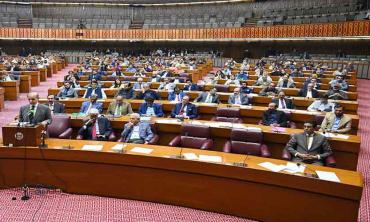
Some of the leading parliamentarians propose that the production and distribution of formula milk products should be regulated, and there should be strict laws for their regulation.
“Formula milk products should be heavily taxed like tobacco products and cigarettes to make them unaffordable for most people as they are damaging for our future generation,” says Senator Sehar Kamran, adding that besides strict laws and heavy taxation, awareness among mothers was key to discouraging formula milk consumption and promoting breastfeeding.
Senator Kamran says that in some communities young mothers who feed their children get ridiculed. This discourages the healthy practice. According to her, even after the promulgation of the laws, implementation remains a serious challenge in Pakistan. She believes that strong efforts should be made to discourage the use of formula milk.
“We need to educate our women using literature in Urdu and local languages so that most of them can understand what is being said. Doctors and authorities should jointly launch a comprehensive campaign to promote breastfeeding”, she adds.
Director General Health Services Dr Baseer Achackzai, a nutrition expert, says breast milk substitutes (BMS) are artificial milk which cause obesity, malnutrition and diarrhoea among children. These products can harm children’s health. Unfortunately, those are presented and promoted as healthy products. The situation needs to be rectified.
Dr Achackzai says they are trying their best to create awareness regarding breastfeeding in the country. He says the people should follow Quranic injunctions in this regard.
Pakistan Pediatric Association president, Prof Dr Jamal Raza, calls for a complete ban on the import of formula milk products, saying Pakistan is spending over $400 million for their import which is completely unnecessary and mostly harmful.
He laments that there exists no mechanism for the price and quality control of formula milk in Pakistan, saying their prices are raised by their importers and marketing companies and nobody knows about the quality and ingredients. “On an average, Rs 30,000 is spent by a family per month for arranging formula milk if over-dilution is not done. This is considerable financial burden on people, which can be avoided by promoting breast milk”, he says, adding that formula milk is adding to the malnutrition burden in the country.
Dr Raza urges policymakers to take action and paediatricians to discourage parents from giving formula milk to children. He says, “Strict laws should be promulgated to discourage the illegal marketing of formula milk.”
The writer is an investigative reporter, currently covering health, science, environment and water issues for The News International