
Greenland ice melting past ‘tipping point’
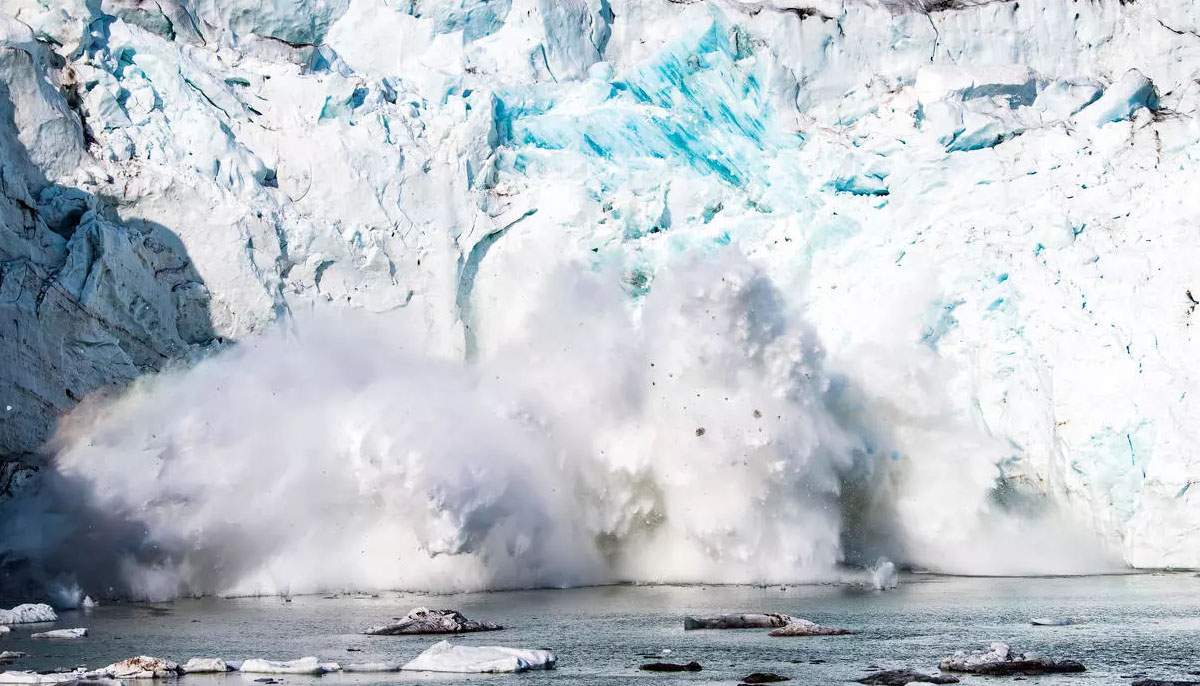
COPENHAGEN: The melting of Greenland’s ice cap has gone so far that it is now irreversible, with snowfall no longer able to compensate for the loss of ice even if global warming were to end today, according to researchers.
"Greenland’s glaciers have passed a tipping point of sorts, where the snowfall that replenishes the ice sheet each year cannot keep up with the ice that is flowing into the ocean from glaciers," said a statement from Ohio State University, where several authors of a study published August 13 in Communications Earth and Environment are based.
Climate change is having a devastating effect on the world’s glaciers, with the ice melt posing a threat to millions of people around the world. Alarming reports about the ice melt on the vast Arctic island -- which is warming twice as fast as the rest of the planet -- have multiplied in recent years.
Eighty-five percent of the surface of Greenland, an island of two million square kilometres or four times the size of France, is covered in ice. "The study confirms results from a lot of other studies ... that the combination of melt and calving of icebergs explains the large amount of ice lost from Greenland over the last couple of decades," Ruth Mottram, a climatologist at Denmark’s Meteorological Institute told AFP.
In the 1980s and 1990s, the ice cap lost around 450 billion tonnes of ice per year, which was compensated by snowfall, the scientists said after analysing 40 years of data. But the ice melt has accelerated this century, climbing to 500 billion tonnes and it is no longer sufficiently replenished with snow.
"The Greenland ice sheet is losing mass at accelerated rates in the 21st century, making it the largest single contributor to rising sea levels," the study said.
The melting ice actually causes more ice to melt, as the meltwater that collects on the ice sheet absorbs more of the Sun’s radiative force than snow and ice do -- snow and ice reflect sunlight back into space.
In addition, the loss of ice exposes the permafrost, or frozen soil, which when thawed releases powerful greenhouse gases into the atmosphere, trapping heat. Therefore the melting ice is not just a symptom of global warming, it is also becoming a driver of global warming.
While researchers are in agreement that the Greenland ice melt is worrying, not all agree that it has reached a ‘tipping point’. "We don’t know how much greenhouse gas concentrations will rise," Mottram said.
The published results show that "even if we stabilised temperatures (and greenhouse gas emissions) at the present level, the ice sheet would still continue to melt, but only until the size of the ice sheet is once more in balance with the climate," she said.







-
 Lee Andrews Mystery Takes Another Twist After Reported Phone Activity
 -
 'Industry' Season 4 Made HBO Heads Deeply 'uncomfortable', But Why?
 -
 Meghan Markle Issues Stark Warning To Prince Harry
 -
 Fake CAPTCHA Scam Installs Malware In Seconds: Here’s How To Stay Safe
 -
 'Blue Blood' Prince Harry Turns ‘wildly’ Different From Meghan Markle
 -
 Probe Against Andrew Mountbatten-Windsor Widens From Windsor To Buckingham Palace
 -
 Princess Beatrice Eyes £60K-a-year College For Stepson Wolfie: Details Inside
 -
 Ex Prince Andrew Managed Arms Deals For Mom? He Made Her A Lot Of Money’
 -
 Google's AI Bans Artists' Accounts With Zero Human Review
 -
 New Study Suggests Rapid Weight Loss May Be More Effective Than Gradual Dieting
 -
 'Never In Million Years': Dog Owner Looks Back At Beloved Pet Nearly Losing Life
 -
 Prince Harry, Meghan Markle Offer Peace To King Charles, William: 'Fresh Start'
 -
 Australia: Man Dies After Shark Attack In Queensland
 -
 King Charles Secretly Makes Things Clear: ‘Come To Me Man To Man I Won’t Take Meghan’s Orders’
 -
 'World Will Get Some Good News In Next Few Hours'
 -
 Queen Elizabeth Remained 'fiercely Loyal' To Andrew Even After Epstein Scandal