
Maleeha deposes before US Senate Committee
Saturday, October 03, 2009

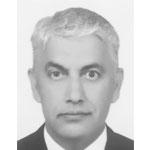
WASHINGTON: Testifying before a US Senate Committee, Dr Maleeha Lodhi, former Pakistan Ambassador to the US and the UK, has warned of the destabilising effects on Pakistan if Washington opted for a strategy of more military escalation in Afghanistan.

Opposing any troop surge that is being debated in the US media and Congress, Dr Lodhi urged the Obama administration to instead seek a political solution, pointing out that military force has neither brought about regional stability nor helped achieve US goals, says a message received here. “The past eight years testify to this,” she said.

In her remarks at the hearing of the Senate Foreign Relations Committee, chaired by Senator John Kerry, she said that Pakistan’s stability had been gravely undermined by the twin blowback from Afghanistan: first by the war against the Soviet occupation and second, the consequences of the 2001 US military intervention.

Appreciating the hearing titled ‘Afghanistan’s impact on Pakistan, Dr Maleeha said that it was important that the ramifications for Pakistan of any decision that the administration took on Afghanistan be carefully assessed.

She said the choice for the US should not be one between open-ended military escalation and cut and run from Afghanistan. Both would be disastrous for the region. The first would trap the West in a Vietnam-style quagmire and a war without end. The second would repeat the strategic error of the 1990’s when the US abandoned Afghanistan to the chaos that nurtured terrorism.

She said the US must heed the lesson of history in a country that has been a graveyard of empires, which is that outsiders cannot expect to overcome or defeat the resistance to foreign forces. She recalled that at the peak of its occupation, the Soviet Union had deployed 140,000 troops and also had the support of a 100,000 strong Afghan Army, but it failed to defeat the Mujahideen.

She said a third way must be found which should be a new, comprehensive strategy with political, economic and military components. But its main thrust should be to pursue a political solution aimed at separating elements of Taliban from al-Qaeda and drawing all Afghan groups into a process of reconciliation.

Dr Lodhi said that Afghan leaders and US commanders had talked about reconciliation but what has been missing is a political framework within which serious negotiations can be pursued and meaningful incentives offered to the insurgents.

Talks, initially through intermediaries, with those Taliban elements which are ready to disavow al-Qaeda and abandon violence should be undertaken and terms set out in exchange of a progressive withdrawal of Western forces from Afghanistan.

If an agreement can be arrived at and backed by a regional consensus, a UN/OIC peace keeping force drawn from Muslim countries can be inducted to implement such an accord.In listing the negative effects that further military escalation can have on Pakistan, she mentioned five: possible influx of more militants from across the border, refugees fleeing intensified fighting, increased vulnerability of US-Nato ground supply routes through Pakistan, which could over stretch the Pakistan army that would have to protect these, violent reprisals in mainland Pakistan, and most importantly placing the fragile public consensus that had recently been forged to fight militancy.

Maleeha Lodhi also charted the success that Pakistan had recently had in countering militancy in Swat, Bajaur and containing, by a strategy of military encirclement, the Tehrik-i-Taliban Pakistan in SWA.