
![]() |
| Winning the peace |
| Tuesday, June 02, 2009 By Dr Maleeha Lodhi |
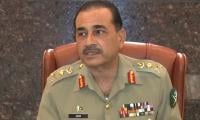
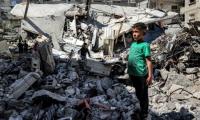
| The writer is a former envoy to the US and the UK, and a former editor of The News A spate of terrorist bombings has rocked the country in the past week. A day after the devastating attack in the heart of Lahore, multiple explosions followed in Peshawar's historic Qissa Khawani bazaar and D.I. Khan. This wave of violent reprisals was widely anticipated in the wake of the increasingly effective month-old military operation in Swat. The Tehrik-e-Taliban Pakistan (TTP) was quick to take responsibility for the Lahore atrocity that targeted a police centre and an intelligence agency's offices, claiming over 20 lives while leaving hundreds of people injured. Baitullah Mehsud's deputy and Taliban commander Hakimullah Mehsud announced that the attack was in retaliation for the Swat operation. He vowed further attacks on government targets in other Punjab cities and Islamabad and warned residents to evacuate these urban centres. The terrorist backlash is principally aimed at draining public support for the army offensive in Swat, even though it may have other objectives. The violent effort by militants to take the war to the country's urban heartland indicates a number of possibilities: a) That the bombings are acts of desperation reflecting the inability of the TTP to help its militant allies in the combat zone, in the face of the military's use of massive fire power and its effective closure of supply routes into Malakand Division. b) The terrorist attacks represent an effort to reduce pressure on the militants in Swat by widening the theatre of conflict. c) The bombings aim to raise the stakes in order to deter the widely anticipated military action against Baitullah Mehsud in South Waziristan. d) By upping the ante in the Punjab heartland the TTP wants to create a high impact while escalating and enhancing the "costs" of the Swat operation. The retaliatory actions may well be seeking to achieve a combination of these aims. But central to all these objectives is to rattle the political and military establishments, weaken national resolve and erode public support for the anti-militancy campaign. The national leadership has responded appropriately, restating its commitment to stay the course. Prime Minister Yusuf Raza Gilani has said the campaign will be taken to its logical end. Chief of Army Staff, General Ashfaq Parvez Kayani, has reiterated the army's resolve to "defeat those out to destabilize the country", and declared that the country will not be terrorized by such actions. The public reaction, so far, indicates that the anti-Taliban sentiment is solidifying rather than fragmenting. The consensus behind the fight against militancy is holding, while the bloody mayhem in Lahore and the Frontier is reinforcing public anger at the wanton violence unleashed by the militants. For now it is the militants who are losing hearts and minds. If fear and ambivalence dictated the public mood before, outrage at the excesses of the militants appears to define it for now. But public opinion can be fragile in the weeks ahead. The broad consensus that has emerged over the past month could fray under the mounting pressure of a prolonged bombing campaign of urban centres, accompanied by levels of disruption that can test the public's patience. Fear and war-weariness can trump the public will to resist the militants. This makes it necessary for the government to complement its statements of resolve with political outreach to maintain and consolidate the consensus as it comes under increasing strain. By spreading its terror tactics to the cities, the TTP has thrown down the gauntlet to the authorities. This presents the country's security managers with the choice of either opting for a defensive or an offensive response. The former is evident in the tightening of security in major cities but a weak police and civilian intelligence apparatus sets sharp limits on this approach to deter further attacks, which can be expected to continue. An offensive response would involve striking at the TTP in its stronghold. But before securing Swat and consolidating control of Bajaur this response would risk military overstretch with all its attendant risks. The timing for opening another front would have to be determined very carefully by weighing several military and political considerations. They would include an accurate assessment of Mehsud's capabilities and on whether his efforts to forge a broader front with other militants are foundering or gaining ground. A critical factor in this evaluation would be whether public opinion will support the expansion of military engagement into another, bloodier theatre of combat. While these policy options are being weighed, the need to stiffen and sustain the public resolve will remain the key to defeating militancy. It cannot be assumed that the widespread antipathy towards militants will continue to translate into unshakeable support for the army operation. Fear and panic can inject a dynamic that can undermine the public determination to confront the Taliban in an unfortunate repeat of the past. The country's leadership has to brace itself and also steel the public determination to withstand the shock waves of more urban violence by the militants. Much will of course depend on the Swat operation being able to attain the core goal of disabling the top leadership of the Swat Taliban. This may not be quick or easy as these leaders appear to have escaped to hard-to-access mountainous hideouts. So long as these militant commanders remain at bay it will be difficult to reverse the climate of fear and insecurity that prevails even in the areas that have been cleared. Only by neutralizing the top leaders can a decisive blow be delivered to the strategic centre of the militant threat. This will create a demonstration effect that reverberates beyond Malakand, undermine the morale of the TTP and significantly diminish the space for militant activity. Overall, sustainable success in Malakand has to be construed in civilian-governance rather than in military terms. The biggest question mark still relates to civilian capacity. With virtually no possibility of assembling or mobilizing a civilian 'surge' to fill the vaccum in the post-operation phase, an emergency or interim structure will have to be devised that can be expeditiously installed once the region has been cleared of militants. Tough challenges will be posed by the post-conflict situation. The battle zone has witnessed intense war fighting on a scale unprecedented in the region's history, dislocating close to 3 million people and leaving more than 80 soldiers and over 1,200 militants dead. This adds up to a toxic environment of vast devastation, broken infrastructure and a shattered economy. To repatriate the internally displaced persons (IDPs) back to their homes will be an extraordinary task. To resettle them in an environment where basic services are functioning and law enforcement is assured will be an even greater challenge. The situation cannot realistically be expected to normalize so easily or speedily in the aftermath of so much destruction and disruption. For these reasons and, in the absence of a viable civilian arrangement that can be fashioned in the near term, the army may have to prepare itself to remain in Swat longer than it may wish to. Establishing a cantonment in Mingora for a permanent presence in the heart of the region to prevent the return of militants and insure a secure environment for the residents of Swat now appears inevitable. This will allow time for the envisaged recruitment and training of the special 10,000 strong police force that can gradually take charge of law enforcement. This is expected to be mostly drawn from retired service personnel (estimated to be around 3 million soldiers). The political and military challenges ahead are daunting but the effectiveness of governance arrangements in the war-torn valley of Swat will determine ultimate success. This will require a comprehensive plan, not a patchwork, ad hoc, fire-fighting response. Without this, winning the peace will prove elusive. |