
![]() |
| ‘Killing of top PLO official highlights Palestinian rifts’ |
| Wednesday, March 25, 2009 |
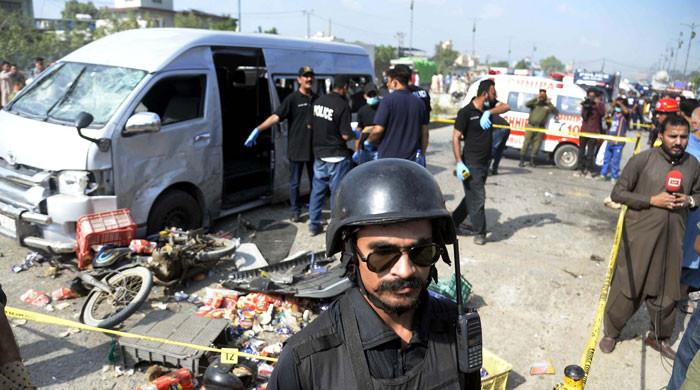
| RIYADH/BEIRUT: Saudi King Abdullah called for Arab and Palestinian unity in the face of Israeli “aggression” as he opened the new session of the kingdom’s Shura (consultative) Council on Tuesday. Speaking a week before an Arab League summit in Qatar, Abdullah told the 150-member appointed body that differences among Arab and Islamic countries had been exploited by Israel and contributed to a “dark atmosphere” in the region. But he added that the deep rift between Palestinian factions was even more serious than Israeli policy as a challenge to Arab unity. “The challenges that face your nation, at the domestic level and the level of Arab and Islamic nations ... require twice as much responsibility in countering them as they emerge one after another, including Israeli aggression that creates mischief in the land,” he said. Particularly concerning was “the Palestinian dispute between brothers which is more serious in jeopardising our just cause than Israeli aggression,” the king said, also pointing to “Arab and Islamic differences that thrill the foe and pain friends.” Israel’s deadly 22-day genocidal onslaught against the Gaza Strip at the turn of the year deepened the rift between the territory’s Hamas rulers and Western-backed Palestinian President Mahmoud Abbas. It also created a split in the Arab world between governments like Qatar and Syria which voiced support for Hamas, and Saudi Arabia and Egypt which sided firmly with Abbas. The Saudis have since pushed hard for Arab reconciliation, hosting the leaders of Syria, Egypt and Kuwait for a March 11 mini-summit in a bid to settle differences ahead of the Arab summit set for March 29 and 30. The kingdom has also called repeatedly for the Islamists of Hamas to mend fences with the Palestinian leadership. Meanwhile, the killing of a top PLO official in Lebanon further destabilises an already explosive situation in the country’s refugee camps and undermines the authority of the mainstream Palestinian Fatah movement, analysts say. “Kamal Medhat’s assassination shows, once again, that the camps are a destabilising factor both on the Palestinian and Lebanese scene,” said Sahar Atrache, an analyst with the International Crisis Group, a think tank based in Brussels. “This weakens the situation of the Palestinians in Lebanon and clearly is a serious blow to Fatah who has lost a key member,” she added. Medhat, the Palestine Liberation Organisation’s number two in Lebanon, was killed along with three other people in a roadside bombing on Monday at the Mieh Mieh refugee camp near the southern coastal city of Sidon. The attack took place against a backdrop of inter-Palestinian divisions in Lebanon that have led to repeated and often deadly clashes in recent years between various factions inside the country’s 12 refugee camps. Medhat was leading efforts to end the rift between Fatah and the rival Hamas movement as well as several other Islamist groups operating in the camps. But PLO infighting in Lebanon, notably within its dominant movement Fatah, had hindered reconciliation efforts and contributed to a security breakdown that has allowed extremist groups to gain a foothold in the camps. “Medhat’s killing was a message aimed at breaking his initiative to establish dialogue with all the factions, including the Islamists,” Atrache, who recently co-authored an ICG report on the Palestinian camps, told AFP. The Fatah movement said in a statement that “this terrorist crime was carried out by agents whose aim is to crush Fatah and to eliminate its top leadership in order to gain power”. “Although all Palestinian factions were quick to denounce the crime and blame Israel and its agents, security officials believe that Medhat was killed in a settling of scores,” it said. |