
 |
| |
WEEKLY
SECTIONS |
 |
|
 |
| Gilani, one in a 100 million! |
 |
 |
 |
Wednesday, November 18, 2009
Anjum Niaz
The writer is a freelance journalist with over twenty years of experience in national and international reporting
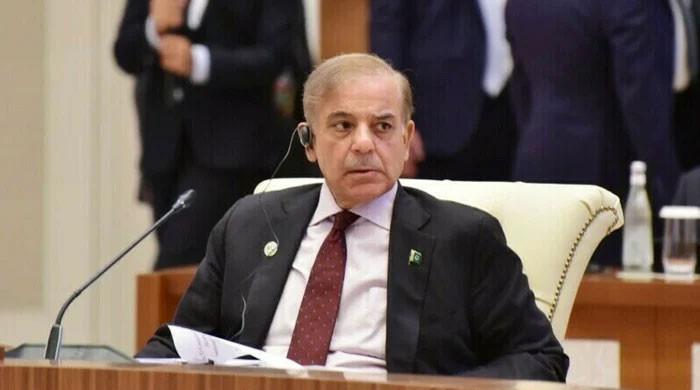
The unkindest cut for Zardari comes from Forbes. This influential business magazine of America has ignored our president and his billions; instead, it has pitched for Yousuf Raza Gilani, making him the 38th most powerful man in the world! Heading the list of 67 is, of course, Barack Obama. But doesn't Forbes know that Obama communicates with Zardari, and not Gilani? Only yesterday, or make it day before, our president got a personal letter from the US president telling him to "move it" with the war against the Taliban.
One can understand why Obama has been selected. The magazine has a ready answer: "Let's count the ways: [He] presides over the world's largest, most innovative, most dynamic economy; [is] commander-in-chief of the planet's richest, deadliest military; [has his] finger on the button of nuclear arsenal containing more than 5,000 warheads; [is] head of state of the world's sole superpower; his Democrats have majorities in both US [Houses]."
One cannot understand why Gilani has been selected. Can you? Let's read the magazine's reason for picking our PM: "[He is] less powerful than Bin Laden--can't find him in his own country. Oversees Pakistan's fledgling civilian government, ceded responsibility for tracking down terrorists to the military. Busy fending off Obama, Taliban, Al Qaeda, deposed militant groups. A little defensive? 'We want stability in the region. We ourselves are a victim of terrorism and extremism.' Still has keys to Pakistan's nuclear arsenal."
Oops! Forbes has got it wrong: Gilani does not have the "keys to Pakistan's nuclear arsenal." Don't we all know Gen Kayani is the one who pushes the buttons? This information is not classified, it's in the public domain for all to read and figure out.
But to return to Gilani's selection: either the magazine editors wore blinkers or they were on to something that we don't know (like a change in the presidency), or they just liked putting a Pakistani face in their gallery of powerful men. So without having to hunt for a face, they instantly settled on the prime minister. It was a safe gamble; one that didn't require too much hair-splitting.
Four questions were floated by the editors for the eligibility test. The lucky 67 winners declared the "most powerful people in the world" had to pass all four. First: does the person have influence over lots of other people? Does Gilani have "influence over lots of people"? The ready answer would be a big "No." It's not Gilani but Zardari who is the all-powerful ruler today. For such a well-informed journal as Forbes to be in the dark seems very strange. Providing an alternative narrative in the shape and form of Gilani premised on his power-exerting capabilities is akin to the magazine's indifference towards politics in Pakistan? Or maybe it didn't want to bother with the internal wrangling currently going on in the corridors of power in Islamabad? Or, after doing the political equations and adding up the numbers that make up democracy, Forbes found Gilani the top scorer. (The last is more credible.)
The second question for eligibility was: assessing the financial resources controlled by these individuals. For heads of state or government, as in the case of our prime minister, Forbes used the Gross Domestic Product. The definition of GDP is: The total market value of all final goods and services produced in a country in a given year, equal to total consumer, investment and government spending, plus the value of exports, minus the value of imports. I'm no financial expert, but I believe that most of our GDP is not controlled by the prime minister. Surely Forbes being a business magazine must know that our economic condition is anything but robust.
Third question for eligibility: determining if these people are powerful in multiple spheres. "There are only 67 slots on our list -- one for every 100 million people on the planet -- so being powerful in just one area is not enough to guarantee a spot. Our picks project their influence in myriad ways. Take Italy's colourful prime minister, Silvio Berlusconi (No. 12), who is a politician, a media monopolist and owner of a soccer powerhouse, or Oprah Winfrey (No. 45), who can manufacture a bestseller and an American president," states Forbes.
I leave it to the readers to determine Gilani's role and power in "multiple spheres." All I can humbly add is that, until recently, our honourable prime minister and president remained hunkered down in their respective palaces, donning shiny suits and snazzy ties to meet each other and talk serious stuff without daring to travel afar. The most visited city in Gilani's itinerary remained Multan, his hometown. To try to know in which other sphere our PM shines requires a lot of head scratching.
Take, for example, the social sector. What ripples did the PM make in healthcare reform; population control; universal education; job generation; women's rights and sustainable development? Name just one. Or what was his contribution towards controlling corruption or enhancing science and technology? Name just one area in which he was successful and deserves our kudos. I can think of none.
Fourth and final question: determining the active use of their power. "Ingvar Kamprad, the 83-year-old entrepreneur behind Ikea and the richest man in Europe, was an early candidate for this list, but was excluded because he doesn't exercise his power. On the other hand, Russian autocrat Vladimir Putin (No. 3) scored points because he likes to throw his weight around by jailing oligarchs, invading neighbouring countries and periodically cutting off Western Europe's supply of natural gas," says Forbes. The only "active use of his power" that one can credit Gilani with is steering the ship of democracy towards calmer waters despite having President Asif Zardari as the helmsman, bent on destroying the PPP and the democratic norms of the country.
And this, indeed, is a match clincher.
Quietly, gently, diplomatically, Yousuf Raza Gilani has faced the political storm within the country and abroad. As soon as he was selected for the job by the father-and-son combo – Zardari and Bilawal – he calmly allowed the two to reign supreme without ever getting competitive. He was dignified, decent and decorous in his dealings with Zardari who, according to The Financial Times (August 26, 2008), suffered in 2007 from "severe emotional instability, dementia, amnesia, concentration problems and major depressive disorder."
For this alone, and much more, Gilani deserves his 38th position among the "world's most powerful people"!
He has won respect from the surly Sharif brothers; he has no detractors in the cavernous GHQ; he has navigated like a master mariner through the shark-infested waters of the judiciary, set up by none other than his own president, and has succeeded in handing back the Supreme Court to the brave judges and their chief maliciously ejected by Musharraf. He has not made enemies in the media.
Also, dealing with the dodgy, corrupt and NRO-stained clique forming a close circuit around the Presidency is no small feat. Gilani gets on perfectly well with this tainted lot without dying himself in their wool. And, yes! Keeping his coalition partners and slick politicos like Altaf Hussain, Asfandyar Wali Khan, and Maulana Fazlur Rehman in their place is praiseworthy.
While Gilani would inarguably fail the Forbes magazine's eligibility test made up of four questions, he deserves the 38th position for holding up the sphere of democracy in the same way Atlas held up the heavens in Greek mythology.
Email: aniaz@fas.harvard.edu & www. anjumniaz.com
|
|
 |
| Back
| Send
this story to Friend | Print
Version |
 |
|
|