
Saturday, November 21, 2009, Zilhaj 03, 1430 A.H   ISSN 1563-9479
 Group Chairman: Mir Javed Rahman Founded by: Mir Khalil-ur-Rahman Editor-in-Chief: Mir Shakil-ur-Rahman 
HOME | TOP STORIES | WORLD | NATIONAL | BUSINESS |  SPORTS |  KARACHI | LAHORE | ISLAMABADPESHAWAREDITORIAL | OPINION | STOCK INSTEP TODAY  NEWSPOST
  WEEKLY SECTIONS
   News on Sunday
   You
   Health Body & Mind
   Technobytes
   Iqra
   Galaxy
   Tapestry
   Education-Zine
   Us
   Cyber@print
   Investor's J.
   Viewers' Forum
   Today's Cartoon
   Style
   Business & Finance   Review
   Instep
   MAG Fashion
   Blog
  FEATURES
   Opinion Archive
   Fashion Archive
   Magazine Archive
   Style Archive

  FINANCE
   Currency Rates
   KSE Index
   Bullion Rates
   Prize Bonds

Share this story!   
 Rich states fail to assist IDPs: Oxfam
Tuesday, June 16, 2009
Islamabad

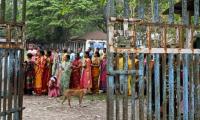
A weak international donor response is hampering the efforts to assist more than two million IDPs comprising women, men and children, affected by the conflict in NWFP, raising the risk of prolonged suffering and instability.

In a report published Monday by the international agency Oxfam, it said the Pakistani authorities and the humanitarian community have made significant efforts to respond to the world’s biggest and fastest displacement of people in more than a decade but are still struggling to cope, says a press release.

Many displaced people have not received adequate water, sanitation, food, healthcare, cash, information, and shelter assistance, especially those in unofficial camps and host communities, where approximately 85 per cent of the displaced people are staying. In such challenging circumstances, women and children are most at risk, Oxfam said.

“The relief effort has been undermined by the lack of money, which has contributed to delays in providing adequate water, sanitation, shelter and health care,” said Neva Khan, Country Director Oxfam in Pakistan.

“The United Nation’s revised appeal for $543 million is barely a quarter-funded six weeks into the emergency and most of that was given to support the exodus of people fleeing clashes last year. Aid agencies are struggling for funds just as the summer monsoons are approaching, which raises the risk of disease. Much more needs to be done, especially by the international community, to meet immediate needs and support a recovery that will help future peace and stability,” she said.

The report titled ‘Too Little, Too Slow: Why More Must be Done to Assist Pakistan’s Displaced Millions’ says that host communities have played a vital role in preventing a catastrophe but are struggling with dwindling resources and insufficient help. The humanitarian situation remains highly volatile as the conflict spreads, triggering new displacements, it says.

Oxfam urges the rich countries to support Pakistan’s democratic political leadership and local civilian institutions to lead a robust relief, recovery and reconstruction strategy. Affected communities - especially vulnerable groups such as women - and local civil society organisations must be given a meaningful part. The strategy must help address the root causes of instability and conflict.

“So far, the rich states have not only failed to adequately address the humanitarian needs of more than two million women, men and children but have also risked missing crucial opportunities to support efforts that can help stabilise a volatile region. With the humanitarian situation threatening to deteriorate, time is running out,” said Ms Khan.

Working with local partners, Oxfam is planning to assist up to 360,000 people both inside official camps and elsewhere with water and sanitation, non-food items, cash grants, and hygiene promotion.

Share this story!   
Back     |    Send this story to Friend    |     Print Version
 
Google
 
The News Home  |  Jang Group Online  |  Jang Multimedia  |  Jang Searchable  |  Ad Tariff / Enquiry |  Editor Internet  |  Webmaster