
 |
| |
WEEKLY
SECTIONS |
 |
|
 |
| Russia-India defence cooperation not enough: Medvedev |
 |
 |
 |
Friday, December 05, 2008
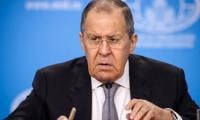
NEW DELHI: President Dmitry Medvedev said the traditionally strong defence ties between Russia and India should no longer be based on just buying and selling arms and a deeper cooperation was needed.
Russia accounts for almost three quarters of India’s weaponry but its share of the market has been limited in recent years by increasing competition. Moscow is now playing up the virtues of joint ventures with New Delhi. In an interview with Indian public television channel Doordarshan, Medvedev called for more projects such as the Bramos, an anti-ship cruise missile jointly developed by India and Moscow.
The publication of Medvedev’s comments came just ahead of his arrival on a visit to India where defence ties are set to be a major focus.
“We would like to move to something with a deeper relationship. There are examples of such projects like Bramos but that is not enough,” he said in the interview, a full transcript of which was released by the Kremlin on Thursday.
“Although we have very deep and fruitful relations and serious cooperation, the relations in defence, security and the weapons trade are based on the principles of buy and sell.” Responding to a question about the possibility of two sides jointly developing a new generation fighter jet, producing tanks in India or even the leasing of atomic-powered submarines to India, Medvedev replied: “I think that we can make more progress on these issues. The creation of a new generation fighter jet would be interesting, good work.” Russia is worried that its traditional share of the Indian defence budget is being eaten up by Israel and the United States and there have also been disputes over costs and late deliveries. The sale by Russia to India of a refurbished Soviet-era aircraft carrier, the 44,570-tonne Admiral Gorshkov, has been marred by a dispute over the price.
Medvedev admitted the vessel was “not the simplest issue in our relations” but said there was no reason why the sale should not go ahead. “It seems to me that we simply must agree on the final parameters of cooperation on this project and realise them to the end,” he added.
President Dmitry Medvedev arrived here on Thursday for a visit expected to see Russia agree to build India new nuclear reactors and give backing to its ally after the terrorist attacks in Mumbai.
A cornerstone of his trip to New Delhi, whose strong ties with Moscow date back to the Soviet Union, is to be the signing of a new accord for Russia to build four new nuclear reactors to generate energy in southern India. “The terrorist threat is not over for our country,” said Medvedev in an interview with Indian public television. “We are ready to have cooperation (with India) in all areas with the aim of preventing such terror attacks.”
The wide main streets of central Delhi have been festooned with Russian flags to welcome Medvedev but the visit is taking place under the tightest security. The credentials of staff at the Sheraton Hotel where Medvedev is staying have been checked and Russian secret agents are already in the city, the Hindustan Times reported.
The Russian leader, whose visit was planned well before the attacks, is set to be the first foreign head of state to visit the country after the bloodshed in Mumbai.
The two sides are expected on Friday to sign an accord for Russia to build four more nuclear reactors in the southern state of Tamil Nadu in the latest sign of burgeoning ties.
Moscow is already building two 1,000-megawatt light water nuclear reactors at Kudankulam and can now construct more after a group of nuclear supplier states in September lifted a ban on India shopping for nuclear technology.
Russia is the only foreign country working in India to expand the country’s nuclear energy programme but New Delhi has signed pacts on nuclear cooperation with France and the United States. “We think that during my visit this area will make its biggest progress yet,” Medvedev said in the interview, a transcript of which was released by the Kremlin.
|
|
 |
| Back
| Send
this story to Friend | Print
Version |
 |
|
|